Test report DSG-2374 · Rev E · tested November 18, 2026
Supply Chain & PolicyDevice under test
TSMC Falls 4% as U.S. Tightens AI Chip Export Curbs on China
TSMC fell 4% to $360.28 after new U.S. export-license rules targeted AI chip shipments and foundries serving Chinese fabless designers. Intel dropped 3%, AMD 2%.
- Read
- 3 min
- Words
- 666
- Node
- 7nm
- Operator
- Amara Osei
Spec summary
- TSMC fell 4% to $360.28 on November 17 after the U.S. tightened AI chip export curbs on China.
- New rules require licenses for AI chip shipments to data centers in Singapore, Malaysia, Thailand, Indonesia and Brazil.
- TSMC guided Q4 2026 revenue of $52.3–$54.3 billion on October 15, before the restrictions took effect.
- Intel Foundry posted a $1.85 billion operating loss in Q3 2026 despite 58% revenue growth.
- AMD took an $800 million inventory charge on Instinct MI308 products in Q2 2025 over export controls.
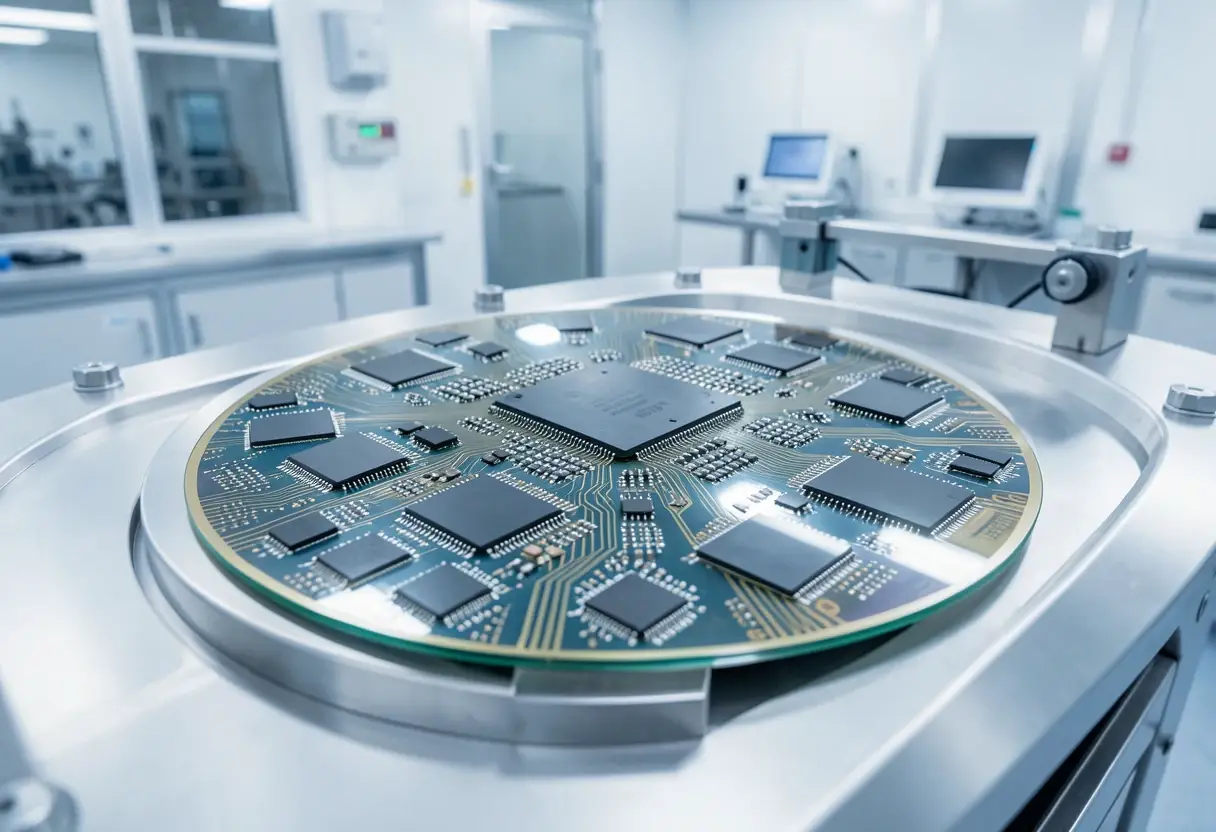
Taiwan Semiconductor Manufacturing (NYSE:TSM) fell 4% to $360.28 in morning trading on November 17, after Washington tightened restrictions on China's access to advanced AI chips. The stock remains up 19% year to date despite the drop.
The new U.S. rules require export licenses for shipments of advanced AI chips to data centers in Singapore, Malaysia, Thailand, Indonesia and Brazil — five countries Washington classifies as higher risk for diversion to China. A second provision adds checks on overseas data centers that rent large amounts of computing power to China-based companies.
The third measure hits Taiwan Semiconductor most directly. It tightens checks on foundries that manufacture advanced chips for Chinese fabless designers — companies that outsource their production. Taiwan Semiconductor is the world's largest dedicated semiconductor foundry. Stricter reviews could raise compliance costs and delay orders for any foundry serving Chinese customers.
What does the drop mean for Q4 guidance?
The restrictions landed while the company's business runs at a high. On October 15, Taiwan Semiconductor guided for Q4 2026 revenue of $52.3 billion to $54.3 billion, citing AI demand that management called "extremely robust." That outlook predates the new rules and does not reflect them.
Broader selling added pressure. The S&P 500 fell 1.2%, with technology the weakest sector, and chip stocks traded cautiously ahead of NVIDIA's (NASDAQ:NVDA) upcoming earnings report.
Chairman and CEO C.C. Wei framed the demand picture on the Q3 call, saying demand remains "far above our capability to supply today." Bulls argue idle capacity from blocked Chinese orders could find other buyers. The bears counter with rising compliance costs and rules whose reach into foundry orders has not been measured. Any slowdown in approvals for Chinese fabless orders would likely appear first in the company's monthly revenue reports.
In short: the supply-constrained story survives only if displaced Chinese demand finds new buyers fast.
How far did Intel and AMD fall?
Intel (NASDAQ:INTC) dropped 3% to $54.03 — a smaller decline than Taiwan Semiconductor's, but part of a brutal month in which the shares have fallen 40%.
Intel Foundry posted revenue growth of 58% year over year in Q3 2026, yet recorded a $1.85 billion operating loss. The gap shows the company is still building the outside customer base Taiwan Semiconductor already serves. For Q4, Intel guided revenue of $15 billion to $16 billion, with a PC slowdown expected to persist through at least the first half of 2027.
Advanced Micro Devices (NASDAQ:AMD) slid 2% to $493.88. The stock is up 131% year to date, far ahead of Taiwan Semiconductor over the same period. AMD depends on Taiwan Semiconductor to build its Instinct accelerators and EPYC server processors, and those AI chips fall under U.S. export rules. In Q2 2025, AMD took an $800 million inventory charge on its Instinct MI308 products tied to export controls. Those rules matter more now: AMD's data center revenue grew 97% year over year in Q3.
The divergence in one line: the foundry lost the most, the fab owner the middle, the designer the least.
Why do the three companies face different China risks?
Taiwan Semiconductor builds chips other companies design, so tighter checks on Chinese fabless customers reach directly into its order book. It also runs manufacturing in China through TSMC China and TSMC Nanjing, adding a further layer of compliance exposure.
Intel designs and manufactures its own processors, so the restrictions can touch both its chip sales and the outside foundry business it is trying to grow. AMD designs chips but owns no factories, leaving it dependent on Taiwan Semiconductor for its most advanced products.
The result: AMD feels export rules mainly through what it can ship to Chinese buyers, while the foundry feels them through which customers it can serve. The scope of the new foundry checks remains open, and that uncertainty stays with TSM stock until the first monthly revenue prints arrive.
via 247wallst.com (Source)
More from Amara Osei
Show full bio
Staff writer covering money, funding and market shifts around hardware layer of artificial intelligence at Die Signal.
698 articles
Same lot · LOT-362E
- DSG-902014nmTSM Under Scrutiny as Taiwan Weighs AI Chip Export Controls
- DSG-286545nmTaiwan Mulls Tighter AI Chip Curbs as TSMC Holds Terafab Talks
- DSG-688310nmUS Pushes to Cut Taiwan Chip Reliance, but Taipei Stays Central
- DSG-12897nmTSMC Secures Taiwan Approval for $44 Billion in US Investments
- DSG-746720nmTSMC Crosses $2 Trillion Market Cap on AI Foundry Demand