Test report DSG-6285 · Rev B · tested November 18, 2026
Foundries & ManufacturingDevice under test
Hyundai to Field-Test Atlas Humanoid Robot at US Chip Plant
Hyundai's Atlas humanoid will move wafers at a GlobalFoundries US chip plant ahead of 30,000-unit annual production in 2028, as Boston Dynamics targets outside sales.
- Read
- 3 min
- Words
- 636
- Node
- 20nm
- Operator
- Marcus Bennett
Spec summary
- Hyundai plans mass production of Atlas at 30,000 units per year by 2028
- 25,000 Atlas units are earmarked for Hyundai Motor and Kia global plants
- Boston Dynamics lost 528.4 billion won last year and 626.6 billion won through Q3 this year
- Samsung and SK hynix both target autonomous fabs by 2030
- Hyundai affiliates bought SoftBank's entire 9.65% Boston Dynamics stake under a 2020 put option
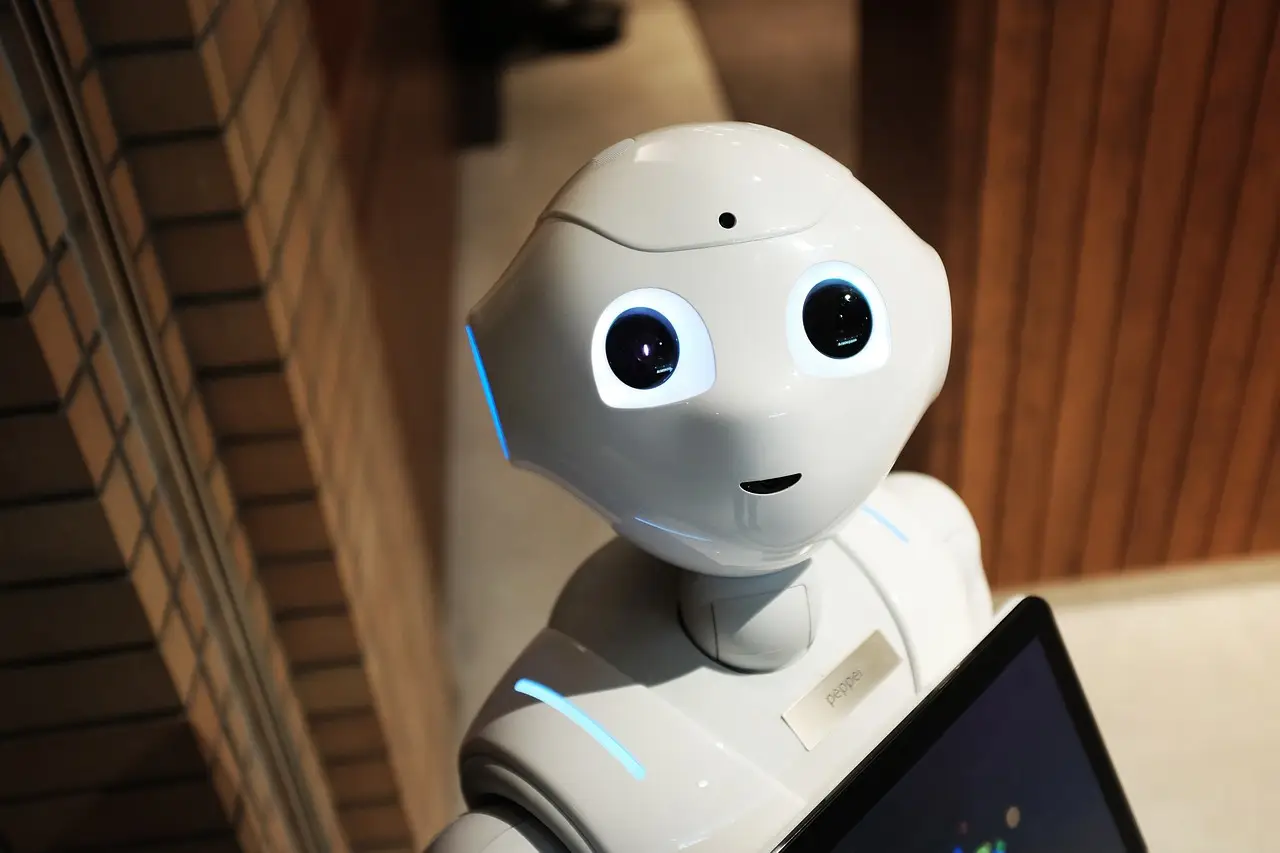
Hyundai Motor Group will deploy its Atlas humanoid robot at a GlobalFoundries chip plant in the United States, testing the machine in the most precision-demanding manufacturing environment it has faced. The field test, reported by industry sources on the 18th, is a strategic step toward mass production of Atlas in 2028 and toward selling the robot outside the automotive industry.
Atlas will learn to move wafers and other components at the plant. Semiconductor processes run at the nanometer scale, and even minute deviations affect yields. That makes the work more demanding than almost any other industrial task a humanoid robot could take on.
Boston Dynamics and GlobalFoundries plan to focus on the synergy between the automated facilities already installed at the site and the robot itself. The goal is to identify specific roles Atlas can specialize in. GlobalFoundries also appears set to use the robot to accelerate its shift toward physical AI and strengthen the foundation for an autonomous factory.
Why a chip plant and not a car plant?
Atlas is currently training at the Robotics Metaplant Application Center (RMAC), a robot learning facility inside Hyundai's Metaplant in Georgia, ahead of deployment at vehicle assembly lines. A chip plant is a harder school. Training there would let the robot enter non-automotive industrial sites sooner, because it proves the machine can handle environments stricter than car assembly.
After adapting to manufacturing environments, Atlas is expected to take on more sophisticated work: managing production lines and equipment, and performing assembly. Later deployments are likely at infrastructure facilities with high temperatures and high noise, where human labor is difficult.
The AI transition at chip plants is becoming an industry norm, not an experiment by one company. Samsung Electronics has announced plans to convert its domestic and overseas plants into AI-driven autonomous factories by 2030, and is phasing humanoid robots into its entire manufacturing process to move beyond automation toward autonomous operations. SK hynix also plans to build an autonomous fab by 2030 by extending automation into work areas that rely heavily on human labor.
What does this change for Hyundai's robot economics?
The numbers explain the push. Hyundai plans a production system of 30,000 Atlas units per year by 2028. It intends to deploy 25,000 of those units at global plants of Hyundai Motor and Kia. That leaves 5,000 units a year to sell elsewhere — and a 30,000-unit facility cannot run efficiently on internal demand alone. The industry sees room for Atlas in semiconductors, aerospace, logistics and life sciences, not just automobiles.
The financial pressure is real. Boston Dynamics posted a loss of 528.4 billion won last year and a net loss of 626.6 billion won through the third quarter of this year. Expanded sales of Atlas to outside companies are a prerequisite for an initial public offering expected to be pursued around next year.
"The uses for humanoid robots are widening without regard to industry boundaries," an industry official said. "As the mass production date approaches, Hyundai Motor Group's investment costs for Boston Dynamics will inevitably rise, so it will try to offset that through sales to outside companies."
The SoftBank stake cleanup
Hyundai recently completed a restructuring of its governance of Boston Dynamics. Affiliates acquired the entire 9.65% stake previously held by SoftBank. SoftBank exercised a put option on its stake under a contract signed in 2020, and Hyundai completed the purchase. The industry believes HMG Global, Hyundai Glovis and Chairman Euisun Chung bought the stake in line with their existing shareholdings.
The chip plant test is therefore part of a larger sequence: prove Atlas outside cars, sell it across industries, fill the 30,000-unit capacity, and position Boston Dynamics for a listing. The GlobalFoundries deployment is the first public proof point.
via en.sedaily.com (Source)
More from Marcus Bennett
Show full bio
News editor covering regulation, policy and their impact on hardware layer of artificial intelligence at Die Signal.
681 articles
Same lot · LOT-362E
- DSG-273665nmBoston Dynamics' Atlas Robot to Enter Chip Plants With GlobalFoundries
- DSG-253010nmAtlas Humanoid Robot Heads From Car Plants Into Chip Fabs
- DSG-192014nmGenerative Bionics to build AI data factory for humanoid robots in Italy
- DSG-748065nmSamsung and SK Hynix Target Humanoid Robots as Next Growth Market
- DSG-233720nmMobilint to Trial Korean NPU with LG, Doosan and Daedong