Test report DSG-5340 · Rev C · tested September 30, 2026
Supply Chain & PolicyDevice under test
Taiwan Breaks Ground on $217M Drone Park
Taiwan starts construction on a $217 million drone park to build a 'non-red' supply chain excluding Chinese components from unmanned aerial vehicle manufacturing.
- Read
- 1 min
- Words
- 274
- Node
- 45nm
- Operator
- Amara Osei
Spec summary
- Taiwan broke ground on a $217 million drone industrial park
- The project aims to establish a 'non-red' supply chain excluding Chinese components
- The initiative aligns with Western efforts to source drones outside China
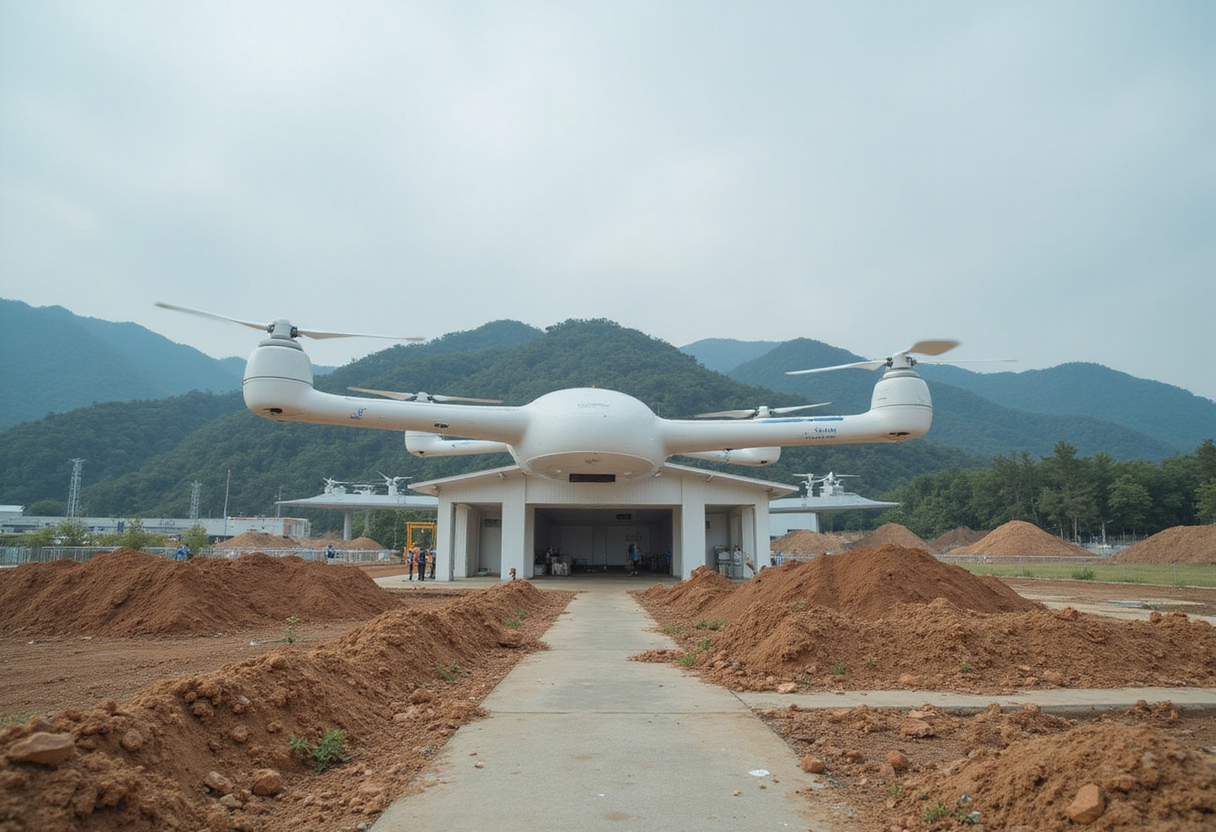
Taiwan has begun construction of a $217 million drone industrial park intended to build what officials call a "non-red" supply chain — a reference to excluding components and manufacturing ties with mainland China.
The investment signals Taiwan's push to become a significant player in the global drone market at a time when Western governments and defense buyers are actively seeking alternatives to Chinese-made unmanned aerial vehicles. China currently dominates global drone manufacturing, and supply chains for airframes, flight controllers, motors, and optics have historically run through Chinese suppliers.
The groundbreaking places Taiwan among a growing set of countries — including the United States, Ukraine, and several EU member states — pursuing domestic or allied drone production capacity. Taiwan's existing electronics and precision manufacturing base gives it a potential advantage in scaling component output quickly.
The "non-red" framing aligns with Taiwan's broader industrial policy of reducing dependence on mainland Chinese inputs across strategic technology sectors. For drone procurement agencies and integrators outside China, a Taiwanese supply chain could offer a politically uncontested sourcing option with established semiconductor and electronics manufacturing behind it.
The $217 million facility represents a concrete bet that demand for China-free drone hardware will persist among government and commercial buyers. Further details on the park's construction timeline, anchor tenants, and production targets were not specified in the announcement.
For supply chain managers and procurement teams tracking drone sourcing, the project adds a new candidate supplier ecosystem in Asia. Its competitiveness will depend on pricing, certification, and output scale relative to established Western drone manufacturers — questions that will only be answered once the park's tenants begin production.
via Google News: Semiconductor supply chain (Source)
More from Amara Osei
Same lot · LOT-C1D0
- DSG-12897nmTSMC Secures Taiwan Approval for $44 Billion in US Investments
- DSG-688310nmUS Pushes to Cut Taiwan Chip Reliance, but Taipei Stays Central
- DSG-736128nmTSMC Weighs Multibillion-Dollar Texas Fab Campus as AI Demand Strains Capacity
- DSG-36227nmTSMC Reportedly Evaluates Second U.S. Site for Chip-Making Hub
- DSG-123465nmUS Proposals to Tighten China Chip Tool Exports Hit Suppliers