Test report · tested November 22, 2026
AI Datacenter InfrastructureDevice under test
SpaceX Investors Fear Their $40 Billion in Chips Could Be Launched Into Orbit
Financiers behind SpaceX's $40 billion Project Saturn fear the Nvidia chips they fund could be launched into orbit, where repossession would be practically impossible.
- Read
- 2 min
- Words
- 495
- Segment
- AI Datacenter Infrastructure
- Operator
- Marcus Bennett
Spec summary
- Apollo-managed vehicle borrows over $40 billion; SpaceX adds $7 billion to buy Nvidia chips leased back for about five years.
- Musk said the space-optimized Vera Rubin NVL72 chip launches in Q4 2027 and "in considerable volume" in 2028.
- Financial Times reports investors want clauses keeping the chips on Earth; outcome of negotiations unknown.
- Goldman Sachs, Blackrock and KKR-advised funds participate in Project Saturn, announced late October as the largest compute financing ever.
- Musk claimed in February that by around 2031 annual AI capacity added in space could exceed all capacity on Earth.
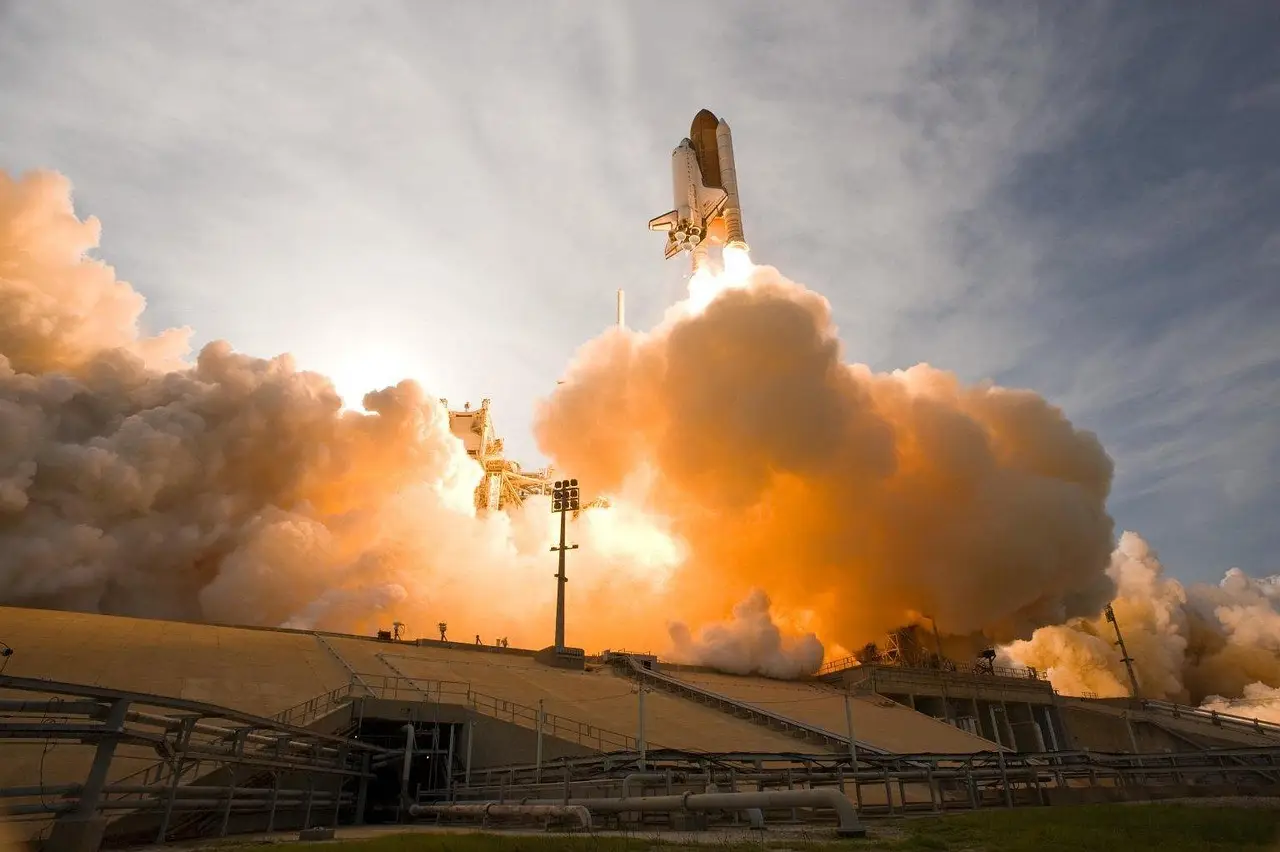
Lenders behind SpaceX's $40 billion chip financing push want contract clauses guaranteeing that the Nvidia hardware they fund stays on Earth. The Financial Times reports, citing people familiar with the matter, that financiers fear the chips could be launched into orbit despite assurances to the contrary. Whether the clauses made it into the final agreements remains unknown.
The fear is not abstract. In August, Elon Musk announced on X that SpaceX had worked with Nvidia on a chip optimized for use in space: the Vera Rubin NVL72. That exact chip is the main focus of the $40 billion financing round. Musk wrote that the chip would launch in the fourth quarter of 2027 and "then in considerable volume in 2028".
How the deal is built
The structure explains the investor anxiety. SpaceX needs enormous capital to expand its AI compute business, but does not want the resulting debt on its own balance sheet. So a purpose vehicle managed by investment firm Apollo borrows more than $40 billion from investors, while SpaceX itself contributes $7 billion. The money buys Nvidia chips, which are then leased to SpaceX for roughly five years.
In late October, SpaceX called it the largest compute financing round ever. Alongside Apollo, the participants named include Goldman Sachs and BlackRock, plus funds advised by KKR that have made commitments. SpaceX said it intends to build "the world's largest compute capacity".
What does this change for the lenders?
The core problem is repossession. The chips are only on loan. If SpaceX one day cannot pay and the hardware has already been launched into orbit, the financiers would struggle to recover their property. Recovering collateral from orbit is, for practical purposes, impossible.
SpaceX has reportedly promised that the borrowed compute chips are intended for use on Earth. Investors, however, worry Musk will not keep that promise, and they may be surfacing their concerns publicly as a form of pressure.
Musk's orbital compute ambitions
Their worry has a documented basis. Musk believes nearly all compute will eventually migrate to space. In February, he said that by around 2031, more AI capacity could be added in orbit each year than exists on Earth in total. His argument: data centers in space could run on solar power, and the vacuum would help with cooling.
That vision was part of the success story behind SpaceX's historic stock market listing in June. Nvidia, for its part, embraced the plans at the time. In a statement, the chipmaker said its Vera Rubin semiconductor was developed specifically for agentic AI, and that Musk's company wanted to make that foundation usable "beyond terrestrial data centers". Nvidia said it also wanted to create "compute capacity in space" with Vera Rubin.
The lenders behind Project Saturn now want to insure themselves against exactly that outcome — a rare case where the fine print of a financing agreement has to settle where the collateral physically sits: on the ground or in orbit.
via n-tv.de/rss (Source)
More from Marcus Bennett
Show full bio
News editor covering regulation, policy and their impact on hardware layer of artificial intelligence at Die Signal.
752 articles
Same lot
- SpaceX falls 5%, breaks below IPO price on chip-financing concerns
- SpaceX Seeks $40 Billion in Debt to Buy Nvidia AI Chips
- SpaceX Lines Up $40 Billion AI Chip Financing Days After Musk Pledged $500 Billion
- Lenders Seek Earth-Only Safeguards for SpaceX’s $40B GPU Deal
- SpaceX and Nvidia in $40 Billion Debt Finance Deal for Chips