Test report DSG-5585 · Rev F · tested October 10, 2026
Foundries & ManufacturingDevice under test
Siemens and TSMC advance AI-powered chip design automation
Siemens and TSMC are advancing AI-powered automation of chip design, pairing foundry process knowledge with Siemens EDA tools to cut design cycle times.
- Read
- 4 min
- Words
- 748
- Node
- 14nm
- Operator
- Grace Kim
Spec summary
- Siemens and TSMC are advancing AI-powered chip design automation, per evertiq.com.
- The collaboration combines TSMC foundry process knowledge with Siemens' EDA toolchain.
- No commercial terms or availability timeline were disclosed in the report.
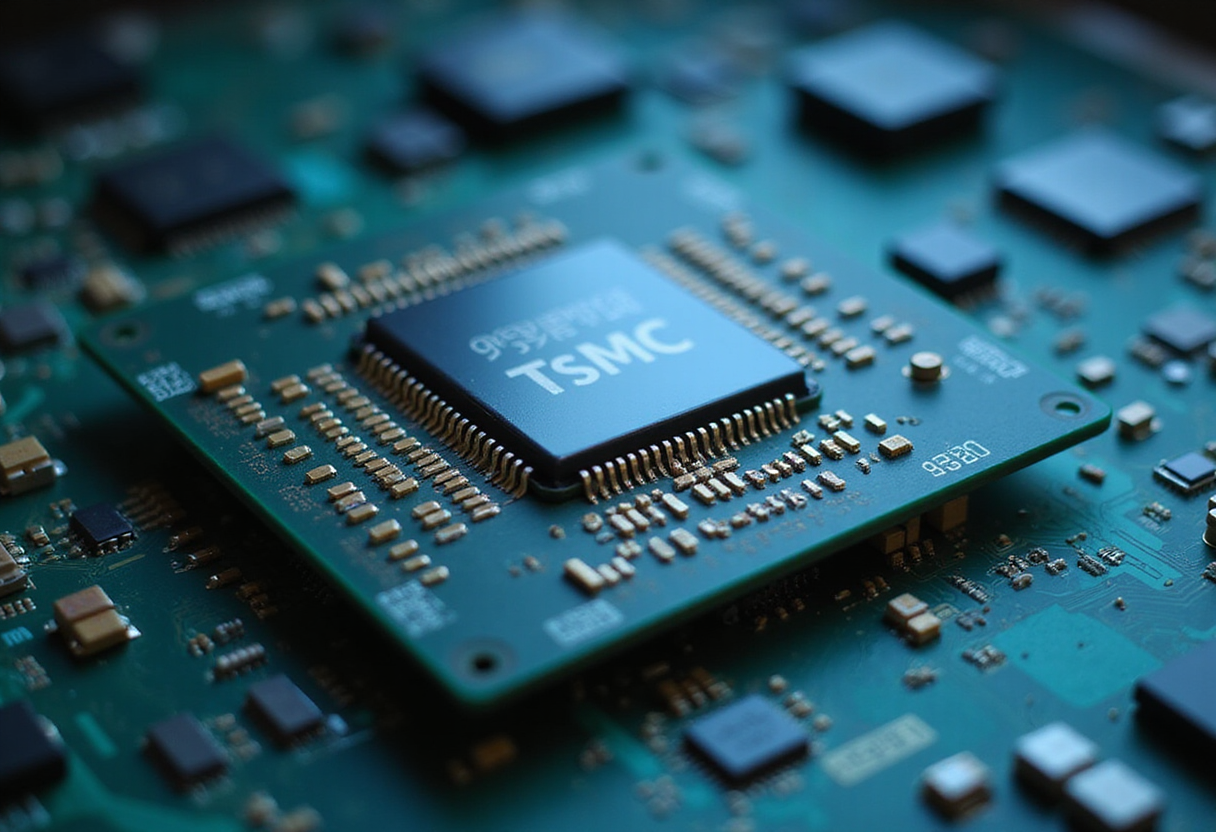
Siemens and TSMC are advancing AI-powered automation of chip design, a collaboration that targets one of the most persistent bottlenecks in semiconductor development: the manual, engineer-intensive work of turning a design concept into a manufacturable layout.
The two companies have made the effort public through coverage by evertiq.com, which reports that the partners are moving forward with AI-driven tooling for chip design automation. The collaboration pairs TSMC's foundry process knowledge with Siemens' electronic design automation (EDA) portfolio, and it arrives as the industry struggles with design costs and engineering headcount for advanced nodes.
Why is AI-driven design automation needed now?
Chip design at leading-edge process nodes has become a scaling problem in its own right. Modern system-on-chip designs contain billions of transistors, and the individual steps — logic synthesis, place-and-route, timing closure, verification, and design-for-manufacturability — each require iterative human decisions that consume weeks or months of engineering time.
AI-based methods promise to shorten those loops. Instead of relying solely on hand-tuned heuristics, machine learning models can propose optimizations, predict outcomes of design decisions before simulation runs complete, and steer the flow toward timing, power, and area targets with fewer manual interventions.
For foundries, the incentive is direct. TSMC's customers face rising non-recurring engineering costs at each new node, and any automation that compresses design cycles effectively widens the pool of customers who can afford advanced silicon. For EDA vendors such as Siemens — whose Mentor Graphics acquisition gave it a place among the top three EDA suppliers alongside Synopsys and Cadence — AI capabilities have become a competitive differentiator in tool selection.
What does the collaboration cover?
According to the report, the effort focuses on embedding AI into the design automation flow, combining TSMC's process and manufacturing insight with Siemens' design toolchain. The specific shape of the work, as reported, centers on advancing AI-powered automation of chip design steps rather than a single point tool.
Industry context frames the direction:
-
Flow-level automation: AI applied across multiple design stages, not isolated features, so that decisions in one step account for downstream effects.
-
Foundry-EDA co-optimization: TSMC contributes process design kit data and manufacturing feedback; Siemens integrates that into tool behavior and optimization engines.
-
Cycle-time reduction: The practical goal is shorter iteration loops between design changes and sign-off-quality results, which currently dominate project schedules.
The collaboration is part of a broader industry pattern. Rival EDA vendors have rolled out AI-driven synthesis, place-and-route, and verification assistants, and foundries have certified AI-optimized flows for their most advanced processes. Siemens and TSMC working together signals that AI in design automation has moved from research demos into production-relevant engineering.
Who benefits, and how quickly?
The immediate audience is the design engineering community: teams at fabless companies, design service providers, and in-house silicon groups that build on TSMC processes and use Siemens EDA tools. For these teams, AI-assisted flows can mean fewer manual timing-closure iterations, faster what-if analysis, and better first-pass quality of results.
The longer-term implications touch the whole supply chain:
-
Design cost pressure: Advanced-node design costs have become a gatekeeper for who can build leading-edge chips; automation that reduces engineering hours lowers that barrier.
-
Engineering capacity: Experienced physical design and verification engineers remain scarce; AI tooling that offloads routine optimization frees specialists for architecture and sign-off work.
-
Time to market: For chipmakers in competitive segments such as AI accelerators and networking silicon, compressed design cycles translate directly into product cadence advantages.
No timeline for general availability of specific AI-powered capabilities from the collaboration was included in the report, and the companies have not disclosed commercial terms.
What comes next?
Watch for certification announcements. When TSMC qualifies AI-driven Siemens flows for named process nodes, that marks the transition from joint development to something customers can adopt in production. Additional signals include customer references describing measured cycle-time or quality-of-results improvements, and expansion of the collaboration into adjacent domains such as verification and test.
The direction is consistent with where the industry is heading: foundry and EDA players are converging on AI as the lever for managing design complexity that human-only flows can no longer absorb economically. Siemens and TSMC advancing AI-powered chip design automation places both firms on that path, with the specifics of tool availability and measured gains still to be detailed.
via Google News: TSMC (Source)
More from Grace Kim
Same lot · LOT-C1C6
- DSG-493714nmOpenAI Partners With Synopsys on AI Model for Chip Design
- DSG-754620nmSynopsys and TSMC Partner on Agentic AI and Advanced Design
- DSG-553810nmSiemens and TSMC Expand AI-driven EDA Collaboration
- DSG-616314nmSiemens and TSMC extend collaboration on AI-assisted EDA
- DSG-22023nmSiemens and TSMC deploy AI agents for design rule checking