Test report DSG-3655 · Rev F · tested October 12, 2026
Memory & StorageDevice under test
SanDisk Falls 6% as China's DRAM Progress Triggers Memory Selloff
SanDisk fell 6% and Seagate 4% as China's reported DRAM progress triggered a broad selloff across memory and storage stocks, pressuring sector pricing outlooks.
- Read
- 2 min
- Words
- 382
- Node
- 7nm
- Operator
- Amara Osei
Spec summary
- SanDisk shares dropped 6% in a memory-sector selloff.
- Seagate Technology slid 4% in the same session.
- The selloff followed reports of China's progress in DRAM development.
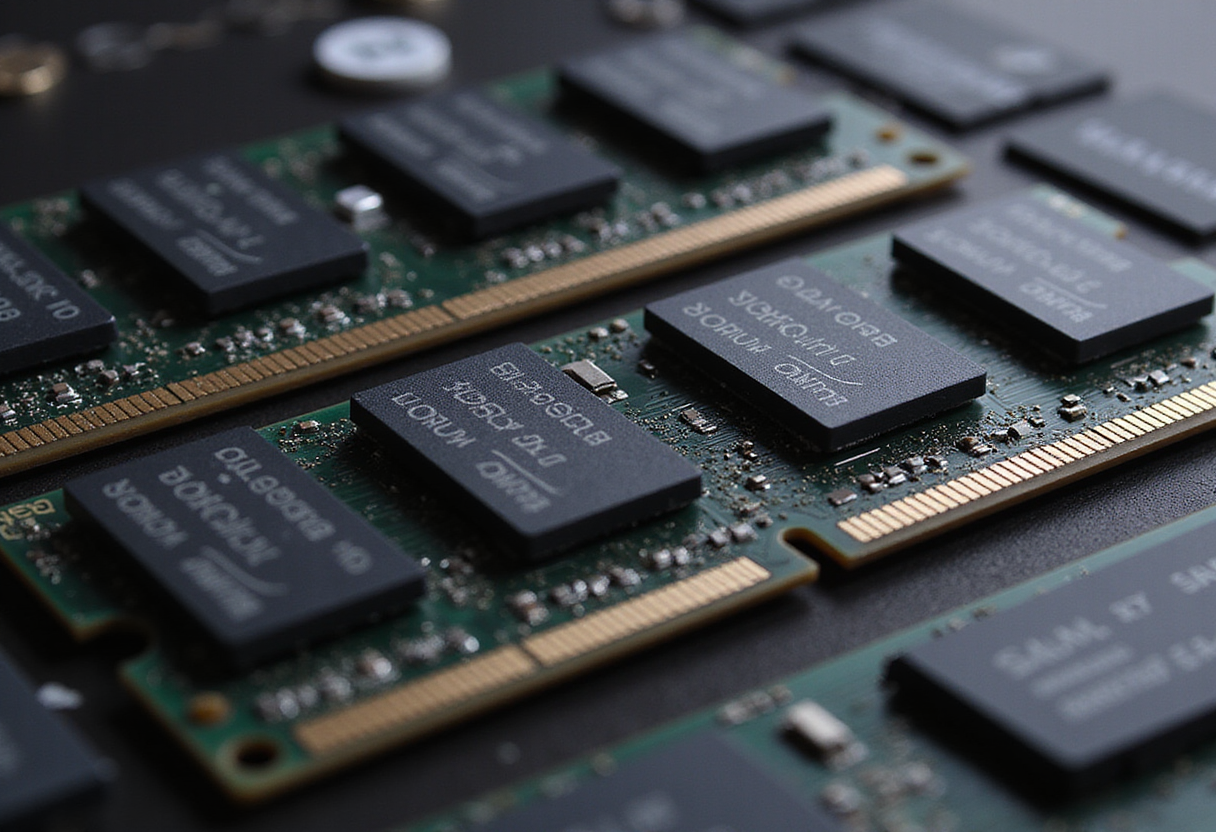
SanDisk shares dropped 6% as investors sold off memory and storage stocks in response to reports of progress by China in DRAM development. Seagate Technology followed the sector down, losing 4% in the same session.
The two declines mark one of the sharper single-day moves for storage hardware names, driven by concerns that advancing Chinese DRAM capability could erode the market position of established Western and allied manufacturers.
Why did China's DRAM progress hit SanDisk hardest?
SanDisk, a major supplier of NAND flash memory products, took the steepest fall among the affected names, closing the session down 6%. The selloff signals that traders view Chinese advances in DRAM technology as a threat that extends beyond the DRAM segment itself, pressuring the broader memory complex — including NAND flash — as investors reprice the competitive outlook.
Memory pricing and memory-maker equities tend to react sharply to supply-side news. Any credible expansion of Chinese production capacity raises the prospect of additional supply entering global markets, which investors read as a risk to pricing power and margins across the sector.
What does the Seagate decline signal?
Seagate Technology, a leading manufacturer of hard disk drives, slid 4% alongside SanDisk's larger drop. While Seagate's core business sits in mechanical storage rather than memory chips, the decline indicates that the market treated China's DRAM progress as a negative for storage hardware vendors broadly.
The parallel move suggests investors are applying a sector-wide risk discount rather than assessing each company's exposure individually. Storage and memory names frequently trade as a group when geopolitical or capacity-related news hits the supply chain.
What happens next?
The direction of these stocks from here depends on how concrete China's DRAM progress proves to be in commercial terms, and whether additional details emerge about production volumes, yields, or timelines.
For now, the session stands as a clear marker: a 6% loss for SanDisk and a 4% loss for Seagate, both attributed by market watchers to China's advancing position in DRAM technology and the resulting selloff across memory and storage equities.
Investors in the sector will be watching for confirmation of the underlying reports and for any response from incumbent memory manufacturers, whose competitive positioning is the direct subject of the market's reassessment.
via Google News: DRAM chip (Source)
More from Amara Osei
Show full bio
Staff writer covering money, funding and market shifts around hardware layer of artificial intelligence at Die Signal.
277 articles
Same lot · LOT-C1C8
- DSG-225045nmAcer chairman: China supply may burst DRAM and NAND price bubble by mid-2027
- DSG-352620nmMicron, SK Hynix Shares Slip as China's CXMT Advances Next-Gen DRAM
- DSG-921465nmCXMT Overtakes Intel in Market Value After Shanghai Listing Debut
- DSG-287765nmChinese NAND Supplier Overtakes Micron and Kioxia in Chip Shipments
- DSG-21767nmDRAM and NAND Prices Rise 660% Year-Over-Year, Bernstein Data Shows