Test report DSG-5828 · Rev E · tested October 8, 2026
Memory & StorageDevice under test
Samsung Q3 Operating Profit Jumps Nearly Eight-Fold to a Record
Samsung's Q3 operating profit surged nearly eight-fold to a record high, confirming a memory-chip upcycle with direct read-through for Micron, Nvidia and chip stocks.
- Read
- 3 min
- Words
- 545
- Node
- 28nm
- Operator
- Amara Osei
Spec summary
- Samsung's Q3 operating profit surged nearly eight-fold year on year to a record high.
- The result signals a broad memory-chip cycle upturn, not just Samsung-specific strength.
- Micron is the most direct read-through among US-listed memory names.
- Nvidia's exposure runs through HBM demand and AI data-center memory costs.
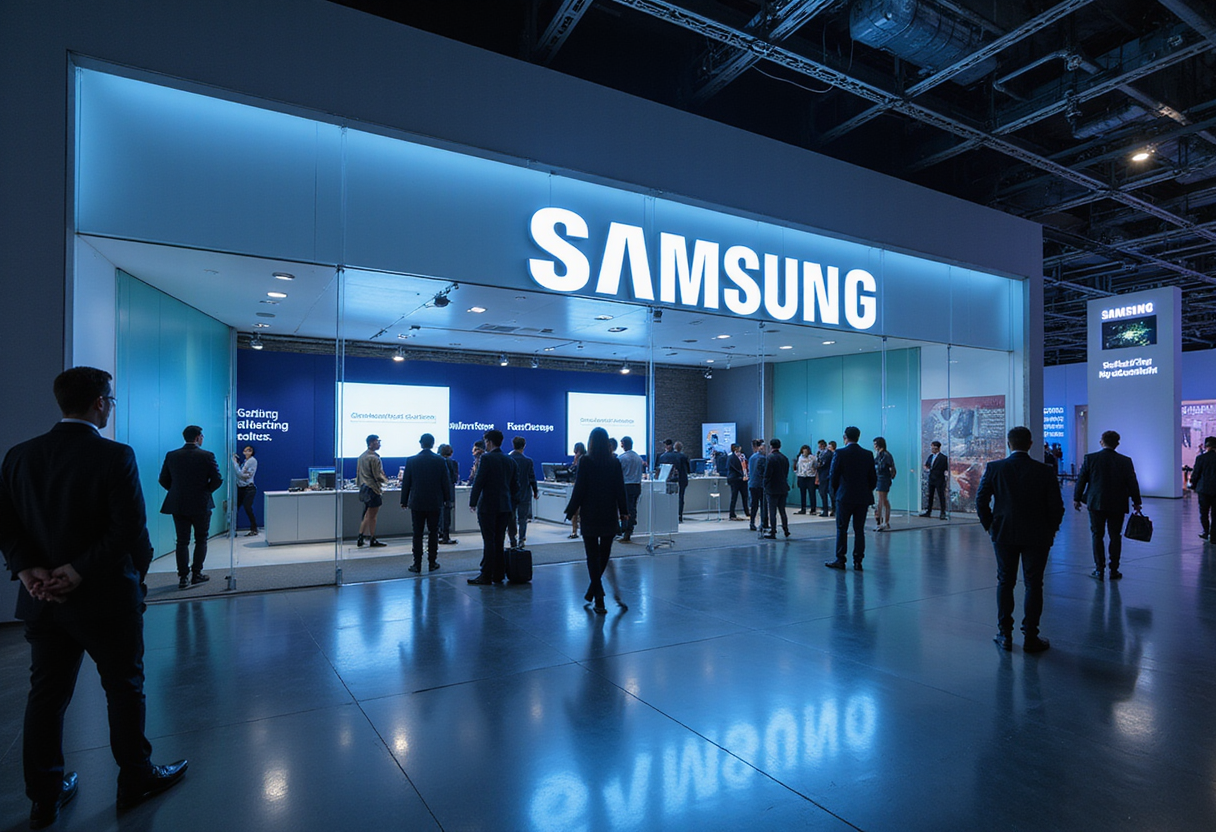
Samsung reported an operating profit for the third quarter that surged nearly eight-fold year on year and set a new record for the company. The result, flagged by TradingKey, confirms that the memory-chip cycle has turned decisively and immediately raises the question of what the recovery means for Micron, Nvidia and the broader memory-stock trade.
Why does one Samsung quarter matter for the whole sector?
Samsung is the world's largest memory producer across both DRAM and NAND flash. Its margins function as a real-time read on supply, demand and pricing for the entire industry. When Samsung's operating profit multiplies by almost eight in a single year, the cause is rarely company-specific execution alone.
Analysts tracking the sector attribute profit expansions of this scale to the combination of:
- Rising memory prices as supply discipline meets recovering demand;
- Growing shipments of high-bandwidth memory (HBM) tied to AI data-center buildouts;
- Inventory normalization after the prolonged downturn that preceded this cycle.
A record quarter at Samsung therefore signals that pricing power has returned to memory makers as a group, not just to one balance sheet.
What does the print signal for Micron?
Micron sits closest to Samsung in the commodity DRAM and NAND markets, which makes it the most direct beneficiary of the same forces behind Samsung's result. When contract prices firm, Micron's revenue and margins typically move in the same direction as its larger Korean rival's.
The open question for Micron investors is durability. A single record quarter does not guarantee that pricing holds through the next several quarters, and memory remains one of the most cyclical corners of the semiconductor industry. Samsung's print establishes that the upswing is real; it does not establish how long it runs.
Where does Nvidia fit into the memory story?
Nvidia connects to the memory cycle through HBM, the high-bandwidth DRAM stacked alongside AI accelerators. AI GPUs are only as fast as the memory feeding them, and HBM supply has become a bottleneck in the AI hardware chain.
Samsung's record profit reflects in part this AI-driven demand shift. For Nvidia, the same dynamic cuts both ways: HBM scarcity supports its premium positioning, while rising memory costs feed into the bill of materials for AI systems. Traders reading Samsung's results are effectively reading one input of Nvidia's cost structure.
What should investors watch next?
The record quarter reframes the setup for memory stocks, but several variables decide whether the rally extends:
- Whether memory pricing continues to climb or plateaus in coming contract negotiations;
- How HBM capacity and allocation evolve among Samsung, its Korean rival SK Hynix and Micron;
- Whether AI data-center demand keeps absorbing incremental supply, or whether capex enthusiasm overshoots end demand.
Samsung's nearly eight-fold profit surge is the hardest data point yet that the memory recovery has reached the earnings line. For Micron, Nvidia and the wider chip complex, the quarter serves as both confirmation of the upcycle and a benchmark against which the next round of results will be measured.
The outlook now hinges on execution and pricing power in the quarters ahead — the cycle has turned, and the market's attention shifts to how long it stays turned.
via Google News: HBM memory (Source)
More from Amara Osei
Same lot · LOT-C1AF
- DSG-560710nmSamsung Posts Record Profit on Memory Chip Demand
- DSG-748714nmSamsung Q3 Preliminary: Operating Profit Passes 100 Trillion Won
- DSG-22833nmSamsung Expects 780% Jump in Quarterly Operating Profit on AI Boom
- DSG-39617nmMicron Beats Estimates, Issues Strong Guidance on Memory Shortage
- DSG-43067nmSamsung Q3 Operating Profit Jumps Nearly Nine-Fold on AI Chip Demand