Test report DSG-1921 · Rev F · tested October 16, 2026
AI Datacenter InfrastructureDevice under test
Salience Labs raises $125m Series B for optical AI data center switches
Oxford-based Salience Labs raised $125m in a Series B led by Bullhound Capital, with AMD Ventures and Intel Capital participating, to scale its silicon photonics optical circuit switches.
- Read
- 3 min
- Words
- 554
- Node
- 20nm
- Operator
- Marcus Bennett
Spec summary
- Salience Labs raised $125 million in a Series B led by Bullhound Capital, with AMD Ventures and Intel Capital participating.
- The company debuted a 32-port all-optical switch in March 2026 and a 64-port version in September 2026, an industry first for silicon photonics OCS.
- Founded in 2021, the Oxford, UK startup targets 128- and 256-port configurations next.
- The funding will accelerate OCS deployment, scale volume manufacturing and expand US presence in Silicon Valley.
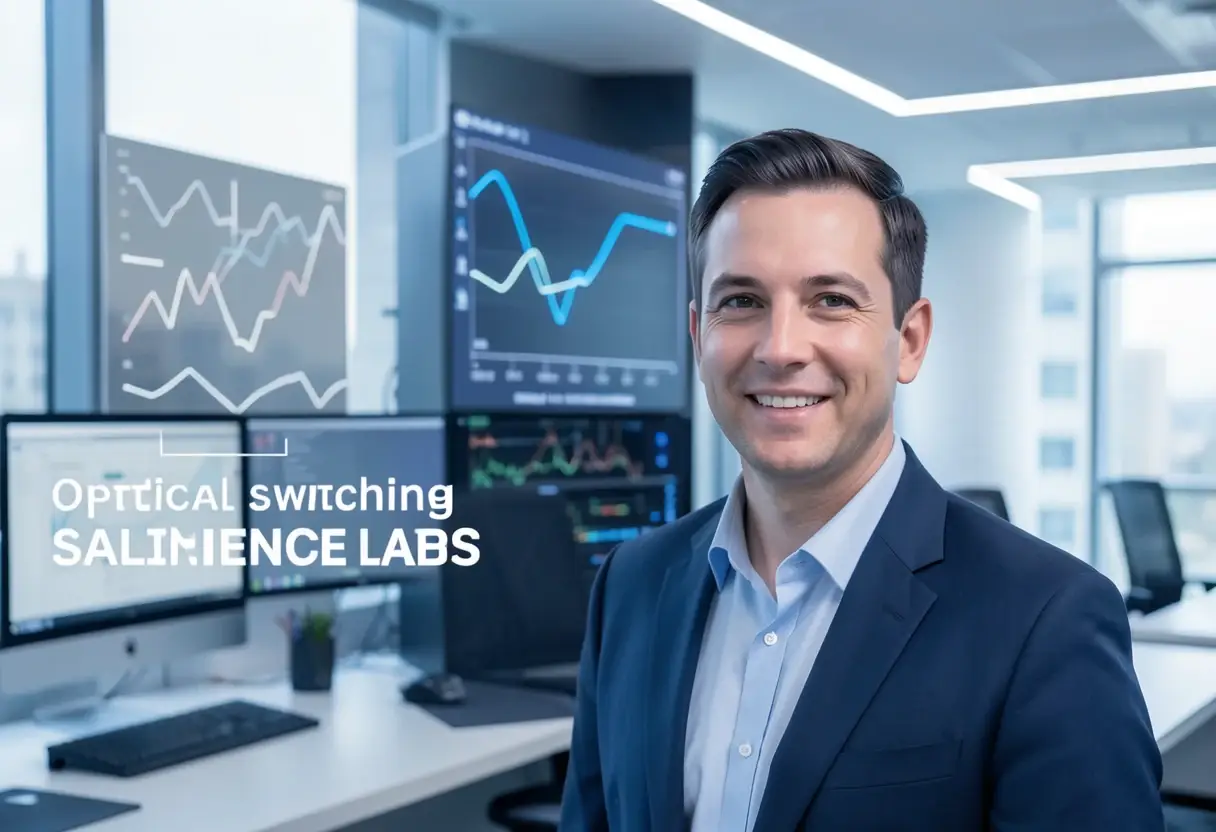
Salience Labs has raised $125 million in a Series B round to scale its optical circuit switching technology for AI data centers. Bullhound Capital led the round. AMD Ventures and Intel Capital took part, alongside SBI Group, Hudson River Trading and the British Business Bank.
Existing investors also returned. They included Applied Ventures LLC, Oxford Science Enterprises, Cambridge Innovation Capital and Silicon Catalyst Ventures.
The Oxford, UK-based company will use the money to accelerate deployment of its optical circuit switching (OCS) technology, scale volume manufacturing and expand its US presence in Silicon Valley.
What has the company shipped so far?
Salience Labs was founded in 2021. It builds photonic chips that connect AI workloads inside data centers. The product line is young but concrete.
- March 2026: the company debuted an all-optical 32-port switch.
- September 2026: it unveiled a 64-port version, an industry first for silicon photonics OCS technology.
- Next targets: 128- and 256-port configurations.
That port-count trajectory matters. Larger port counts widen the scale-up domain a single switch fabric can serve, which is the core constraint on how big AI training clusters can grow.
Why does the network limit AI clusters?
CEO and co-founder Vaysh Kewada laid out the mechanism in an interview with SDxCentral, conducted at the company's Oxfordshire facility before the funding announcement. The problem is structural, not incremental.
"There is a fundamental network limitation on the size of the scale-up domain," Kewada said. "This is partly what is driving that deployment of optical connectivity, and at the same time, customers really need to get a good bang for the buck out of this expensive capex. What matters is utilization and latency."
In plain terms: electrical interconnects cap the number of GPUs a cluster can treat as one machine. Optical switching removes part of that ceiling. But the hardware is expensive, so buyers demand high utilization and low latency to justify the spend.
How crowded is the field?
A growing number of companies sell optical switching. Working silicon is far scarcer. Kewada drew that distinction directly.
"When you look at optical switch companies, yes, there's a growing number, but if you look at who has actually shown silicon, working silicon, it becomes a dwindling number and a handful, especially for a market that large," she said. "And this is where we're playing in a very interesting space."
Salience Labs belongs to that handful. It has demonstrated both a 32-port and a 64-port device in production-intent form within six months.
What does this change for the market?
Two chip giants now hold stakes in an OCS startup. AMD Ventures and Intel Capital joining the same round is the notable signal here. Both companies sell the accelerators and CPUs that sit behind these switches, so their participation ties optical interconnect strategy directly to their core product roadmaps.
For data center operators, the funding should translate into volume availability. The company named manufacturing scale-up and a Silicon Valley expansion as spending priorities. That points toward qualification timelines for hyperscale buyers rather than lab demos.
The 128- and 256-port roadmap is the item to watch. If Salience Labs hits those configurations, the scale-up domain for AI clusters widens again. The $125 million buys the manufacturing capacity to try.
via Data Center Dynamics (Source)
More from Marcus Bennett
Show full bio
News editor covering regulation, policy and their impact on hardware layer of artificial intelligence at Die Signal.
439 articles
Same lot · LOT-C1CC
- DSG-335945nmSalience Labs Ships 32-Port Silicon Photonics OCS for AI Scale-Up
- DSG-880714nmBroadcom Reportedly Secures $60 Billion in AI Chip Financing
- DSG-87353nmSilicon Valley Bets $5 Billion on Advanced AI Chip Facility
- DSG-30177nmApplied Materials Puts $5 Billion Into Silicon Valley AI Chip Research Hub
- DSG-823214nmUpscale AI launches platform to interconnect rival-vendor AI chips