Test report DSG-5359 · Rev B · tested November 13, 2026
AI Datacenter InfrastructureDevice under test
Sabey Signs 43.5MW Virtual PPA With Texas Solar Farm
Sabey Data Centers signed a ten-year, 43.5MW vPPA with the operating Greasewood solar farm in Texas, covering an estimated 130GWh per year toward its 2029 net-zero target.
- Read
- 3 min
- Words
- 676
- Node
- 14nm
- Operator
- Priya Raman
Spec summary
- Sabey Data Centers signed a ten-year virtual PPA covering 43.5MW of solar capacity in Texas.
- The deal is expected to generate about 130GWh annually, or 1.3TWh over the ten-year term.
- Greasewood Solar Farm in Girvin, Pecos County, Texas, is owned by Copenhagen Infrastructure Partners and has operated since 2021.
- Sabey targets net-zero Scope 1 and Scope 2 emissions by 2029.
- Sabey operates data centers in Washington, New York, Texas, Oregon, Indiana, and Virginia.
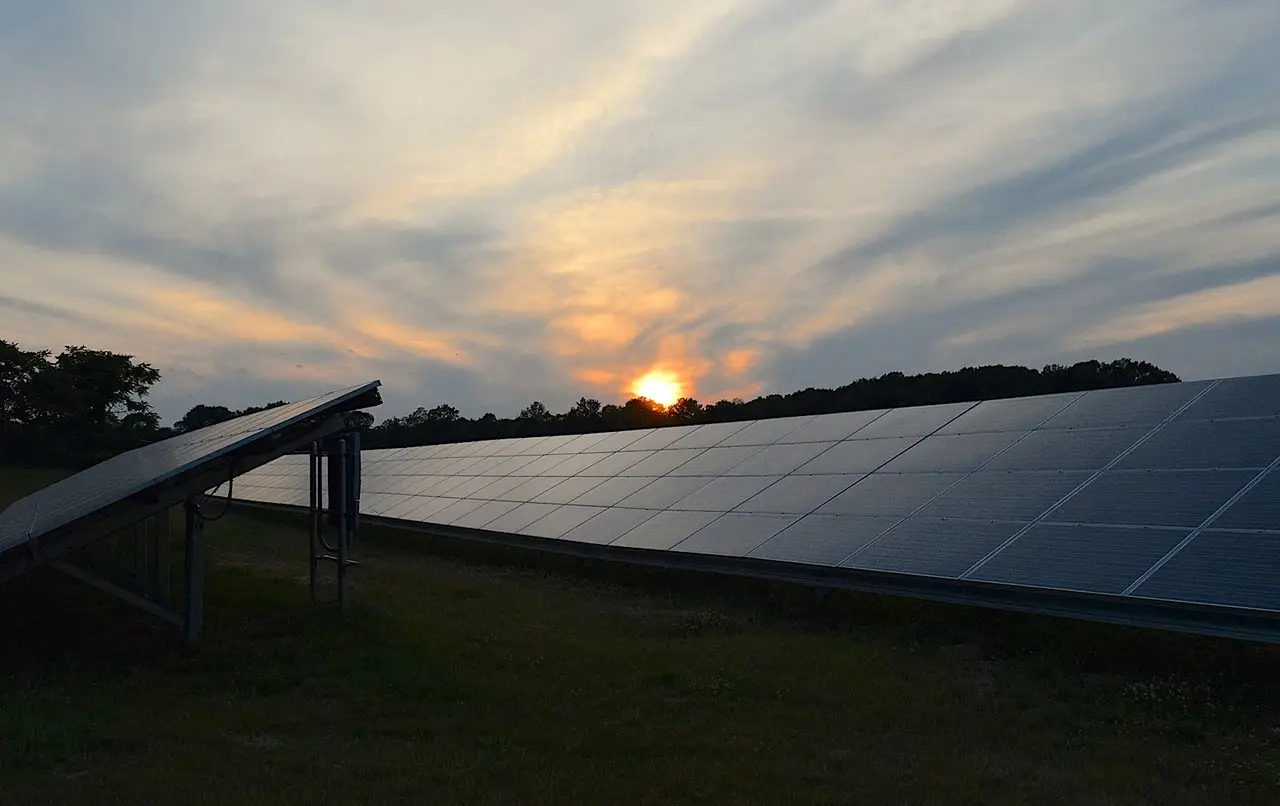
Sabey Data Centers has signed a ten-year virtual power purchase agreement (vPPA, a contract for the environmental attributes of power sold to the grid rather than physical delivery) covering 43.5MW of solar capacity in Texas. The company announced the deal this week.
The agreement targets the operating Greasewood solar project and is expected to yield roughly 130GWh annually, or approximately 1.3TWh across the full ten-year term.
Who owns the solar farm?
Greasewood Solar Farm is an operating solar photovoltaic installation in Girvin, Pecos County, Texas. Copenhagen Infrastructure Partners owns it. The farm entered commercial operation in 2021, which matters for how the claim should be read: a vPPA with an already-running plant adds no new generation to the grid. It reallocates existing output's financial and attribute risk. Sabey did not state whether the project would have operated at the same level without the contract. That question remains open.
What did Sabey say?
Casey Mason, director of energy & sustainability at Sabey Data Centers, framed the deal against the company's longer horizon. He said: "Our 2029 net-zero goal requires us to think beyond simply buying renewable energy year to year."
Mason added: "This agreement is a long-term commitment that supports renewable generation on the grid and moves us meaningfully closer to where we want to be."
Both statements are forward-looking. Neither quantifies how much the 43.5MW deal closes the gap between current emissions and the 2029 target. The company disclosed no baseline figures alongside the announcement.
What is the net-zero target?
Sabey is targeting net-zero Scope 1 and Scope 2 emissions by 2029. Scope 1 covers direct emissions from owned assets; Scope 2 covers purchased electricity. The target excludes Scope 3 (supply chain and customer emissions), which typically dominates a data center operator's footprint through embodied hardware and upstream electricity. The announcement did not address Scope 3 at all. A 2029 deadline also sits roughly two years ahead of most large data center operators' published commitments, an aggressive timeline the company did not explain in this release.
The vPPA structure is the standard instrument here. Sabey buys the renewable energy certificates while the power itself sells into the Texas grid at market prices. The contract hedges the company against price swings and lets it claim the attributes. It does not power any single Sabey facility directly.
Where does Sabey operate?
Sabey Data Centers runs facilities across the United States. Sites are in operation or development in:
- Quincy, Seattle, and East Wenatchee, Washington
- New York City
- Austin, Texas
- Umatilla, Oregon
- Indianapolis, Indiana
- Ashburn, Virginia
The Texas connection gives the Greasewood deal a degree of regional logic; Austin is the company's site nearest the Pecos County project. The announcement did not break down how much of Sabey's total load the 130GWh per year represents. Without that number, the proportional impact on Scope 2 accounting cannot be independently assessed.
What is not in the announcement?
Several material details are absent. The release specifies no pricing, no contract start date, and no counterparty revenue terms. It does not say whether the vPPA covers all of Greasewood's output or a tranche of it. Copenhagen Infrastructure Partners issued no parallel statement quoted in the announcement, and no executive from the owner commented publicly in the release.
The 1.3TWh figure is an estimate, not a guarantee. Actual generation depends on weather, curtailment in the Texas market, and grid conditions at ERCOT (the state's independent grid operator). Ten-year solar output in West Texas carries meaningful interannual variance, and the announcement includes no degradation assumptions for the plant's panels.
Why it matters
For a mid-sized operator, a decade-long 43.5MW commitment signals durable intent rather than spot purchases of certificates. The 2029 net-zero deadline now has at least one long-dated instrument behind it. What remains unpublished is the arithmetic: current emissions, expected reduction from this contract, and the residual gap. Until those numbers appear, "meaningfully closer" is a claim, not a measurement.
via datacenterdynamics.com (Source)
More from Priya Raman
Show full bio
Correspondent covering money, funding and market shifts around hardware layer of artificial intelligence at Die Signal.
573 articles
Same lot · LOT-3629
- DSG-170410nmGoogle to fund 440MW solar PPA and 1.4GWh storage for West Memphis
- DSG-489114nmUruguay Signs $5.7bn Solaria Deal for 500MW of Data Center Capacity
- DSG-229120nmMarwynn Signs MoU for Up to $500m AI Data Center and Solar Campus in Grenada
- DSG-316665nm1GW Data Center Proposed Beside 1.3GW Solar Farm in Norfolk
- DSG-188065nmConsortium Plans 400MW AI Data Center Complex in Oman