Test report DSG-7447 · Rev D · tested November 11, 2026
Foundries & ManufacturingDevice under test
Rapidus Weighs One-Year Delay for 2-Nanometer Mass Production
Rapidus may push 2nm mass production from fiscal 2027 to fiscal 2028 as transistor-linking and yield problems slow Japan's state-backed bid to rejoin the leading edge.
- Read
- 3 min
- Words
- 625
- Node
- 28nm
- Operator
- Elena Vasquez
Spec summary
- Rapidus is considering delaying 2nm mass production from H2 fiscal 2027 to fiscal 2028, Jiji Press reported on the 11th.
- The Japanese government plans over 3 trillion yen in subsidies and equity for Rapidus through fiscal 2027.
- Rapidus was founded in August 2022 with backing from Toyota, Sony, NTT and SoftBank, partnering with IBM to jump from 40nm to 2nm.
- The company produced a prototype transistor in July last year but struggles with interconnect technology and yields.
- TSMC posted record October revenue on strong 2nm demand, while Samsung and Intel race to improve yields.
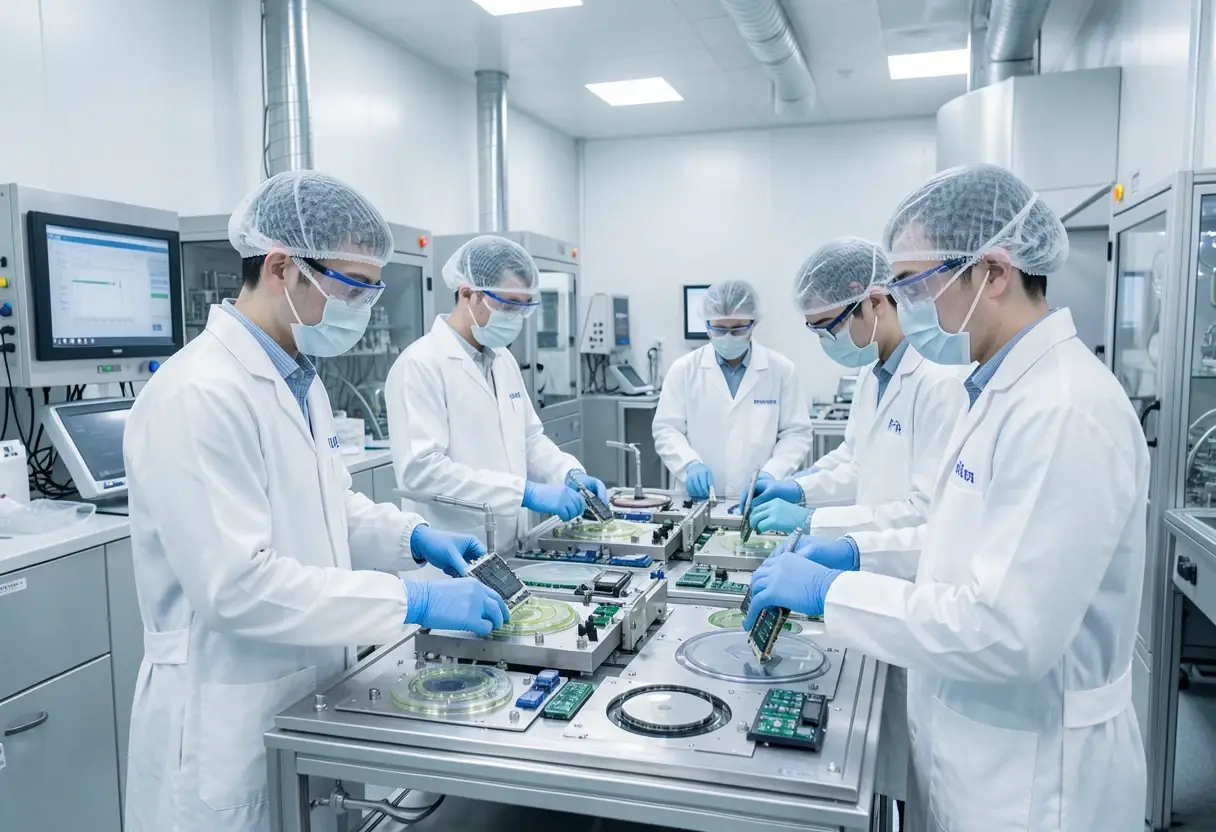
Rapidus is weighing a one-year delay in mass production of 2-nanometer chips, moving the target from the second half of fiscal 2027 to fiscal 2028, Japan's Jiji Press reported on the 11th. That shifts the start window from April 2027–March 2028 to April 2028–March 2029 — a full year of breathing room the company hopes it won't need.
For practitioners, the reason matters more than the date. The holdup isn't the transistors themselves. Rapidus produced a prototype transistor back in July last year. The bottleneck is everything around them: connecting transistors to one another and integrating them with other components, according to people familiar with the matter who spoke to Jiji. That interconnect work is what's making it hard to hit the performance targets the chips require.
Where exactly is the plan stuck?
Two problem areas surfaced in the report:
- Interconnect and integration technology — linking transistors and combining them with other components without losing performance.
- Yield improvement — progress has been slow. Yield measures the share of chips on a wafer that actually meet spec, relative to the wafer's maximum design capacity. Low yield means you're paying full wafer costs for a fraction of sellable output, so it hits productivity directly.
The company isn't conceding anything publicly. Rapidus said it will "continue to do everything possible to meet the target of starting mass production in the latter half of fiscal 2027." That's a firm-on-paper stance that leaves room for the fiscal 2028 fallback Jiji describes.
Why the jump was always ambitious
Rapidus was born in August 2022 out of a public-private consortium backed by Toyota, Sony, NTT and SoftBank. Its strategy skips the intermediate steps most manufacturers take: the company set out to leap from 40-nanometer technology straight to 2 nanometers, relying on a technology partnership with IBM of the United States.
That's roughly two decades of process-node progress compressed into a single jump. The prototype transistor in July last year suggested the bet could pay off. The current interconnect and yield struggles show where the plan gets unforgiving.
What's at stake for Tokyo?
A delay would be a painful setback for the Japanese government, which is pouring money into the company to revive Japan's semiconductor industry. Tokyo plans to provide more than 3 trillion yen — about 25.26 trillion won — in subsidies and equity investment through fiscal 2027.
To put that in perspective, that's state backing on the scale of a national industrial program, not a typical R&D grant. Every slipped quarter weakens the return argument for that spending.
How does the competitive clock look?
Two-nanometer chips are what Jiji's sources call a "dream technology" for chipmakers, and the race is already crowded. Taiwan's TSMC, the world's largest contract chipmaker, posted record revenue in October — widely read as proof of strong demand for its cutting-edge 2-nanometer output. South Korea's Samsung Electronics and Intel of the U.S. are both working to improve their own yields as the competition runs on.
The frontier is moving too: development of 1.4-nanometer technology, the generation after 2 nanometers, is advancing quickly.
So even if Rapidus holds its fiscal 2027 target, it enters mass production against rivals who are already shipping the node and building the next one. A one-year slip to fiscal 2028 widens that gap at exactly the moment Japan's 3-trillion-yen bet is supposed to start paying off.
Watch for confirmation on the timing. Until Rapidus says otherwise, the official line remains the second half of fiscal 2027 — but the technical detail behind the reported delay tells you where the real schedule risk sits.
via en.sedaily.com (Source)
More from Elena Vasquez
Show full bio
Senior reporter covering people, launches and day-to-day practice in hardware layer of artificial intelligence at Die Signal.
589 articles
Same lot · LOT-3627
- DSG-794314nmJapan Pours Fresh State Money Into Rapidus for 2nm Push
- DSG-468914nmSamsung's 2nm Yield Nears 60% in Push Against TSMC
- DSG-143614nmRapidus Launches CORE Ecosystem With 17 Design Partners
- DSG-169414nmIntel Links AI Chipmaking Push to Faster Next-Gen Process Rollout
- DSG-737514nmSamsung to Start Building Second Taylor Chip Plant Next Month