Test report DSG-6227 · Rev B · tested November 17, 2026
Processors & AcceleratorsDevice under test
Nvidia's Rubin HPC: 50,000+ CUDA Cores, But the Specs That Matter Are Missing
Nvidia unveiled Rubin HPC at SC26 with 50,000+ CUDA cores for 2028 — but no memory, FP64, power or pricing specs. Here's what buyers can actually use.
- Read
- 3 min
- Words
- 689
- Node
- 5nm
- Operator
- Elena Vasquez
Spec summary
- Rubin HPC announced Nov. 16 at SC26 with 50,000+ CUDA cores, available 2028
- Nvidia disclosed no memory capacity, FP64 rate, power draw, price or launch partners
- Current Rubin GPU has 28,672 CUDA cores; new part is at least 1.7x that count
- Top 10 HPCG systems achieve under 3% of peak on sparse workloads
- AMD MI455X-class rival MI430X lists 288 FP64 teraflops and 23.3 TB/s bandwidth for 2027
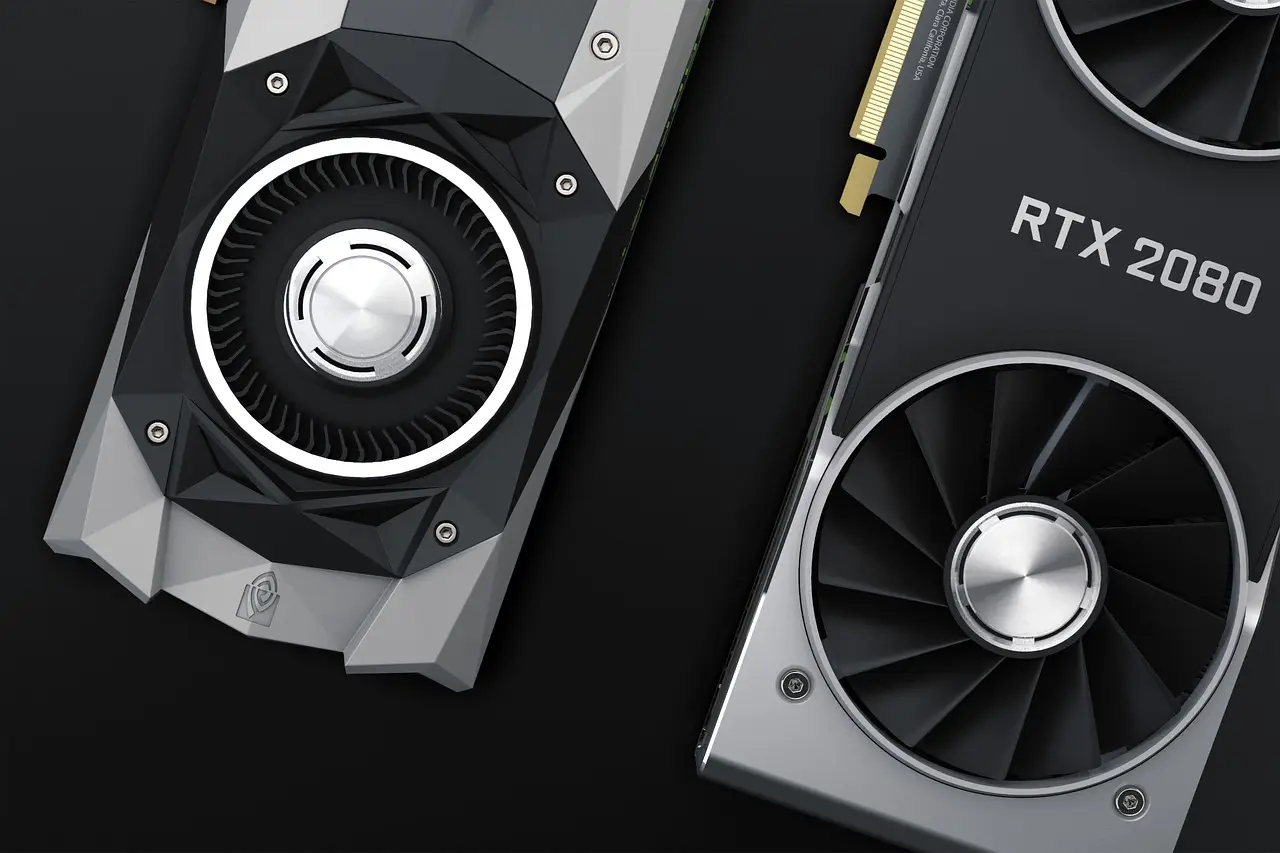
Nvidia announced Rubin HPC at the SC26 supercomputing conference on Monday, Nov. 16: a GPU with more than 50,000 CUDA cores that won't be available until 2028. The company published no price, no memory capacity, no power draw and no double-precision rate alongside it.
That gap is the real story for practitioners. The workloads Rubin HPC targets — sparse matrix math, stencil codes, sorting and reductions — tend to wait on memory, not arithmetic. Buyers planning 2028 supercomputers now hold one big number and no way to convert it into runtime estimates.
The timing is loaded, too. The reveal landed four days after Jensen Huang resigned as CEO and one day before Nvidia's fiscal third-quarter report, scheduled for Tuesday, Nov. 17, at 2 p.m. PT, covering the quarter ended Oct. 25.
What does the announcement actually contain?
Rubin HPC sits inside the Vera Rubin platform rather than forming a separate generation. Nvidia names three headline features: 50,000+ CUDA cores per GPU, a sparse data acceleration capability, and seventh-generation NVLink. The company says the GPU "features a record number of CUDA cores" paired with "a sparse data acceleration capability that keeps those cores fed with data" — wording with no benchmark, unit of speed or comparison attached.
In a statement reported by SiliconANGLE, Nvidia said: "Rubin HPC accelerates the simulations agents use to test ideas and guide their next steps, helping scientists and engineers explore more possibilities and bring breakthroughs closer." That's aspiration, not a measurable claim.
Nvidia also announced expanded CUDA-X libraries (cuPhoton, cuPotential, cuSpa), CUDA Toolkit 13.5 general availability with Vera Rubin support, Slurm 26.11 with CUDA-Q quantum-classical workflow support, an IBM-Fermilab quantum codesign collaboration, a Nemotron for Science package, and a Vera CPU platform for HPC.
Why 50,000 cores can mislead you
Tom's Hardware reported today's Rubin GPU carries 224 streaming multiprocessors and 28,672 CUDA cores. Simple division puts the new part at 1.7 times that count. Tom's Hardware also speculated the jump might imply a four-die package like Rubin Ultra, but Nvidia hasn't described the layout.
"CUDA core" isn't a standard unit — lane counts differ for FP32, FP16 and FP64, and they shift chip to chip. Without an FP64 figure, the 50,000 count can't be converted into double-precision teraflops.
Here's the caution flag: none of the top 10 systems on the November 2025 HPCG list, which models real sparse-matrix access patterns, broke 3 percent of peak performance. El Capitan led that list at 0.6 percent of peak; Fugaku hit 3.0 percent, Frontier 0.7 percent, Aurora 0.3 percent. Kernels doing little arithmetic per byte hit a memory-bandwidth ceiling, and extra cores just idle.
What about NVLink 7?
The current NVL72 rack runs NVLink 6 at 260 TB/s all-to-all, 3.6 TB/s per GPU. Nvidia published no NVLink 7 bandwidth figure. That matters because simulation jobs split grids across many GPUs and swap boundary data every step — when per-GPU compute grows 1.7x or more, the fabric must keep pace or communication becomes the bottleneck.
What's the competitive picture?
Rivals have published harder numbers. AMD's Instinct MI430X page lists up to 288 teraflops of hardware FP64 peak, 432 GB of HBM4 and 23.3 TB/s of bandwidth for a 2027 launch. Intel pitched its FP64-capable D270 GPU at simulation workloads at the same show. Nvidia's 81% share of the TOP500 list gives it incumbency, but FP64 is exactly where rivals attack.
Nvidia did give near-term HPC buyers something: a liquid-cooled MGX rack with 192 Vera CPUs linked by Quantum-X800 InfiniBand, from Dell, HPE, Lenovo and Supermicro starting in early 2027, per StorageReview.
What should buyers do now?
Practical moves: ask vendors for sparse-kernel results, not peak teraflops; write memory bandwidth and FP64 rate into any 2028 RFP as required disclosures; and keep CUDA-X and CUDA 13.5 compatibility on the checklist — the software path is the one part Nvidia has made concrete.
via shattered.io (Source)
More from Elena Vasquez
Show full bio
Senior reporter covering people, launches and day-to-day practice in hardware layer of artificial intelligence at Die Signal.
675 articles
Same lot · LOT-362D
- DSG-70383nmNVIDIA Confirms Rubin HPC: 50,000+ CUDA Cores, Landing in 2028
- DSG-27505nmNvidia unveils Rubin HPC GPU with over 50,000 CUDA cores
- DSG-256610nmCUDA 13.5 vs ROCm 10.1: 20 Years Meets a Six-Week Clock
- DSG-75847nmNVIDIA's DGX Spark HPC Kit: 512 GB, Four Nodes, No Price
- DSG-112814nmOracle Lines Up Nvidia, Google and Cerebras AI Chips for Its Cloud