Test report · tested November 24, 2026
Processors & AcceleratorsDevice under test
Nvidia Adds $900 Billion as Huang Returns as CEO
Nvidia reinstated Jensen Huang as CEO, president and board member on Monday. The stock rose more than 31% and added over $900 billion in market capitalization.
- Read
- 5 min
- Words
- 960
- Segment
- Processors & Accelerators
- Operator
- Priya Raman
Spec summary
- Nvidia reinstated Jensen Huang as CEO, president and board member on Monday, less than two weeks after his resignation.
- Nvidia shares climbed more than 31% and added over $900 billion in market capitalization, per Reuters.
- The Nasdaq Composite rose about 6-6.6%, the S&P 500 about 4.75%, and the Dow roughly 1,550 points, or 3.2%.
- Short sellers lost $12.2 billion on Nvidia in one day, according to Ortex data.
- Nvidia cited confidence that Huang posed no national-security risk; resignation reasons remain unconfirmed.
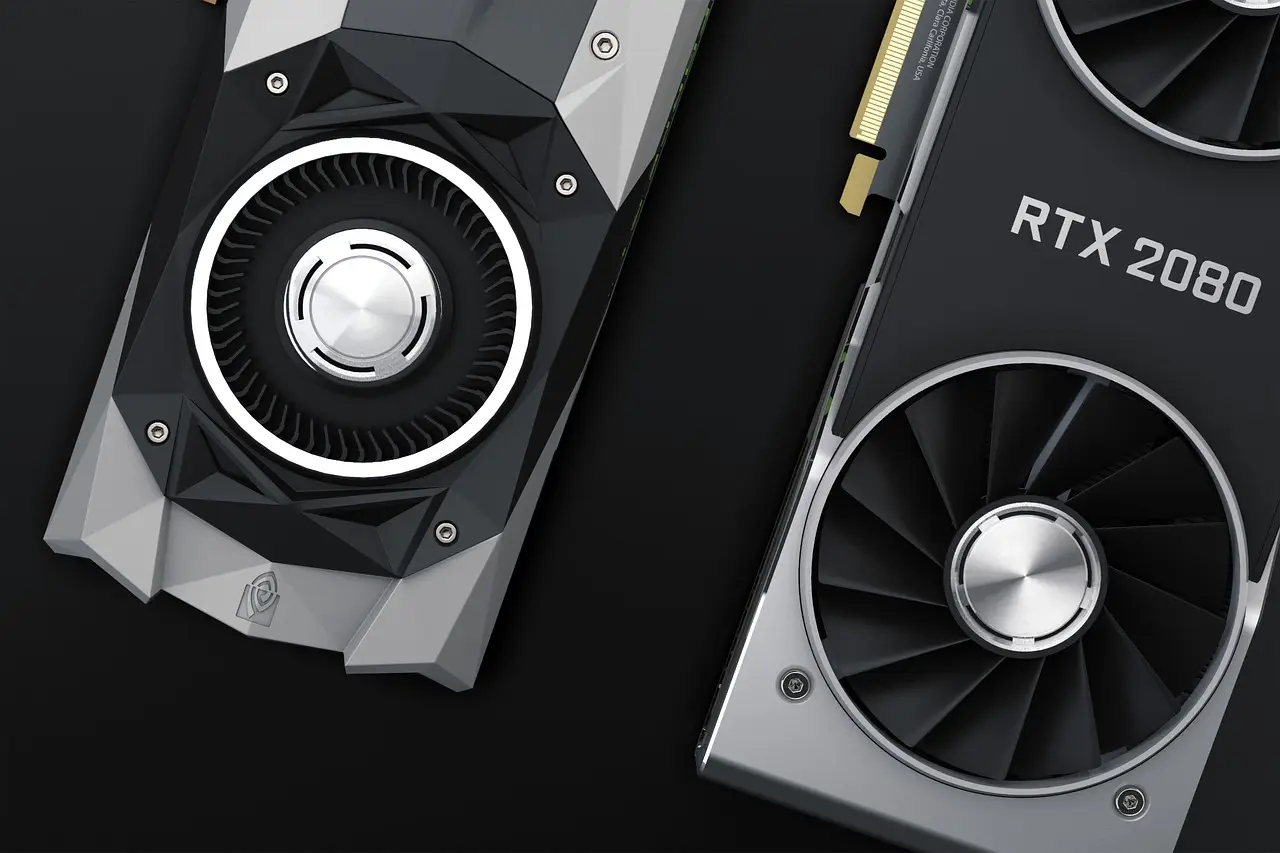
Nvidia added more than $900 billion in market capitalization on Monday after reinstating co-founder Jensen Huang as chief executive, Reuters reported. Shares climbed more than 31% in the session. The company named Huang chief executive, president and a board member, effective immediately, less than two weeks after he resigned.
The reversal stunned traders. Glen Smith, chief investment officer at GDS Wealth Management, told CNN: "The shocking decision to reinstate Jensen Huang as CEO helps to remove a key level of uncertainty from the AI trade, which has been suffering in recent weeks."
Mark Gibbens, founder of Gibbens Capital Management, put it more directly to CNBC: "I think the AI trade is back on."
What does the reinstatement change?
Huang co-founded Nvidia, and investors link its product cadence, supplier relationships and customer trust to him personally. His exit left the sector's bellwether without a leader for eleven days. His return restored certainty, at least for now.
Nvidia's official rationale is narrow. The company said it reinstated Huang after gaining confidence that he did not pose a national-security risk. That statement describes the company's own assessment, not any outside finding. Reports mention allegations about personal conduct and foreign-intelligence ties, plus concerns about an investigation. We do not repeat them as fact. Nobody should read Monday's rally as evidence those questions are answered.
How far did the rally run?
The move was broad, not a one-stock pop. The figures differ slightly between outlets because they sampled the session at different times.
- Nvidia shares: more than 31% (BBC, CNBC); Markets Insider headlined 33%
- Market capitalization added: more than $900 billion (Reuters, early afternoon)
- Nasdaq Composite: about 6% to 6.6%
- S&P 500: about 4.75% (BBC)
- Dow Jones Industrial Average: about 1,550 points, or 3.2% (AP, 2:11 p.m. Eastern)
Euronext's live feed noted Treasury yields rose alongside equities. That pairing signals a risk-on shift rather than a flight to safety. Reuters coverage said both the S&P 500 and the Dow had entered correction territory by the previous Friday amid AI valuation concerns; Monday's gains pulled both benchmarks back.
Why did the market need this?
The AI trade had been under strain for weeks. Chip sector forward price-to-earnings ratios (expected earnings multiples) had fallen to about 10 as roughly $4 trillion in market value vanished over six weeks, citing AFP and Bloomberg figures. Rental prices for older Nvidia GPUs rose nearly 60% even as the stock sank 14%, which suggests customers still wanted the hardware. The price, not demand, was the weak link.
Short sellers felt the reversal first. Ortex data put short-seller losses on Nvidia at $12.2 billion in one day. Covering by shorts fed the rally, a familiar mechanical effect when a heavily bet-against stock turns.
Terry Reitzes, a technology analyst quoted by Markets Insider, summed up the mood with a line beginning "Jensen's back" and tying the rest of the market to the same outcome. Lance Roberts, chief investment strategist at RIA Advisors, told CNN: "Nvidia is a key player in the whole AI space … particularly with these neoclouds." (Neoclouds are newer GPU-focused cloud providers that depend on Nvidia supply.)
David Miller, chief investment officer at Catalyst funds, said the reinstatement could catalyze a broader AI recovery. That is a prediction, not a fact. The next several weeks will test it.
What about the product roadmap?
Leadership continuity matters for the Vera Rubin generation, shown with the Vera Rubin NVL72 computer and the Vera MGX Compute Node. Reports describe a planned Vera Rubin Ultra platform, with an architecture called Feynman targeted for 2028. Treat these as reported plans; no independent benchmark scores are available. One secondary report claims Vera Rubin is already in mass production. We could not confirm it, so treat it as unverified.
Suppliers including Kinsus, SPIL and Amkor plan capacity against Nvidia's forecasts. A chief executive who disappears for a fortnight and returns leaves those suppliers guessing. The H200, several generations behind Vera Rubin, was cleared for China sales after lobbying from Huang — evidence his influence reaches trade policy as well as product design.
Who gains and who loses?
- Memory makers such as Samsung and SK hynix benefit from a steadier AI demand outlook.
- Neoclouds gain restored confidence; they raise money against GPU fleets, and lenders price Nvidia's roadmap into the collateral.
- Challenger chip startups lose their supplier-risk argument. Marlowe raised $277 million at a $1.15 billion valuation to rival Nvidia; a stable Nvidia is a harder target.
- AMD and rivals whose names appeared on flash-sale lists, including Sandisk and Silicon Motion, likely shared the rebound.
What could still go wrong?
Four risks stand. The resignation circumstances remain open, and any verified development could swing the trade back. AI valuations still look stretched to skeptics; a chief executive's return cannot justify a multiple on its own. Export-control tightening could hit revenue regardless of who runs the company. And execution: if the Vera Rubin mass-production claim proves false or early, customers may delay purchases.
Founders have returned before — Jobs to Apple in 1997, Schultz to Starbucks in 2008, Michael Dell in 2007, Dorsey to Twitter in 2015. None of those returns coincided with a move touching the Dow, the S&P 500 and the Nasdaq this hard in one day, though that comparison is our reading of the record, not a sourced statistic.
Monday proved how much of the AI trade depends on sentiment around Nvidia, and how much of Nvidia's sentiment depends on one person. Treat the rally as a confidence reset, not a verdict. Earnings, orders and deployments still have to carry the rest.
via shattered.io (Source)
More from Priya Raman
Show full bio
Correspondent covering money, funding and market shifts around hardware layer of artificial intelligence at Die Signal.
743 articles
Same lot
- Nvidia Reinstates Jensen Huang as CEO; Stock Jumps 27% Pre-Market
- Nvidia Reinstates Jensen Huang After 12 Days; Stock Jumps 28%
- Nvidia Drops Nearly 15% on Jensen Huang's Exit — and Recovers
- Jensen Huang Resigns From Nvidia After 33 Years; Kress Named Interim CEO
- Nvidia Reinstates Jensen Huang as CEO After 11-Day Exit