Test report DSG-7506 · Rev E · tested October 10, 2026
Memory & StorageDevice under test
Netlist seeks U.S. import ban on Micron chips in Google, Nvidia AI systems
Netlist Inc. has petitioned the U.S. International Trade Commission to bar imports of Micron memory components shipped inside AI systems built by Google and Nvidia. The filing targets DRAM used in training and inference stacks.
- Read
- 2 min
- Words
- 444
- Node
- 45nm
- Operator
- Amara Osei
Spec summary
- Netlist Inc. has petitioned the U.S. International Trade Commission to block imports of Micron DRAM shipped inside Google and Nvidia AI systems
- The complaint targets DRAM components used in large-language-model training and inference workloads
- Netlist previously won a multi-hundred-million-dollar jury verdict against Samsung Electronics over LRDIMM-related memory-module patents
- The ITC has roughly 30 days after filing to decide whether to institute a full investigation
- A successful exclusion order could reach finished AI servers, accelerator boards, and reference platforms containing the accused Micron parts
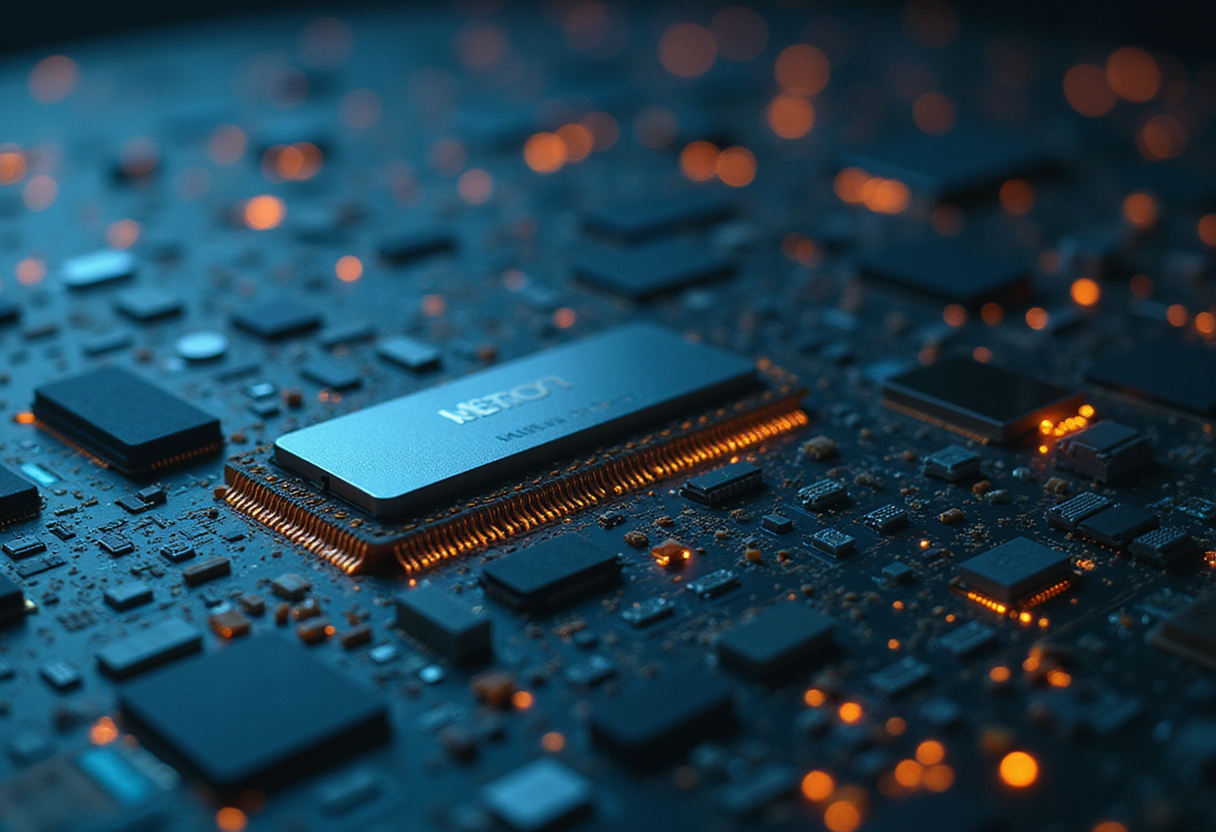
Netlist Inc. has petitioned the U.S. International Trade Commission to bar imports of specific Micron memory components shipped inside AI computing systems built by Google and Nvidia.
The filing targets Micron DRAM that ends up in the compute platforms powering Google's data centers and Nvidia's accelerators. Netlist's complaint alleges those parts practice memory-module patents the company has held and litigated for more than a decade.
What products does the filing cover?
The complaint points at DRAM components feeding the memory subsystems behind large-language-model training and inference workloads. Netlist's patent portfolio covers load-reduced DIMM architecture and related server-memory technologies.
By reaching downstream AI platforms rather than Micron alone, Netlist places the case directly against the segments consuming the largest volumes of advanced memory.
Why name Google and Nvidia as respondents?
An ITC exclusion order tied to named downstream importers reaches finished AI servers, accelerator boards, and reference platforms containing the accused Micron parts.
Naming Google's and Nvidia's product lines brings the action into the hyperscale and AI-accelerator market, where memory demand has tightened most sharply. A general exclusion order would sweep in any importer of products containing the accused Micron DRAM.
What is Netlist's litigation history?
- Pursued Section 337 and district-court claims over the same family of memory-module patents against major DRAM suppliers for more than a decade.
- Won a multi-hundred-million-dollar jury verdict against Samsung Electronics covering LRDIMM-related technology; the award was reduced on appeal, but the underlying infringement finding survived.
- Filed earlier Section 337 actions against Micron with mixed outcomes.
How does the ITC process move from here?
The Commission has roughly 30 days after the filing to decide whether to institute a full investigation. The case then goes to an administrative law judge who oversees discovery, holds an evidentiary trial, and issues an initial determination on violation and remedy. The full Commission reviews that decision. Final rulings typically arrive 12 to 18 months from filing.
If a Section 337 violation is found, remedies include:
- A limited exclusion order against named importers.
- A general exclusion order covering all importers of the infringing articles.
What is the commercial exposure?
Micron supplies high-density DRAM and HBM that feed directly into AI accelerator platforms. The named downstream respondents operate some of the largest AI infrastructure buildouts in the market.
An exclusion order of any scope would force those customers to qualify alternative memory suppliers during a period when AI memory demand is widely reported to outstrip capacity. Section 337 outcomes against major memory makers have historically moved supplier share prices on filing and on initial determination.
via Google News: AI chip (Source)
More from Amara Osei
Same lot · LOT-C1C6
- DSG-60645nmNetlist Seeks US Import Ban on Micron Memory Chips
- DSG-51147nmNetlist Seeks U.S. Import Ban on Micron Chips Used by Google, Nvidia
- DSG-96157nmNetlist Seeks US Import Ban on Micron Memory in Nvidia, Google Cases
- DSG-10543nmNetlist asks ITC to block Micron AI memory chip imports
- DSG-725045nmNetlist Files New ITC Patent Action Against Micron Over HBM Tech