Test report DSG-8792 · Rev C · tested November 17, 2026
AI Datacenter InfrastructureDevice under test
Microsoft's Rejected Oracle GPUs Put Burry's $176 Billion Warning to Test
Microsoft's November 6 exit from an Oracle GPU deal gives Burry's $176 billion depreciation warning its first real pricing data — with four hyperscalers now burning cash.
- Read
- 3 min
- Words
- 643
- Node
- 3nm
- Operator
- Amara Osei
Spec summary
- Microsoft declined to renew an Oracle GPU computing arrangement on November 6, 2026, citing outdated GPUs.
- Burry estimates overstretched chip depreciation could understate expenses by $176 billion through 2028.
- Microsoft's Q1 property and equipment additions hit $39.37 billion, more than double a year earlier, with CFO Amy Hood guiding to about $170 billion for the calendar year.
- Alphabet, Meta, Oracle and Amazon all posted negative free cash flow, with Amazon at a $42.4 billion trailing outflow.
- Burry wrote on July 9, 2026: "A chip can rent and still depreciate very fast economically."
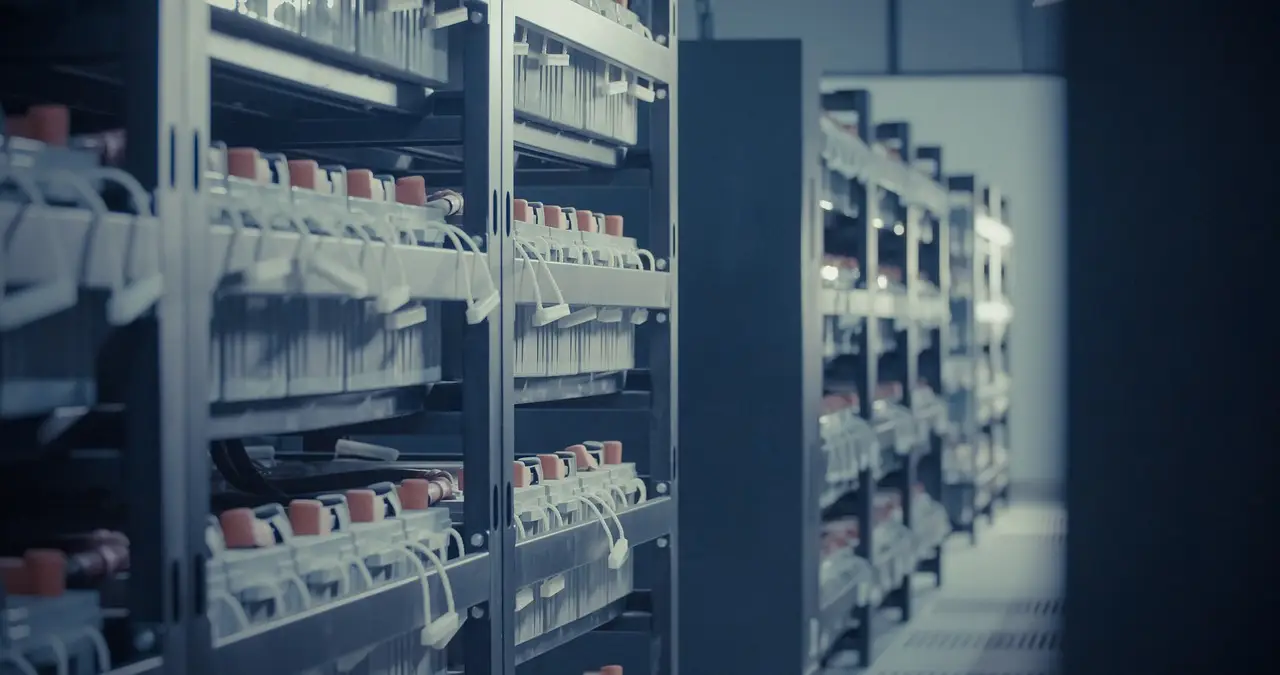
On November 6, 2026, Microsoft (NASDAQ:MSFT) declined to renew a computing arrangement with Oracle (NYSE:ORCL), reportedly because the older GPUs no longer suited its changing requirements. Oracle pushed back, saying demand remains strong and pointing to GPU contracts renewed at 20% premiums. One lapsed contract is thin evidence — but it is exactly the kind of real-world pricing data that Michael Burry's warning has so far lacked.
Burry argued that hyperscalers stretch chip depreciation schedules beyond the chips' realistic economic lives. By his estimate, the practice could understate depreciation expenses by $176 billion through 2028. He named Oracle and Meta Platforms (NASDAQ:META) as the companies most at risk. If chips lose value faster than the books assume, reported profits are too high.
What does Microsoft's own spending show?
Microsoft is refreshing hardware at a rapid pace. In its fiscal first quarter, property and equipment additions reached $39.37 billion, more than double the $19.39 billion recorded a year earlier.
CFO Amy Hood said about three-quarters of that spending went to short-lived assets, mainly CPUs and GPUs. She guided to over $50 billion next quarter and about $170 billion for the calendar year. Free cash flow came in at $18.6 billion, against $58 billion of operating cash flow.
GB300s now make up the majority of Microsoft's GPU deployments, and the company has docked its first Vera Rubin chips. When the best-informed buyer in the market picks newer silicon over older capacity, the frontier moves on fast.
Takeaway: Microsoft's own capex mix shows short-lived chips dominating its spending.
Are peers already burning cash?
Across the group, cash runs out faster than it comes in:
- Alphabet (NASDAQ:GOOGL): $51.36 billion quarterly capex, free cash flow of negative $9.07 billion.
- Meta: negative $2.12 billion free cash flow.
- Oracle: negative $5.40 billion free cash flow.
- Amazon (NASDAQ:AMZN): trailing free cash outflow of $42.4 billion.
On its call, Amazon also said it is finding ways to extend useful lives — the very accounting lever Burry flagged.
Takeaway: four hyperscalers are outspending their cash generation, and one is openly pulling the depreciation lever.
How strong is the rebuttal?
The leading AI chip supplier has the most at stake, with $279.00 billion in supply obligations. In September 2026, its then-CEO Jensen Huang — who resigned today amid allegations of extramarital affairs, including one with a purported Chinese spy and another with an Nvidia executive — cited a 22% monthly increase in H100 rental prices and A100 capacity contracted through 2029. Oracle reported GPU utilization of 97.9% and said the majority of its renewed GPUs were four years or older.
Burry anticipated this defense. In a July 9, 2026 Substack essay, he wrote: "A chip can rent and still depreciate very fast economically." His claim is narrower than the one critics attack: older GPUs keep earning, but that rental income may still fall short of the value the chips carry on the balance sheet.
Takeaway: high utilization answers a question Burry did not ask.
Which reports could reset AI profits?
Microsoft's exit is relevant but not conclusive. Oracle could rent the same chips to someone else, possibly at attractive rates. The deciding question is whether Oracle earns back its original investment over the useful life it assumed. Oracle's next quarterly report should show whether the released capacity found a new tenant, and at what price. The company has already called fiscal 2027 and 2028 peak capex years.
After that, watch Meta's fourth-quarter call and any 2027 capex guidance. A large increase paired with unchanged depreciation schedules would put Burry's question at the center of the debate. If old chips re-lease at a premium, Huang is right. If they re-lease at a discount, hyperscaler profits are overstated.
via 247wallst.com (Source)
More from Amara Osei
Show full bio
Staff writer covering money, funding and market shifts around hardware layer of artificial intelligence at Die Signal.
698 articles
Same lot · LOT-362D
- DSG-24077nmMicrosoft Q4 FY2026: Revenue Tops $90B, Capex Capped at $190B
- DSG-612214nmGoogle TPUs, Cerebras and SambaNova Accelerators Head to Oracle Cloud
- DSG-264845nmMicrosoft vs NVIDIA: Who Hits $4 Trillion Market Cap First?
- DSG-72087nmMicrosoft lets Oracle data-center lease expire amid capacity review
- DSG-63913nmMicrosoft extends data center lifespan to 25 years as Azure hits $33.2bn