Test report DSG-8759 · Rev B · tested October 12, 2026
Processors & AcceleratorsDevice under test
Microsoft's Maia 300: A New AI Chip Built to Cut Costs and Latency
Microsoft's Maia 300 accelerator targets the two constraints that decide AI economics: cost per query and response speed. First-party silicon shifts workloads off vendor chips.
- Read
- 3 min
- Words
- 539
- Node
- 14nm
- Operator
- Marcus Bennett
Spec summary
- Microsoft has introduced the Maia 300, a custom AI accelerator aimed at cheaper and faster AI processing.
- The chip belongs to Microsoft's in-house silicon program and continues the Maia product line.
- No official specifications, pricing, or deployment figures have been published yet.
- The story was first reported by HotHardware.
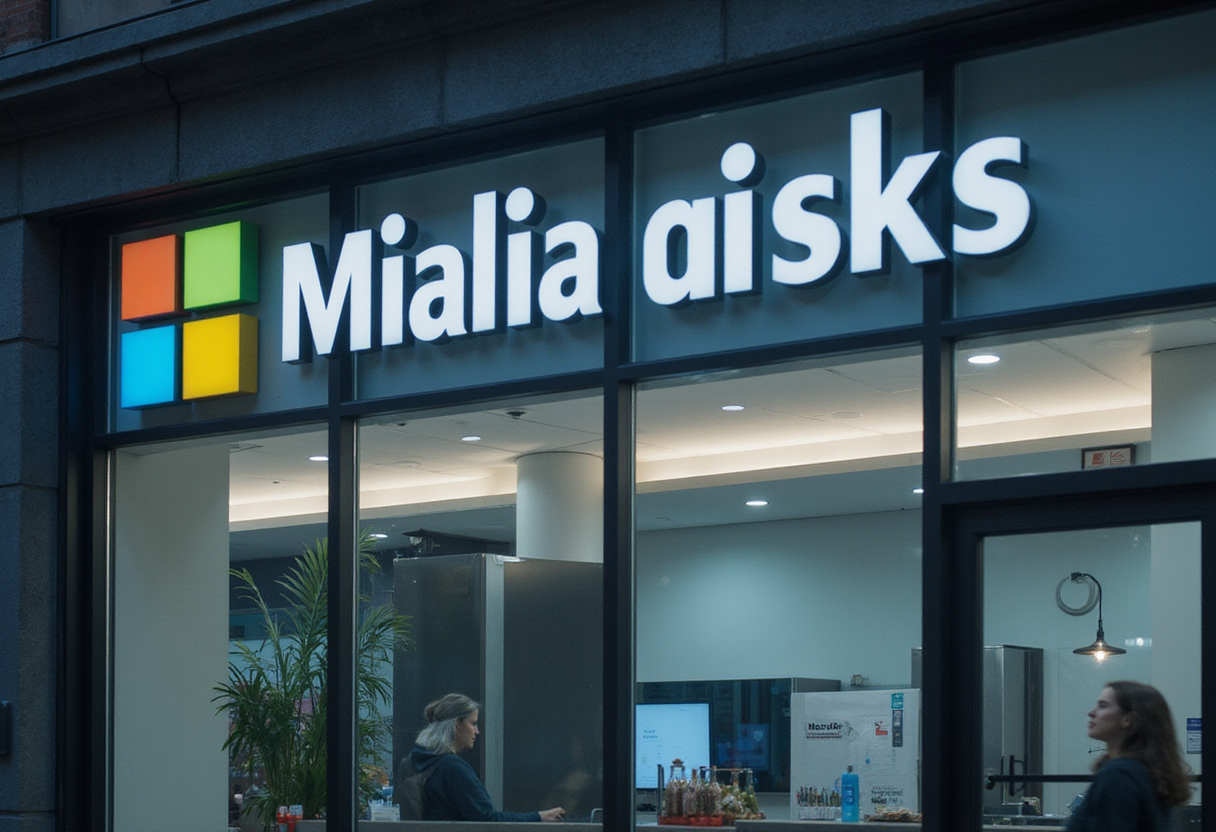
Microsoft has a new AI accelerator called the Maia 300, and the company's stated goal is straightforward: make AI processing both cheaper and faster. That is the entire pitch. It is also a pitch with direct consequences for the economics of every AI service Microsoft runs.
The chip is the latest product of Microsoft's in-house silicon program. By designing its own accelerators rather than buying them exclusively from external vendors, the company gains control over three levers at once: cost per computation, power efficiency, and how tightly the hardware matches its own software stack.
Why does a cloud company design its own chips?
The mechanism is simple. A general-purpose accelerator must serve many customers with many workloads. A first-party chip serves one operator. Microsoft can tune the Maia line to the exact inference jobs that dominate its datacenters, strip out what it does not need, and schedule workloads around the silicon's specific behavior.
That tuning shows up in the two numbers customers actually feel. Cheaper AI means a lower cost per token or per query. Faster AI means lower latency between a user's request and the response. Both numbers shape what Microsoft can charge, and what it can afford to give away.
What does this change for buyers of AI services?
For enterprises buying AI capacity through Azure, the practical question is whether first-party silicon bends the price curve. Custom accelerators have historically lowered unit costs for hyperscalers. If Microsoft passes part of that saving downstream, inference-heavy workloads get cheaper to run at scale. If it keeps the margin, the chip still strengthens Microsoft's competitive position against rivals with similar silicon programs.
For chip vendors, the signal is less comfortable. Every workload moved onto Maia is a workload moved off someone else's accelerator. Microsoft does not need to displace external suppliers entirely; shifting even a share of internal inference demand changes procurement volumes across the market.
The strategic read
The Maia 300 sits in a well-established pattern. The major cloud operators now treat custom silicon as core infrastructure rather than an experiment. Microsoft's earlier Maia-generation parts proved the concept; a numbered successor line indicates a product roadmap, not a one-off project.
What does this change for the broader AI market? It puts downward pressure on the cost of inference, which is the line item that grows fastest as AI products reach mass use. Cheaper inference expands the set of applications that make economic sense. Faster inference expands the set of applications that feel responsive enough to ship.
Microsoft has not yet published full specifications, pricing, or deployment figures for the part. HotHardware, which first reported the story, frames the chip's purpose as reducing both the cost and the speed penalty of AI workloads. The concrete numbers will matter when they arrive.
Until then, the takeaway is structural. The company that runs some of the world's largest AI services now builds more of the hardware underneath them, and it designs that hardware to attack the two constraints — cost and latency — that decide whether AI products survive contact with real users.
We will update this story as Microsoft releases benchmark data and availability details.
via Google News: AI chip (Source)
More from Marcus Bennett
Show full bio
News editor covering regulation, policy and their impact on hardware layer of artificial intelligence at Die Signal.
315 articles
Same lot · LOT-C1C8
- DSG-70923nmMicrosoft Plans Large-Scale Rollout of Its Own AI Chips to Cut Costs
- DSG-61057nmMicrosoft Targets Nvidia Reliance Cuts With Maia 300 AI Chip
- DSG-90885nmMicrosoft's Maia 300 Claims 40% Efficiency Gain Over Nvidia
- DSG-26215nmMicrosoft Unveils New AI Chip in 'Biggest Bet Yet' on Own Silicon
- DSG-187665nmMicrosoft Unveils Maia 300 to Cut AI Chip Dependence on Nvidia and AMD