Test report DSG-9088 · Rev C · tested October 12, 2026
Processors & AcceleratorsDevice under test
Microsoft's Maia 300 Claims 40% Efficiency Gain Over Nvidia
Microsoft's new Maia 300 AI chip claims 40% greater efficiency, a direct challenge to Nvidia's dominance in data-center AI accelerators and cloud compute economics.
- Read
- 4 min
- Words
- 772
- Node
- 5nm
- Operator
- Marcus Bennett
Spec summary
- Microsoft announced the Maia 300 AI chip with a claimed 40% efficiency improvement
- The chip positions Microsoft as a direct challenger to Nvidia in AI accelerators
- Maia 300 is part of Microsoft's in-house silicon line, designated a next-generation part
- Microsoft is among Nvidia's largest customers through its Azure AI infrastructure
- Microsoft has not published the benchmark methodology behind the 40% figure
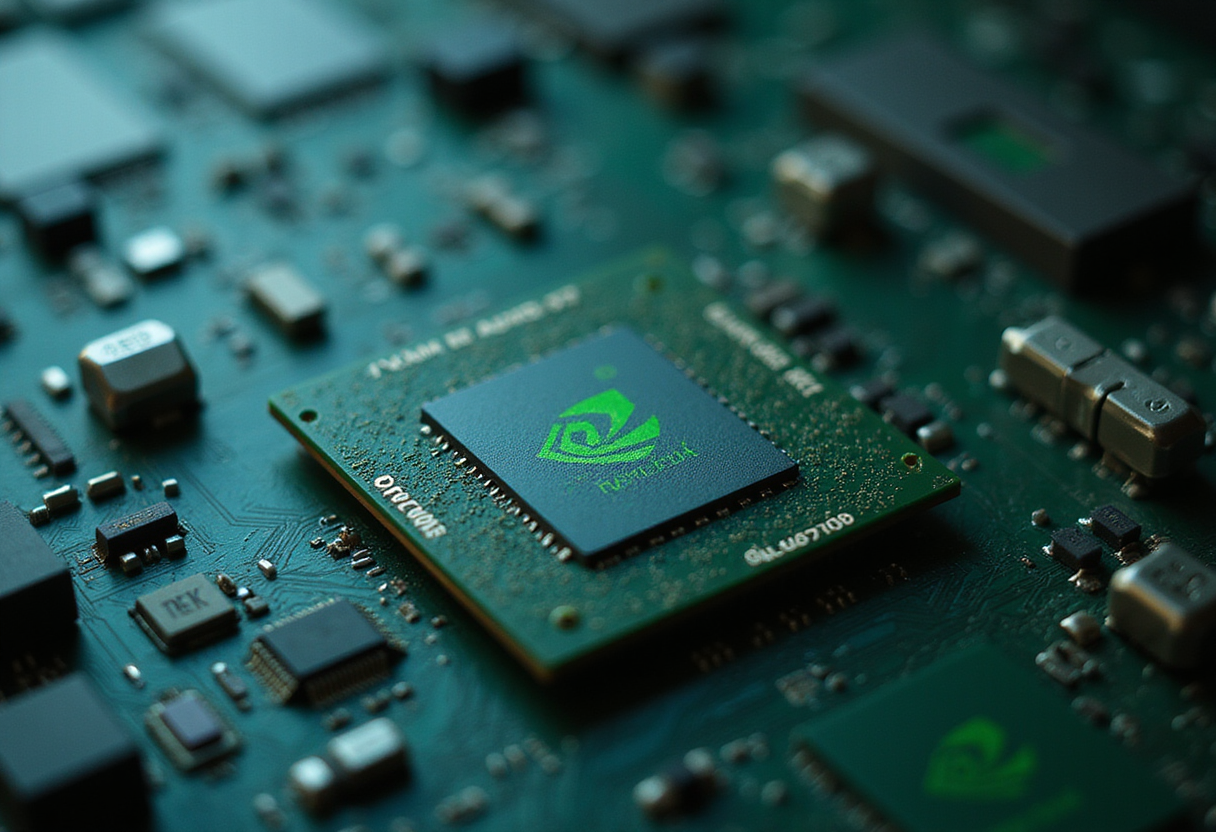
Microsoft says its new Maia 300 AI chip delivers 40% greater efficiency, positioning the in-house accelerator as a direct challenge to Nvidia's grip on the AI compute market. The figure is the headline specification of the announcement and frames the latest move in the escalating race among hyperscalers to design their own silicon.
The claim of a 40% efficiency improvement is the hardest number Microsoft has put forward. Efficiency, in the context of AI accelerators, typically refers to performance per watt — the metric that increasingly determines the economics of large-scale model training and inference, because power delivery and cooling, not raw chip cost, now cap how much compute a data center can host.
What is Microsoft actually claiming?
The company has named the chip Maia 300 and paired the product with a single quantified promise: 40% greater efficiency. Microsoft has not framed the Maia line as a hobbyist or edge product. It sits squarely in the data-center accelerator category, where Nvidia's hardware currently anchors most large AI training clusters.
The significance lies in who is building it. Microsoft operates some of the largest AI infrastructure footprints in the industry through its Azure cloud, and it counts itself among Nvidia's biggest customers. Every accelerator the company qualifies for its own workloads reduces its dependence on external silicon supply — supply that has been allocation-constrained since the generative-AI buildout began.
Why does a first-party chip threaten Nvidia?
Hyperscalers designing their own accelerators changes the buyer-seller dynamic in the AI hardware market. Nvidia sells GPUs to cloud operators; Microsoft builds and deploys its own.
The strategic logic runs along three lines:
- Cost control. Custom silicon eliminates the vendor margin on the most expensive line item in AI infrastructure.
- Supply security. First-party chips insulate cloud capacity planning from third-party allocation cycles.
- Workload tuning. A chip designed for the operator's own models and serving stack can optimize for the exact inference and training profiles those workloads generate.
Microsoft has prior form here. The Maia line follows earlier generations of the company's in-house accelerator program, and the "300" designation marks this as a next-step part rather than a first attempt. The 40% efficiency figure is presented as a generational leap in that lineage.
What does the 40% number mean in practice?
Efficiency gains compound at scale. A 40% improvement in performance per watt means a fixed power budget — the binding constraint in most modern AI data centers — yields substantially more compute. For a hyperscaler running inference across millions of queries daily, that translates directly into either lower energy bills per token served or more capacity per facility.
The metric also matters for the procurement calculus of Microsoft's cloud customers. If Azure can serve AI workloads on Maia 300 hardware at better energy efficiency than GPU-based alternatives, the chip becomes a pricing lever in the cloud market, not just an internal cost play.
One caveat belongs in any sober read of the announcement: the baseline for the 40% claim is the company's own characterization, and Microsoft has not published the benchmark methodology alongside the headline figure. Trade-press readers will want third-party verification before treating the number as settled.
How does this fit the broader silicon race?
Microsoft is not alone in pulling silicon design in-house. The major cloud operators have all moved toward first-party accelerators as AI compute demand outstripped conventional procurement models. Nvidia, for its part, continues to ship its data-center GPU platforms at record volume and retains the cudde of the software ecosystem — the frameworks, kernels and tooling that most AI developers still default to.
That software moat is the real obstacle for any challenger. Hardware efficiency wins benchmarks; ecosystem lock-in wins deployments. Microsoft's task with Maia 300 is to make its toolchain seamless enough that the efficiency advantage survives contact with real customer workloads.
What comes next?
The immediate questions for buyers and competitors are deployment scale and availability. Microsoft's efficiency claim invites three follow-ups the industry will press for:
- Which Azure services will run on Maia 300, and starting when?
- Will external Azure customers get access to Maia-based instances, or is the chip reserved for first-party AI workloads?
- How does the 40% figure hold up on independent benchmarks against current Nvidia accelerators?
Until those answers arrive, the Maia 300 stands as a signal: Microsoft intends to compete on silicon, not just buy it. A 40% efficiency claim from one of Nvidia's largest customers is a market event in itself, whatever the fine print eventually shows.
via Google News: AI chip (Source)
More from Marcus Bennett
Show full bio
News editor covering marketplaces and e-commerce at Die Signal.
305 articles
Same lot · LOT-C1C8
- DSG-187665nmMicrosoft Unveils Maia 300 to Cut AI Chip Dependence on Nvidia and AMD
- DSG-28127nmMicrosoft Positions Maia 300 as Its Inference-Workload Chip
- DSG-26215nmMicrosoft Unveils New AI Chip in 'Biggest Bet Yet' on Own Silicon
- DSG-55767nmMicrosoft Targets 2027 Launch for Maia 300 AI Chip
- DSG-31655nmMicrosoft Unveils Maia 300 AI Chip for Copilot and Teams