Test report DSG-4596 · Rev C · tested October 15, 2026
Memory & StorageDevice under test
Microsoft Eyes Composable Memory to Ease Data Center Shortages
Microsoft is evaluating composable memory — pooled, fabric-shared DRAM — as a response to data center memory shortages, Digital Today reports. The approach targets capacity stranded on underused servers.
- Read
- 3 min
- Words
- 588
- Node
- 14nm
- Operator
- Elena Vasquez
Spec summary
- Microsoft is exploring composable memory to address data center memory shortages, Digital Today reports.
- Composable memory pools DRAM across servers instead of fixing capacity per machine.
- The approach aims to reclaim memory stranded on underloaded nodes for hungry AI workloads.
- The report includes no timeline or product commitment from Microsoft.
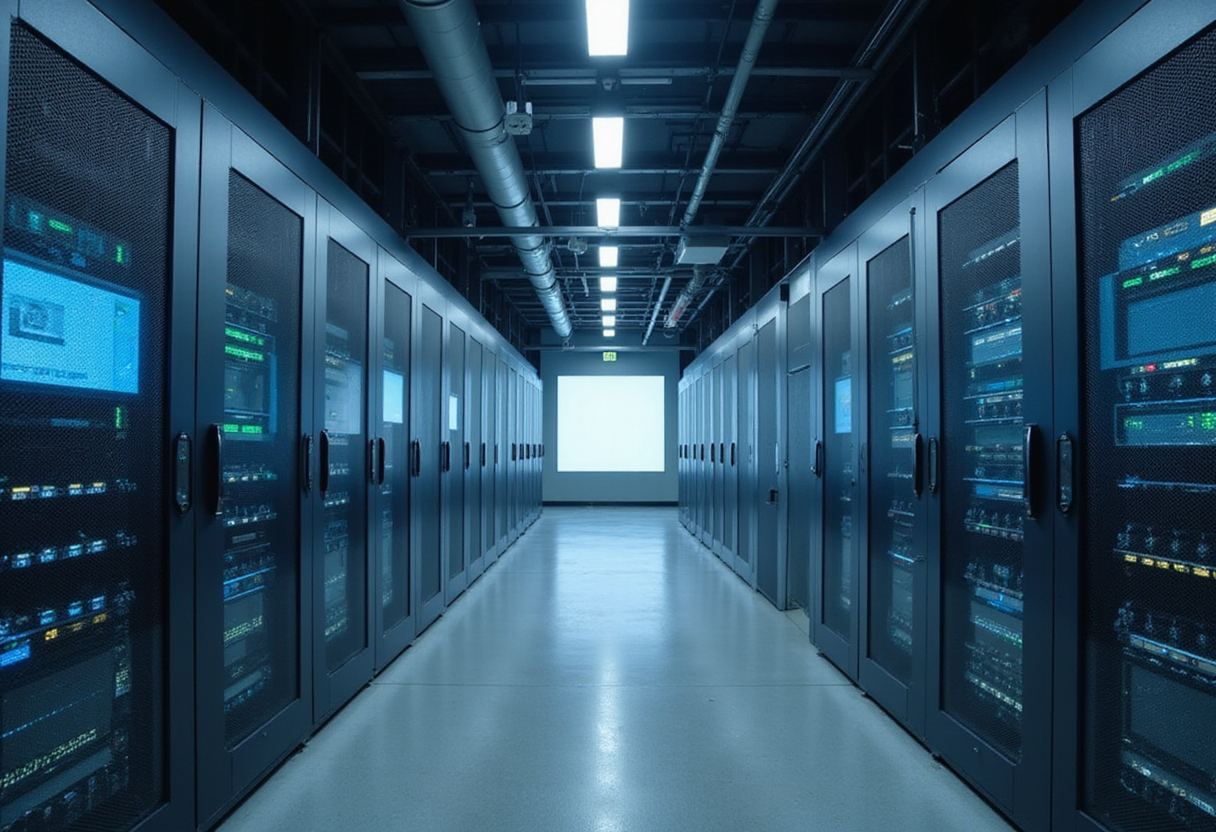
Microsoft is exploring composable memory as an answer to data center memory shortages, according to a report by Digital Today. The approach would let servers draw on pooled DRAM across the rack rather than relying on fixed memory installed in each individual machine.
For operators, that's a meaningful shift. Today, if one server has spare RAM and its neighbor is starved, the surplus sits idle. Composable memory breaks that lock — memory becomes a shared resource, provisioned on demand like compute or storage already is in disaggregated designs.
Why is Microsoft looking at this now?
The pressure comes from AI workloads. Training and inference clusters consume memory far faster than traditional web-serving fleets did, and every GPU server typically needs large amounts of DRAM to keep accelerators fed. When memory supply tightens, the constraint isn't the silicon you can buy — it's the DRAM you can't.
Composable memory attacks that bottleneck from a different angle. Instead of over-provisioning every server for its worst-case memory need, operators can size a shared pool to the average demand and let workloads borrow from it as needed. The result is the same usable capacity from a smaller total purchase.
What does composable memory change for practitioners?
If Microsoft pursues this at data center scale, it changes procurement and architecture planning in several ways:
- Memory stops being tied to a server SKU. Capacity planning shifts from per-box to per-cluster, which alters how refresh cycles and upgrades get budgeted.
- Stranded capacity gets reclaimed. RAM that would sit unused on lightly loaded nodes can serve hungry workloads elsewhere in the pool.
- Supply-shortage exposure drops. Buying for a pool rather than peak per-node demand means the same workload runs on less total DRAM.
How does it work in practice?
Composable infrastructure isn't a new concept — vendors have pitched disaggregated compute, storage and memory for years, with CXL (Compute Express Link) as the key interconnect enabling memory pooling across nodes. The idea is that fabric-attached memory appears to a server as locally addressable, with a latency penalty that's acceptable for workloads designed around it.
The hard part has always been software. Operating systems, schedulers and applications generally assume memory is local and uniform. Making pooled memory practical requires the stack to treat remote DRAM as a first-class citizen — which is presumably where Microsoft's interest, as a hyperscale operator with its own software stack, becomes relevant.
What's the context?
Memory markets have been strained by the AI buildout, as DRAM makers shift production toward high-bandwidth memory for accelerators and conventional supply tightens. Hyperscalers have responded by rethinking how they provision everything from GPUs to networking; memory is the next component getting that treatment.
A hyperscaler validating composable memory would also matter beyond Microsoft's own walls. When operators of that scale adopt an architecture, hardware vendors follow with products, and the technology tends to move downstream to smaller operators within a few product cycles.
What happens next?
Digital Today's report frames Microsoft's interest as exploratory — an acknowledgment that memory, long the predictable part of the server bill of materials, is now a strategic constraint. No timeline or product commitment appears in the report.
Still, the signal is clear. If AI demand keeps outpacing memory supply, expect composable memory to move from whitepaper territory into mainstream data center design — and expect the operators who master pooling early to get more workload per gigabyte than those still buying DRAM box by box.
via Google News: GPU datacenter (Source)
More from Elena Vasquez
Show full bio
Senior reporter covering people, launches and day-to-day practice in hardware layer of artificial intelligence at Die Signal.
382 articles
Same lot · LOT-C1CB
- DSG-475820nmMicron Warns RAM Supply Will Tighten Further as Prices Climb
- DSG-161214nmAI Demand for HBM Pushes Ordinary RAM Prices Above Cutting-Edge Chips
- DSG-698228nmMicron Earnings: AI Chip Demand Drives Fresh Memory Boom
- DSG-258745nmApacer CEO Warns of 70% DRAM Module Supply Drop in 2027
- DSG-90945nmMicron CEO: Memory Shortage Has No End in Sight, Will Probably Get Worse