Test report DSG-2587 · Rev D · tested October 10, 2026
Memory & StorageDevice under test
Apacer CEO Warns of 70% DRAM Module Supply Drop in 2027
Apacer's CEO has warned that DRAM chip supply to module makers could drop by more than 70% year-on-year in 2027, as HBM and server RAM demand absorb manufacturing capacity.
- Read
- 3 min
- Words
- 626
- Node
- 45nm
- Operator
- Amara Osei
Spec summary
- DRAM chip supply to module makers could drop by more than 70% year-on-year in 2027
- Warning attributed to the CEO of Taiwanese memory specialist Apacer
- Driver: AI-driven HBM and server RAM demand absorbing manufacturing capacity
- Module makers sit below hyperscalers, GPU vendors, and server OEMs in the allocation hierarchy
- Apacer has not disclosed the specific share of its supply affected by the projection
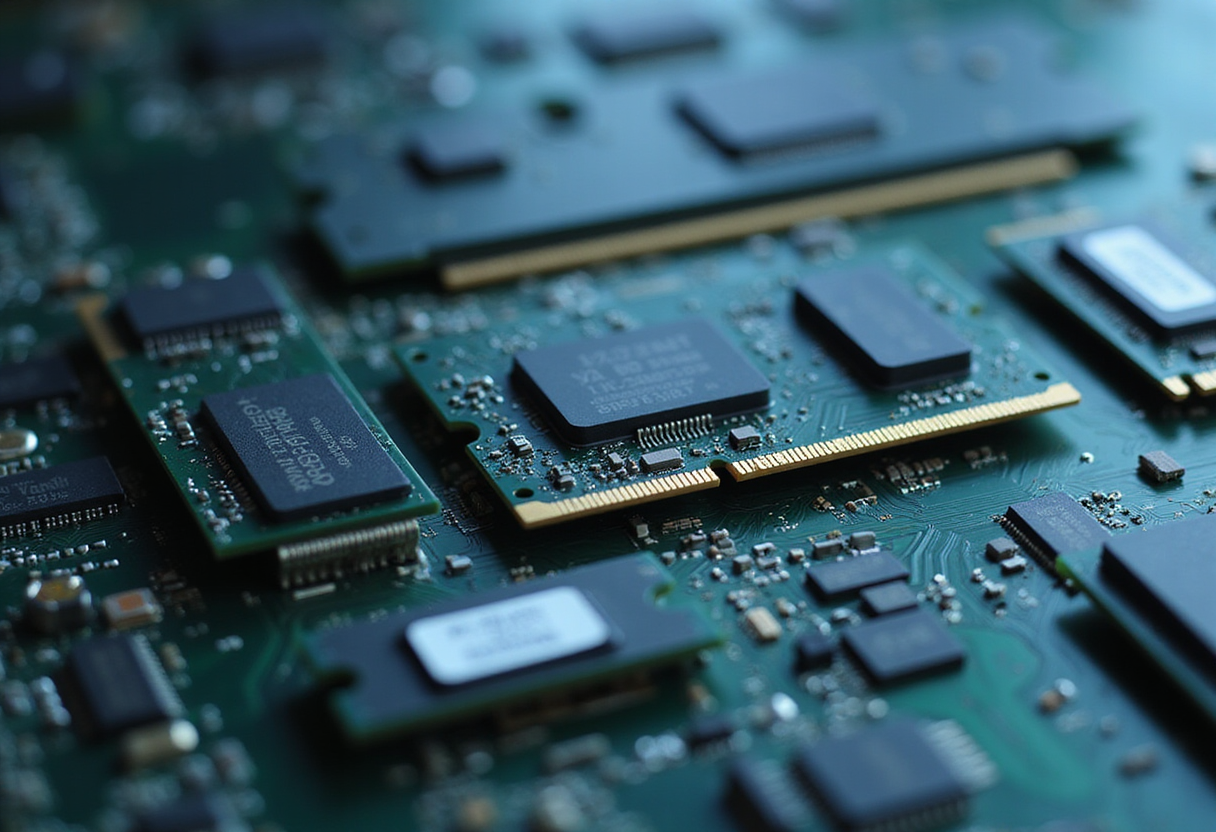
Module makers face a DRAM chip supply contraction of more than 70% year-on-year in 2027, the chief executive of Taiwanese memory specialist Apacer has warned, as high-bandwidth memory and server RAM continue to absorb manufacturing capacity at the wafer level.
The Apacer CEO told Tom's Hardware that the squeeze on conventional DRAM allocations to module assemblers reflects a structural shift in how fab output is distributed. AI-driven HBM production and hyperscaler-grade server memory now claim priority supply lines from the principal DRAM vendors.
Why is module supply under pressure?
The shortfall stems from competing allocations at the fab level. HBM stacks multiple DRAM dies vertically using through-silicon vias and advanced packaging. That process consumes substantially more silicon area per gigabyte than standard DDR5. The HBM3E generation already deployed at scale amplifies that footprint further.
HBM4, currently in qualification at the leading vendors, will push the ratio higher still.
Server-grade memory demand compounds the constraint. Hyperscalers running AI training clusters and cloud providers expanding capacity typically sign multi-year offtake agreements. These contracts take priority on fab output before module makers see their allocation.
Module makers such as Apacer purchase finished or semi-finished DRAM chips from the principal vendors and assemble them into DIMMs, SODIMMs, and industrial-grade products. The companies occupy a tier below hyperscalers, GPU vendors, and server OEMs in the allocation hierarchy.
What does the 70% figure mean?
The projection refers specifically to Apacer's intake from DRAM vendors. It does not describe global merchant supply. A 70% reduction in module-maker intake does not equal a 70% cut in worldwide DRAM output.
It quantifies the gap between priority customers and residual supply available to module assemblers. For context, this would compress raw-material input available for:
- Consumer and gaming DDR5 modules
- Industrial and embedded DRAM products
- Channel and white-box distribution
The figure also signals how aggressively the principal vendors are allocating new wafer capacity to AI-adjacent products. Memory manufacturers have publicly committed significant capex to HBM lines through 2026 and 2027.
Who is most exposed?
Buyers without long-term allocation contracts absorb the shortfall first. Module makers typically pass costs through to retail pricing or shift capacity toward higher-margin industrial SKUs that face less direct competition from hyperscaler demand.
Retail pricing for DDR5 kits has trended upward through recent quarters as contract prices climbed on tightening allocations. The 2027 horizon in Apacer's projection indicates the company does not expect supply relief before then.
Industrial buyers — including manufacturers of networking equipment, automotive electronics, and industrial PCs — typically rely on long-life DRAM SKUs that vendors must continue to build for a decade or longer. Allocation cuts to those lines can force requalification cycles that ripple through downstream product roadmaps.
What should buyers monitor?
The following signals will indicate whether the 70% scenario materializes:
- Quarterly DRAM contract and spot price reports from industry trackers
- Allocation guidance from the principal DRAM vendors
- Hyperscaler capital expenditure disclosures for 2026 and 2027
- Apacer's quarterly product mix between consumer modules and industrial SKUs
- HBM4 qualification announcements and ramp timelines
What happens next?
The constraint will persist until dedicated HBM-specific fab capacity scales and frees conventional wafer lines for standard DDR5 output. Until then, module makers compete for residual allocations.
Apacer has not disclosed the specific share of its supply affected. The 70% figure represents the CEO's projection for DRAM chip intake. DRAM vendors themselves have not issued it as a confirmed forecast.
Module buyers and channel partners should plan procurement cycles around the assumption of continued tightness into 2027. Cost pass-throughs, allocation reallocation toward industrial SKUs, and longer lead times on standard module orders all remain plausible outcomes if the projection holds.
via Google News: DRAM chip (Source)
More from Amara Osei
Same lot · LOT-C1C6
- DSG-161214nmAI Demand for HBM Pushes Ordinary RAM Prices Above Cutting-Edge Chips
- DSG-750314nmMemory supply tightens around AI demand, Equiti analysis shows
- DSG-646165nmHBM Prices Set to More Than Double Next Year, Report Says
- DSG-682365nmHBM Prices Set to More Than Double Next Year Amid Ongoing Shortage
- DSG-351220nmHBM Average Selling Price to Rise 121% Next Year