Test report DSG-5718 · Rev A · tested October 30, 2026
Memory & StorageDevice under test
Micron Stock Up 225% in 2025, Trades 24% Off Peak Ahead of Big Tech Earnings
Micron is up 225% in 2025 but trades 24% below its peak. Amazon and Alphabet earnings on October 28-29 could confirm the AI memory shortage driving its pricing power.
- Read
- 3 min
- Words
- 623
- Node
- 20nm
- Operator
- Priya Raman
Spec summary
- Micron stock has risen 225% in 2025, third-best in the Nasdaq-100, yet trades about 24% below its all-time high.
- Amazon raised its 2026 capex budget from $200 billion to $220 billion, citing escalating memory expenses.
- Alphabet set its 2026 capex forecast at $195-205 billion on infrastructure investment and growth constraints.
- Alphabet and Amazon report earnings October 28 and 29.
- CEO Andy Jassy said rising memory costs are impacting Amazon's financial outlook.
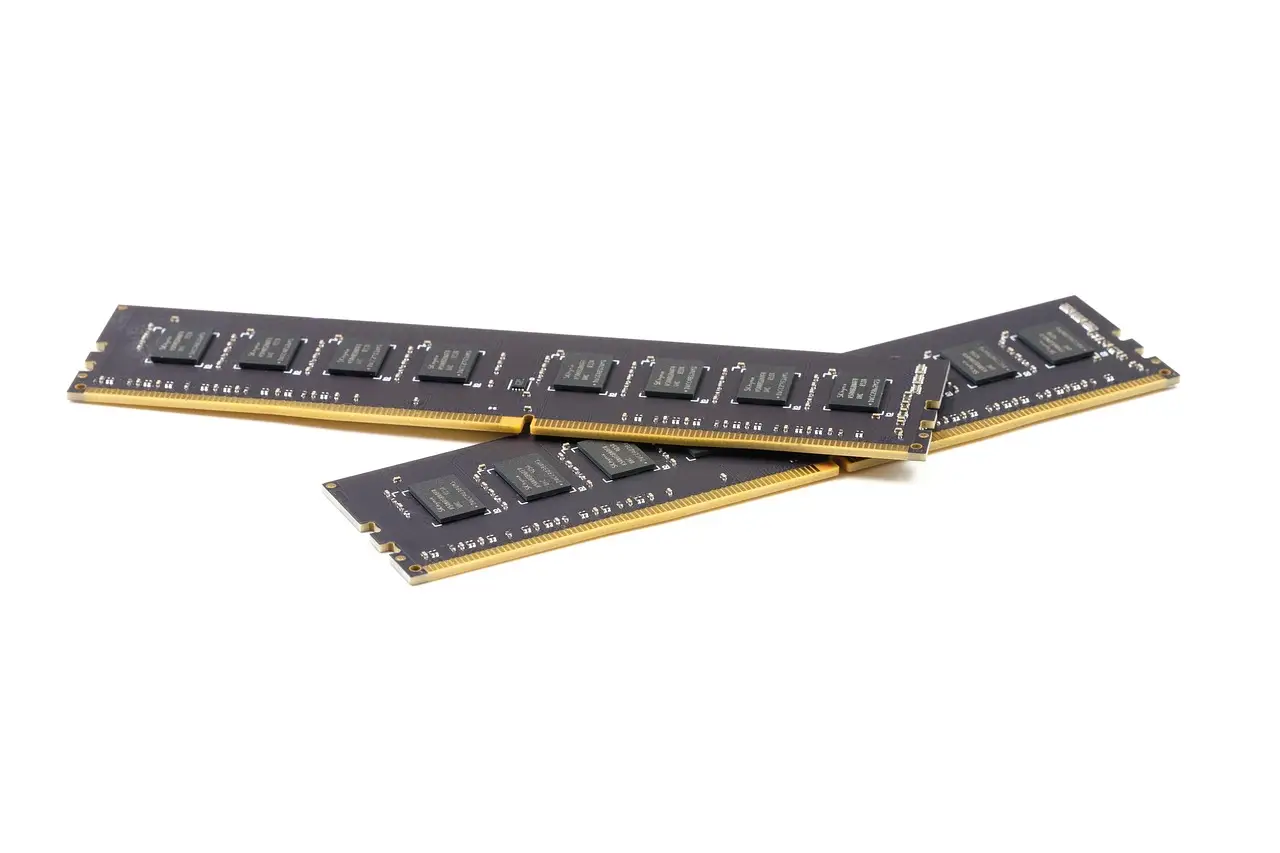
Micron Technology has gained 225% this year, the third-best performance in the Nasdaq-100, yet its shares still trade roughly 24% below their all-time peak. That gap frames the stakes heading into next week's earnings reports from Alphabet and Amazon, scheduled for October 28 and 29.
Investors will scrutinize the AI-related capital expenditures (capex, the money firms spend on physical infrastructure) of both companies. But the global memory shortage may take center stage instead. If it does, Micron sits first in line to benefit.
Why is memory suddenly the bottleneck?
AI infrastructure was historically defined by graphics processing units (GPUs, chips that handle parallel computation) from Nvidia and custom application-specific integrated circuits (ASICs, purpose-built chips) from Broadcom. That picture is shifting. Memory now constrains buildouts as tightly as processors do.
Micron produces dynamic random access memory (DRAM, the workhorse chip memory) and high bandwidth memory (HBM, the stacked variant attached to AI processors). Both sit at the center of current AI chip architecture.
Amazon has already flagged the problem. CEO Andy Jassy said on a recent earnings call that memory costs are rising, and he disclosed a plan to lift Amazon's 2026 capex budget from $200 billion to $220 billion to cover escalating memory expenses.
Alphabet moved in the same direction. The company adjusted its 2026 capex forecast to a range of $195 billion to $205 billion, citing heightened infrastructure investment and growth constraints. Alphabet did not name memory as a driver. The omission matters; the raise is consistent with memory pressure, but the company has not confirmed it.
What did Elon Musk say?
Elon Musk weighed in separately, identifying RAM supply as a limiting factor for AI infrastructure expansion. In recent online discussions, he framed memory as a bottleneck alongside the acquisition of advanced processors.
The constraint touches both phases of AI workloads: training, where models learn to identify patterns, and inference, where trained models are actively used. Each phase consumes substantial memory, and neither scales without it.
Can a shortage actually help Micron?
Pricing power follows scarcity. When demand exceeds supply, memory manufacturers can raise prices, and Micron is already experiencing that dynamic, according to the source's account of market conditions.
The reported effects include:
- Elevated revenue growth
- Improving profit margins
- Enhanced earnings visibility
These claims describe a favorable setup, not a guaranteed outcome. Semiconductor demand is cyclical, and shortage-driven pricing can reverse quickly when supply catches up. The source offers no timeline for how long the tightness persists.
What could the earnings reports change?
Uncertainty hangs over two variables: semiconductor industry volatility and the willingness of hyperscalers (large cloud operators that buy AI infrastructure at scale) to sustain their spending. The October 28 and 29 reports could quell some of that skepticism.
Three acknowledgments from Amazon or Alphabet leadership would matter most to Micron holders:
- Confirmation of the memory shortage
- Commentary on rising component prices
- Evidence of escalated demand for memory-dependent AI applications
Any of these could reshape investor perceptions of Micron's growth trajectory, the source argues.
Is a rally actually likely?
The bull case rests on inference, not on stated guidance. Micron itself has not commented in this account. The argument runs purely through proxy signals: Jassy's capex raise, Alphabet's adjusted forecast, and Musk's remarks on RAM supply.
The shares remain 24% below their pinnacle. A 225% year-to-date gain also cuts both ways; it raises the bar for further upside and leaves the stock exposed if earnings commentary disappoints. The source frames positive feedback from major AI developers as a potential trigger for a resurgence in stock value, extending investor belief in Micron beyond the immediate future.
Halloween approaches. So does the verdict.
via Google News: DRAM chip (Source)
More from Priya Raman
Show full bio
Correspondent covering money, funding and market shifts around hardware layer of artificial intelligence at Die Signal.
467 articles
Same lot · LOT-C204
- DSG-698228nmMicron Earnings: AI Chip Demand Drives Fresh Memory Boom
- DSG-829114nmMicron Forecast Tops Estimates on Booming AI Memory Demand
- DSG-26367nmMicron Quarterly Results Nearly Quadruple on AI Demand Surge
- DSG-655414nmMicron Forecasts $61.5 bn Revenue on AI Memory Demand
- DSG-878265nmMicron's Quarterly Revenue Quadruples Year Over Year on AI Demand