Test report DSG-6889 · Rev B · tested October 13, 2026
Memory & StorageDevice under test
Korean Chip Stocks Slide as China Advances Its DRAM Push
Korean chip stocks fell after reports of China's advancing DRAM program, with investors pricing new competition for Samsung and SK Hynix in the memory market.
- Read
- 3 min
- Words
- 544
- Node
- 14nm
- Operator
- Marcus Bennett
Spec summary
- Korean chip stocks declined after reports of China's DRAM push, Businesskorea reported.
- Samsung Electronics and SK Hynix together dominate global DRAM supply.
- Investors treated China's domestic DRAM program as a supply-side risk to Korean memory producers.
- China has made semiconductor self-sufficiency a state priority, with DRAM a key target.
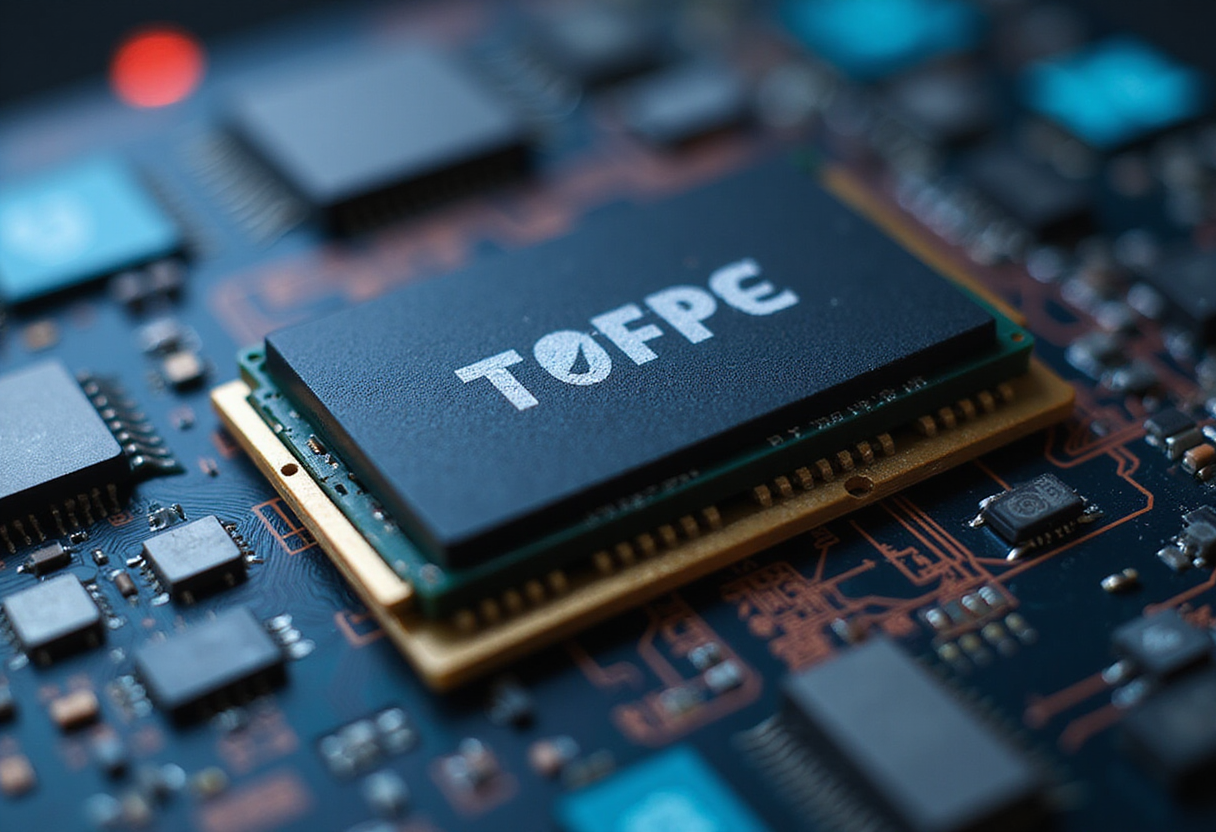
Korean chip stocks fell this week after reports that China is pressing ahead with its domestic DRAM program. The sell-off hit Seoul-listed memory names. Investors read Beijing's push as a direct threat to the two Korean giants that dominate global DRAM supply.
Businesskorea reported the decline under the headline "Korean Chip Stocks Slide on China's DRAM Push." The article links the drop to progress by Chinese memory makers. The market reaction was immediate.
What does this change for Samsung and SK Hynix?
The practical question is simple. If China builds credible DRAM capacity at scale, Korean producers lose pricing power in the commodity segments of the memory market. That is the mechanism behind the stock slide.
Korean firms currently hold a dominant share of global DRAM output. Samsung Electronics and SK Hynix together control most of the world's supply. That concentration has supported margins through the memory cycle. A third large-scale producer would change the arithmetic.
China has pursued semiconductor self-sufficiency for years, and DRAM sits at the center of that effort. Each step Chinese makers take toward volume production narrows the technical gap. Equity markets price that risk before it shows up in quarterly results. This week's move is that pricing in action.
How the market read the news
The reaction followed a familiar pattern for semiconductor equities:
- Shares of Korean memory producers declined on the China reports.
- The drop was broad across chip-related listings in Seoul.
- Investors treated the Chinese DRAM program as a supply-side risk, not a distant project.
Memory stocks are cyclical and sentiment-driven. News about future capacity often moves prices more than current earnings do. A headline about Chinese progress is enough to trigger positioning changes among institutional investors.
Why China's DRAM push matters now
DRAM is a commodity at its core. Products are standardized, buyers switch suppliers on price, and margins swing with the balance of supply and demand. Any new entrant with real volume changes that balance.
China has made semiconductors a national priority and has poured state resources into the sector. Memory chips are a visible target. Progress has been uneven, but the direction is consistent: more domestic capacity, more output, less reliance on imports.
For Korean producers, the threat is gradual rather than sudden. Chinese makers must still close gaps in yield, process technology, and cost per bit. Those gaps take years to close. Markets, however, discount the future, not the present. That is why a report on China's DRAM push can move share prices today.
What to watch next
The signal here is about trajectory, not a single day of trading. Three indicators will tell investors whether this risk is real:
- Chinese DRAM output volumes, once makers disclose production levels.
- Pricing pressure in commodity DRAM segments, where new entrants compete first.
- Capital spending plans from Samsung and SK Hynix, which show how the incumbents intend to respond.
For now, the market has rendered a verdict: Chinese progress in DRAM is a risk worth pricing. The slide in Korean chip stocks reflects that judgment. Whether the discount proves justified depends on execution in China over the coming quarters — and on how fast the Korean incumbents can defend their cost and technology lead.
via Google News: DRAM chip (Source)
More from Marcus Bennett
Show full bio
News editor covering regulation, policy and their impact on hardware layer of artificial intelligence at Die Signal.
318 articles
Same lot · LOT-C1C9
- DSG-352620nmMicron, SK Hynix Shares Slip as China's CXMT Advances Next-Gen DRAM
- DSG-712420nmSamsung and SK hynix Miss Out as Global Chip Stocks Rally
- DSG-501328nmKOSPI Falls 5% as China's CXMT Memory Push Hits Samsung, SK Hynix
- DSG-122814nmMicron, SK Hynix Shares Slip as China's CXMT Advances DRAM
- DSG-44257nmMicron Closes Gap on SK Hynix in Global DRAM Rankings