Test report · tested November 20, 2026
AI Datacenter InfrastructureDevice under test
Korea Sets 50 MW Threshold to Exempt Regional AI Data Centers From Grid Reviews
Seoul caps grid review exemptions at 50 MW outside the capital region, fast-tracks mega projects, and defines AI data centers by accelerator scale and a 1.5 design power ratio.
- Read
- 3 min
- Words
- 664
- Segment
- AI Datacenter Infrastructure
- Operator
- Marcus Bennett
Spec summary
- AI data centers under 50 MW contracted power outside the capital region are exempt from grid impact assessments from March 10 next year.
- Design power ratio must be 1.5 or less; accelerator threshold is 250 kW at 50% of IT power or 5 MW of AI equipment power.
- Operators must report a construction start date within one year of filing to screen out speculators.
- Special zone facilities skip non-technical assessments regardless of size; mega projects get priority grid reviews.
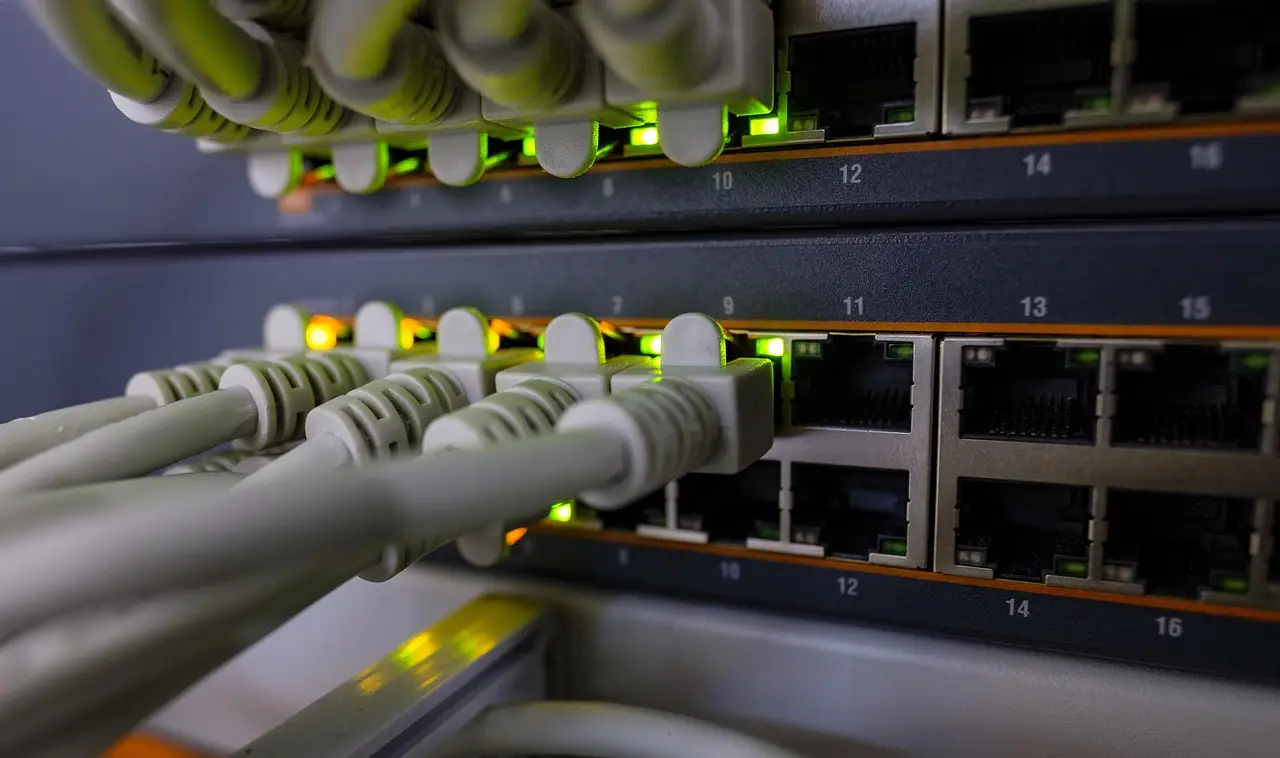
AI data centers outside South Korea's capital region will skip power grid impact assessments entirely if their contracted power stays at or below 50 MW. The Ministry of Science and ICT and the Ministry of Climate, Energy and Environment announced the threshold on the 20th as part of an enforcement decree for the AI Data Center Special Act, which takes effect on March 10 next year.
The government had weighed a 100 MW cutoff first. It dropped that option after concluding it would have little practical effect, because most AI data centers pursued as mega projects would only qualify for exemption at the gigawatt level.
What replaces full reviews for larger sites?
Two mechanisms cover facilities above the threshold. First, AI data centers located in designated special zones will be exempt from all non-technical assessment items regardless of size and will undergo only technical assessments. "We took into account that operators spend much of their time preparing for non-technical assessments," a Science Ministry official said.
Second, a fast track gives priority handling of grid impact assessments to two categories: AI data centers classified as mega projects, and those that apply for bundled permit processing under the Special Act. The Climate Ministry will write the priority rules into the grid impact assessment manual it is preparing. The aim is to cut operators' waiting periods and pull construction start dates earlier.
Ryu Je-myung, second vice minister of science and ICT, said the measures came through close consultation with the Climate Ministry "so that AI data centers can be built on time." He added the government will work to ensure the improved assessment system takes root without disruption alongside the March launch.
Lee Ho-hyeon, second vice minister of climate, energy and environment, said the ministry will "swiftly complete the revision of the notice and the preparation of detailed work manuals" to support rapid construction, including mega projects, while maintaining grid stability.
What counts as an AI data center now?
The same day, the government published draft enforcement decree and enforcement rules defining the criteria:
- The facility must hold AI accelerators such as GPUs and NPUs above a set scale, plus the power and cooling equipment essential to run them.
- The design power ratio — total facility power divided by ICT equipment power — must be 1.5 or less. Lower ratios mean less ancillary power beyond the IT load.
- The accelerator scale threshold is either AI equipment power of 250 kW or more making up at least 50% of total IT power, or AI equipment power of 5 MW or more.
Colocation facilities also qualify. Third-party sites providing power, communications and cooling for AI racks owned or managed by others fall under the Special Act.
How does Korea screen out speculators?
Operators must set and report their own construction start date within one year of filing. A Science Ministry official said the government plans further legislative measures later, after assessing market conditions including speculative projects.
The package also eases physical requirements. Parking requirements drop 20% from existing standards, with room for up to 50% easing through municipal and provincial ordinances, reflecting that AI data centers employ fewer resident staff and vehicles than comparable facilities.
Building artwork rules change too. Server room and cooling equipment room areas are excluded from total floor area calculations. To discourage capital-region concentration, 100% of server room area is excluded outside the capital region but only 50% within it.
Inside special zones, the infrastructure governments may support expands beyond power and water to include transportation, heat supply and energy storage, high-speed communications, and facilities improving living conditions and promoting shared growth with local residents. The Science Ministry plans guidelines in the first half of next year on regional shared growth.
Deputy Prime Minister and Science Minister Bae Kyung-hoon said the subordinate statutes give operators "predictability about which AI data centers qualify for support under the special act and the scope of the benefits they can receive."
via en.sedaily.com (Source)
More from Marcus Bennett
Show full bio
News editor covering regulation, policy and their impact on hardware layer of artificial intelligence at Die Signal.
752 articles
Same lot
- Korea Waives Grid Assessments for AI Data Centers Up to 50 MW
- Korea Deducts Grid-Assessment Points for Data Centers Near Seoul
- Alberta Bill 42 Sets 600 m Data Center Setback, Kills 100 Mt Oil Sands Cap
- Trump Threatens US AI Firms With 'Enormous Taxes' Over Foreign Data Centers
- Spain raises proposed data center renewable threshold above 10 MW