Test report · tested November 26, 2026
Supply Chain & PolicyDevice under test
Korea's Central Bank Lifts 2027 Growth Forecast to 4.1% on Chip Boom
The Bank of Korea lifted its 2027 growth forecast to 4.1% from 2.9%, crediting the semiconductor boom as IT manufacturing's economic share more than doubled to 20.7%.
- Read
- 3 min
- Words
- 658
- Segment
- Supply Chain & Policy
- Operator
- Grace Kim
Spec summary
- BOK raised 2027 growth forecast to 4.1% from 2.9%, and 2026 to 3.9% from 3.3%
- IT manufacturing's nominal economic share hit 20.7% in H1 2026, up from 9.0% in 2025
- Current account surplus projected at record $500 billion in 2026 and $540 billion in 2027
- Exports seen surging 65% to $1.1701 trillion this year; 2028 growth range spans 2.1%–3.6%
- Consumer inflation forecast for 2027 revised up to 2.4% from 2.3%
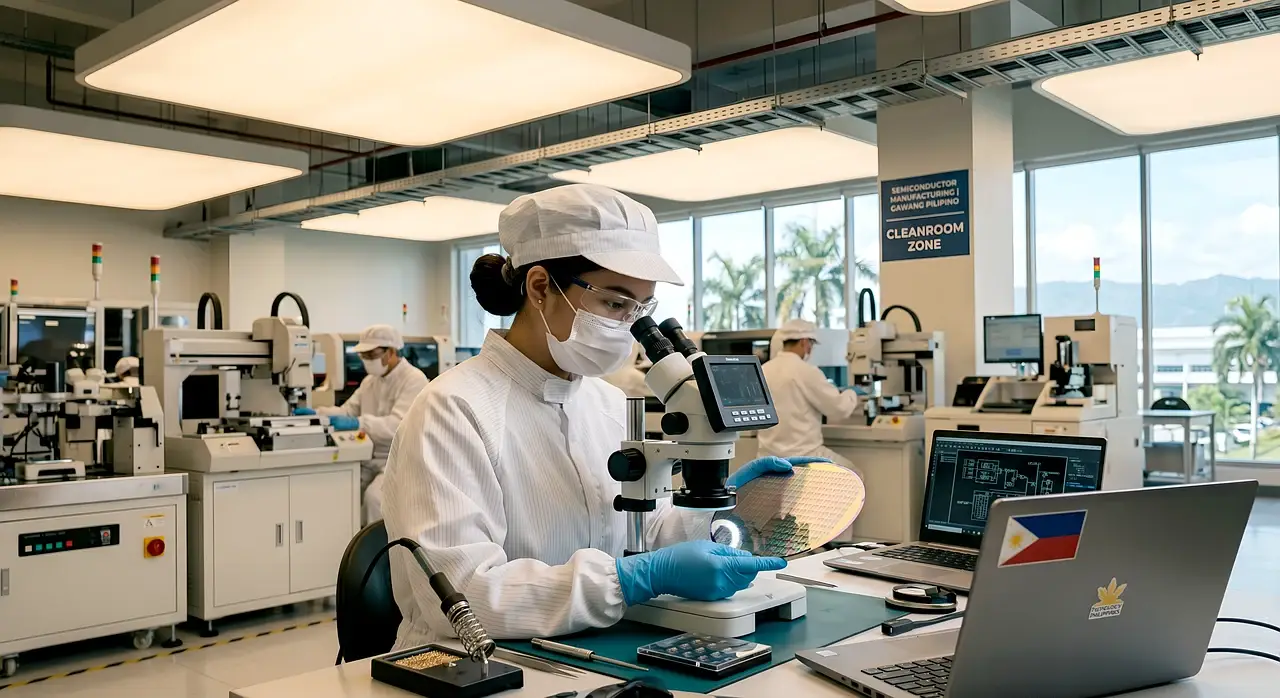
The Bank of Korea raised its 2027 growth forecast to 4.1% from 2.9% on November 26, a 1.2 percentage point upgrade driven almost entirely by the semiconductor supercycle. The bank's "November 2026 Economic Outlook Report" also lifted this year's growth forecast to 3.9% from 3.3%, and projected 3.0% growth for 2028.
Semiconductors did the heavy lifting. Soaring chip prices and rising output expanded the IT manufacturing sector's nominal share of the economy to 20.7% in the first half of this year, up from 9.0% last year. Its contribution to growth under the chain-weighted method (an inflation-adjusted measure that updates weights each period) rose sharply as a result.
The assumptions underpinning the outlook moved in step. The BOK raised its assumption for semiconductor export volume growth this year to the low 20% range from the high 10% range, and for next year to the mid-10% range. World trade growth for 2027 was lifted to 4.9% from 4.0% on expanding global AI investment. The bank also pushed back its expected timing of U.S. semiconductor tariffs by a year, to early 2028 from early next year.
Oil cuts the other way. Brent crude assumptions rose to $91 a barrel from $86 for this year and to $82 from $74 for next year, reflecting persistent Middle East tensions. This year's figure matches the pessimistic scenario in the August outlook, which assumed a prolonged regional stalemate. Renewed tensions shaved 0.05 percentage point off this year's growth forecast and 0.1 point off next year's.
What does the chip boom change for the real economy?
Plenty, if the BOK's projections hold. Private consumption growth should pick up to 2.4% next year from 1.8% this year. Construction investment growth jumps to 2.4% from 0.1%. Household income improves on the back of special bonuses in the IT sector, while government spending keeps growing strongly on solid tax revenue and a larger budget.
"Next year, exports and investment will continue to grow strongly on the back of solid AI investment demand, while consumption will gradually strengthen its recovery on improving income conditions and expanded fiscal spending," the BOK said.
The current account surplus is set to hit record highs: $500 billion this year and $540 billion next year. Total exports on a customs-clearance basis should surge 65% to $1.1701 trillion this year from $709.3 billion last year, then rise 15.4% to $1.3504 trillion in 2027. In 2028, exports fall back 11.7% to $1.1930 trillion, led by semiconductors.
How wide is the range of outcomes?
Very. Next year's growth could land anywhere between 3.4% and 4.6% depending on the chip cycle. The baseline assumes mid-10% chip export volume growth and produces 4.1%. An optimistic scenario — sustained AI investment, faster capacity expansion — puts volume growth near 20% and GDP growth at 4.6%. A pessimistic one, assuming an AI investment correction and tighter financial conditions, slows volume growth to about 10% and caps growth at 3.4%. The 2028 range widens further: 2.1% to 3.6%.
A separate shock analysis is blunt. If AI investment delays, worsening financial conditions and expanded Chinese memory supply hit at once, memory prices would fall 15% below the baseline path next year and 51% in 2028. Total exports would shrink to just above $1 trillion next year and around $900 billion in 2028.
Jobs and prices add caveats. The employment forecast for next year stays at 200,000 new jobs, unchanged from the previous projection; this year's figure was cut to 130,000 from 140,000. Consumer inflation for 2027 was revised up to 2.4% from 2.3%, reflecting stronger demand-side pressure and accumulated costs. Core inflation (excluding food and energy) rose to 2.6% from 2.5% for both years.
via en.sedaily.com (Source)
More from Grace Kim
Show full bio
Market editor covering regulation, policy and their impact on hardware layer of artificial intelligence at Die Signal.
782 articles