Test report DSG-8474 · Rev A · tested November 16, 2026
Supply Chain & PolicyDevice under test
Korea Names Seven Critical Minerals for State-Backed Overseas Mine Push
Seoul picks tungsten, silicon, graphite, cobalt, nickel, gallium and rare earths for state-backed overseas investment. China supplies 93.2% of graphite imports.
- Read
- 3 min
- Words
- 651
- Node
- 14nm
- Operator
- Priya Raman
Spec summary
- Korea named seven priority minerals out of a managed list of 51: tungsten, silicon, graphite, cobalt, nickel, gallium and rare earths.
- China supplied 93.2% of graphite imports and about half of tungsten and rare earths imports last year.
- New Caledonia accounts for 80.3% of nickel imports.
- Minister Kim Jung-kwan convened the public-private strategy meeting on the 16th.
- A legal amendment would let the Korea Mine Rehabilitation and Mineral Resources Corporation invest directly in overseas mines and smelting facilities.
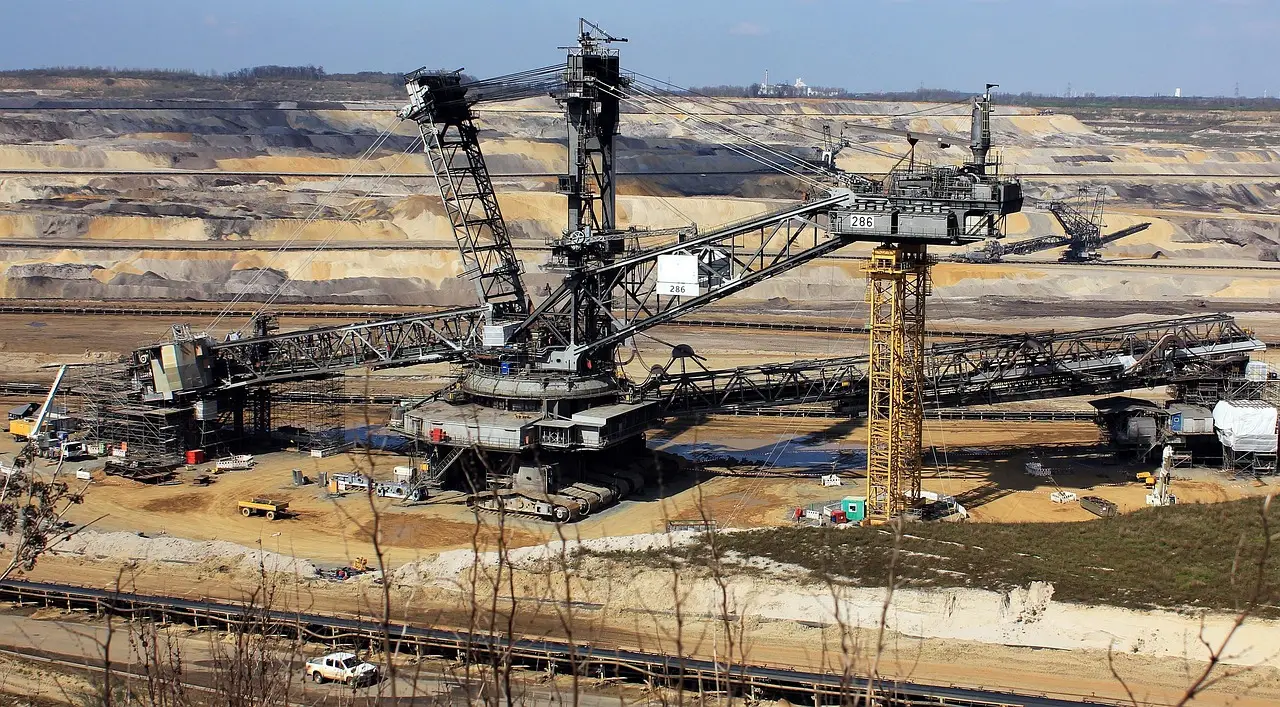
Seven minerals — tungsten, silicon, graphite, cobalt, nickel, gallium and rare earths — now sit at the center of South Korea's state-led push into overseas mining. Trade, Industry and Energy Minister Kim Jung-kwan convened a public-private strategy meeting at the Coal Center on the 16th and declared that supply chain security for these materials "can no longer be put off." The ministry selected the seven from a managed list of 51 critical minerals, ranking each by industrial impact and by how heavily imports depend on a single country.
The dependence is measurable. Roughly half of the tungsten and rare earths Korea imported last year came from China. China accounts for 93.2% of graphite imports. New Caledonia supplies 80.3% of nickel imports. Those concentration figures come from the Korea Mine Rehabilitation and Mineral Resources Corporation, the state body that would execute the investments.
What does the legal overhaul change?
At present, the corporation cannot invest directly alongside private companies in overseas mines or in smelting and refining facilities. A legal amendment now under way would restore that authority. The ministry also plans a dedicated resource security fund. The stated logic: stable investment requires dedicated funding and a dedicated institution.
The centerpiece is a "critical minerals pipeline project." It would link the full cycle — ore extraction, smelting, refining, and production of key materials — rather than chasing individual mine stakes in isolation.
What did the minister actually commit to?
Kim Jung-kwan framed the meeting as a pivot from discussion to execution. "This is no longer a time for talk but a time to produce concrete results," he said. The ministry intends to wrap up the institutional overhaul quickly and deliver results in overseas mine development and in smelting capacity. No timelines, budget figures or target countries accompanied the statement. The remarks signal intent, not yet a funded program.
Who supplies the patient capital?
Experts at the meeting stressed that resource development rewards persistence, not announcements. Kim Jin-soo, professor of natural resources and environmental engineering at Hanyang University, said: "Resource development requires steady investment over more than 10 years." He added that "public institutions must effectively serve as patient capital." That is a direct caution: a pipeline project launched on a political calendar may not survive the decade an overseas mine demands.
Past failures haunt this program. The ministry acknowledged as much by planning strict pre- and post-investment controls.
What guardrails are proposed?
The ministry outlined two oversight structures:
- A "corporation innovation task force" to strengthen the professional capabilities of the Korea Mine Rehabilitation and Mineral Resources Corporation. It will recruit outside experts and sell non-core assets to restore the corporation's finances.
- A new overseas resource development review council under the ministry, monitoring the entire process from investment decision to fund disbursement and withdrawal.
Investment will go only to projects the industrial resource security strategy deems necessary. Joint investment with the private sector, with minority stakes as the guiding principle, is the stated norm. The ministry did not specify who holds final veto power on the council, nor how minority-stake discipline will be enforced if a strategic project requires control.
What remains unsaid?
The announcement contains no budget for the resource security fund, no target date for the legal amendment, and no volume targets for any of the seven minerals. The concentration statistics themselves invite a question the ministry left open: diversifying away from a supplier holding 93.2% of graphite imports takes years, and replacement capacity outside China remains limited. The pipeline concept covers ore through refined materials, but the ministry named no smelters, refiners or partner countries.
Korea has been here before. Its earlier overseas resource development drives produced losses that the new review council is explicitly designed to prevent. Whether the guardrails work — or whether they slow investment past the point of relevance — will decide if this round differs from the last.
via en.sedaily.com (Source)
More from Priya Raman
Show full bio
Correspondent covering money, funding and market shifts around hardware layer of artificial intelligence at Die Signal.
661 articles
Same lot · LOT-362C
- DSG-692214nmChina Imposes New Export Controls on Rare Earth and Battery Materials
- DSG-954128nmTSMC weighs rare-earth-free factory motors amid export risk
- DSG-166428nmBeijing Tightens Critical Mineral Export Controls with Whistleblower
- DSG-65615nmTVA Clears 230 MW Power Supply for Korea Zinc's $7.4 Billion U.S. Smelter
- DSG-68653nmLS Eco Energy to begin non-Chinese samarium output next month