Test report · tested November 27, 2026
Memory & StorageDevice under test
Kioxia's third-gen XL-Flash reaches 3-microsecond reads
Kioxia's Gen 3 XL-Flash averages 3 µs reads — a tenth of BiCS8 TLC's latency — at 70% higher density, with 150K–250K P/E cycles. Samples land March 2027 in 18M-IOPS GP2 SSDs.
- Read
- 4 min
- Words
- 758
- Segment
- Memory & Storage
- Operator
- Elena Vasquez
Spec summary
- Gen 3 XL-Flash averages 3 µs read latency, over 10x faster than BiCS8 TLC's 40 µs, with 70% higher bit density and ~135% better efficiency than Gen 2.
- Samples ship to select customers before end of Q1 2027; GP2 SSD evaluation samples follow by end of 2027.
- First product, the GP2, is rated above 18 million 512-byte random read IOPS and up to 28 GB/s sequential reads over PCIe 6.0 x4.
- SLC endurance of 150,000–250,000 P/E cycles is at least 50x standard TLC; up to 50 drive writes per day.
- Later GP drives with Nvidia target up to 100 million random-read IOPS for AI servers.
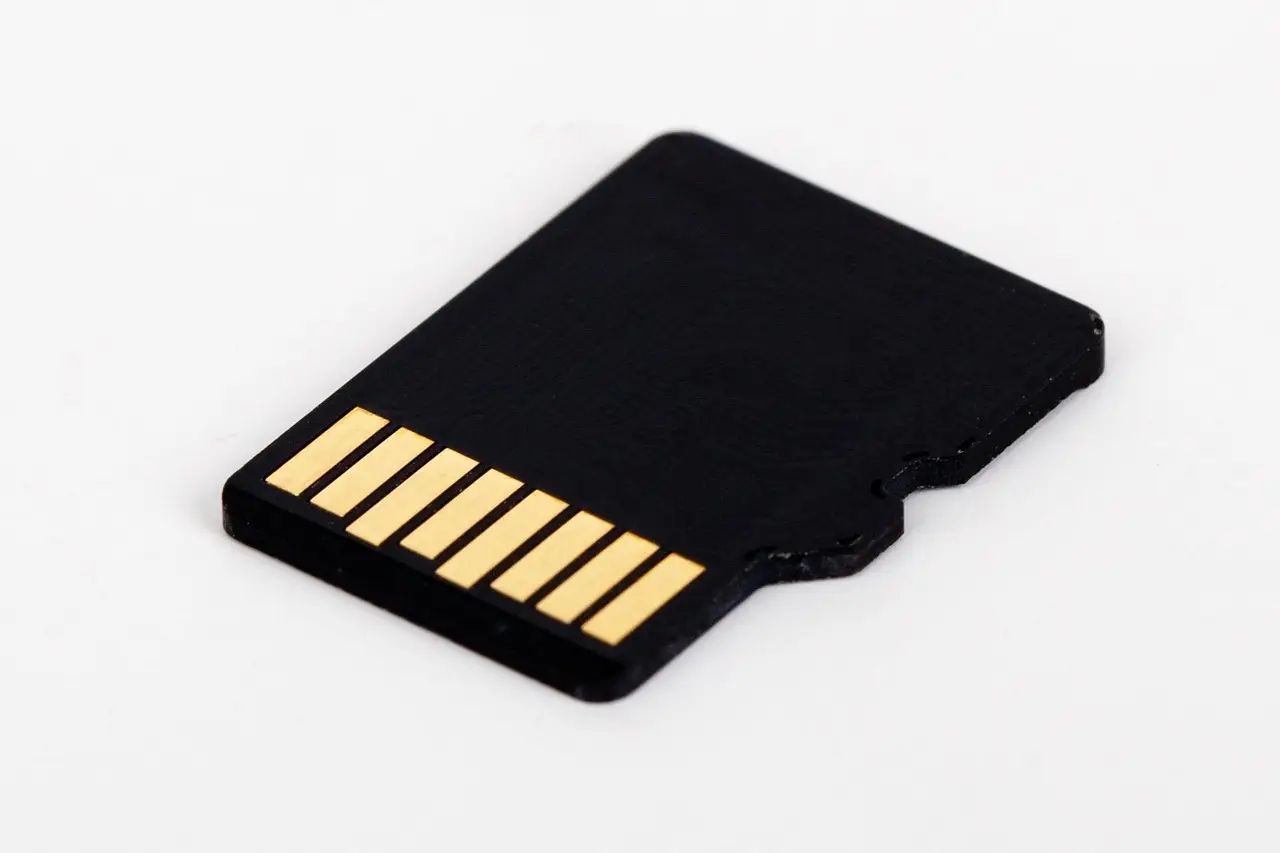
Kioxia's third-generation XL-Flash averages 3-microsecond read latency — Optane-class performance from NAND — while packing 70% more bits per area than Gen 2. The company demonstrated a prototype at its KIOXIA Forum in Tokyo and says samples ship before the end of Q1 2027. Its first home is the GP2 enterprise SSD, rated for more than 18 million 512-byte random read IOPS.
That latency figure deserves a frame of reference: standard BiCS8 TLC reads in about 40 microseconds, so Gen 3 is more than ten times faster. It even undercuts the sub-5 µs spec of the original 2019 XL-Flash, which was SLC on 128Gb dies. Power efficiency improves too — Kioxia puts the gain at roughly 135% over Gen 2.
Where does this sit in the memory stack?
Kioxia positions the low-latency flash as "a new memory tier" between DRAM and conventional flash. The pitch: complement or replace some DRAM, cutting costs in AI servers and data centers where fine-grained memory lookups — think KV caching — hammer the storage tier all day.
The obvious comparison is Intel's Optane, which used 3D XPoint memory that stored bits as resistance changes in the cell material rather than trapped charge. That gives 3D XPoint a real edge on writes, since it doesn't need an erase cycle before writing new data. Intel exited the Optane business in 2022, leaving a gap Kioxia clearly wants to fill.
Unlike 3D XPoint, XL-Flash is built on BiCS flash technology, just tuned for low read latency and high write endurance. Endurance lands at 150,000 to 250,000 program/erase cycles — at least 50 times standard TLC — with a 4.8 Gb/s interface speed.
What does Gen 3 change versus Gen 1 and Gen 2?
The lineage is short and clear:
- Gen 1 (2019): SLC, 128Gb die, reads under 5 µs.
- Gen 2 (2022): added 2-bit MLC for lower bit cost on 128Gb/256Gb dies, trading performance — under 5 µs for SLC, under 10 µs for MLC.
- Gen 3 (2026 prototype): back to SLC (reported), 128Gb die (reported), 3 µs average reads.
The latency trick is architectural: more, smaller planes — 16 per die with a 4KB page in earlier generations — a common approach in SLC and low-latency flash that especially helps small I/O. Kioxia's GP drives target 512-byte accesses rather than the typical 4KB, matching enterprise requirements for AI workloads.
How does it get denser without losing speed?
CBA — CMOS directly Bonded to Array — is the key. Kioxia builds the logic CMOS wafer and the memory-cell wafer separately, then bonds them. That maintains performance at much higher density, and by Kioxia's own tests it improves the efficiency of 512-byte reads, which lines up exactly with the GP2's design intent. The company hasn't disclosed full details such as layer count.
What do the GP2 drives promise?
The GP2 "Super High IOPS" SSD will be the first product on the new flash. The headline numbers:
- Up to 28 GB/s sequential reads, if it saturates PCIe 6.0 x4 as expected.
- 18 million-plus 512-byte random read IOPS — a 2.5x jump versus "typical TLC-based SSDs," measured against Kioxia's own CM10 drives.
- Up to 50 drive writes per day, in Optane's ballpark.
- E1.S and E3.S form factors under consideration, with direct liquid cooling support — increasingly necessary in GPU-heavy data centers where the GP2 is likely to live.
Kioxia first showed the GP series with Nvidia earlier this year, framing these drives as a flash tier that gets more out of a GPU's HBM by offloading memory however possible. Later GP drives target up to 100 million random-read IOPS, a figure Kioxia and Nvidia have been working toward for AI servers.
Timing matters here. The flash samples to select customers by end of Q1 2027, but Kioxia only promises GP2 evaluation samples to select customers by the end of that year, and exact drive specs may differ. Separately, the company announced its XL1 CXL memory expansion modules on XL-Flash in August and said it "will continue to leverage the speed, power efficiency, and endurance of XL-FLASH" for emerging data center needs.
For storage architects, the practical takeaway: if the March 2027 samples hold at 3 µs and the endurance claims check out, the DRAM-offload tier that Optane vacated in 2022 finally has a credible NAND-based successor — one that doesn't require anyone to revive 3D XPoint.
via tomshardware.com (Source)
More from Elena Vasquez
Show full bio
Senior reporter covering people, launches and day-to-day practice in hardware layer of artificial intelligence at Die Signal.
815 articles
Same lot
- Kioxia and Nvidia test 144 SSDs for an AI memory role
- Chinese NAND Supplier Overtakes Micron and Kioxia in Chip Shipments
- Micron Targets NVIDIA Custom HBM Standards in TSMC Partnership
- SK Hynix Ships Next-Generation HBM Samples to Major Customers
- Samsung Posts Record $80 Billion Profit as AI Memory Demand Beats Estimates