Test report DSG-1084 · Rev C · tested October 10, 2026
Memory & StorageDevice under test
Jensen Huang, Samsung and SK Chiefs Meet on HBM5 and AI Factories
Jensen Huang met Samsung and SK chairmen in New York on Sept. 28 to align on 8th-gen HBM5, custom memory, foundry cooperation, and AI factories scaling to 2 GW and 50,000 GPUs.
- Read
- 3 min
- Words
- 558
- Node
- 65nm
- Operator
- Amara Osei
Spec summary
- Sept. 28, 2026: Jensen Huang met Samsung's Lee Jae-yong and SK's Chey Tae-won in New York around the Korea Society gala.
- Samsung began HBM4 mass production in February 2026 and shipped 12-layer HBM4E samples in May 2026.
- SK Telecom plans AI factories of up to 2 GW by pairing Nvidia DSX with Vera Rubin systems, with phased operations from 2027.
- Samsung and Nvidia are jointly building an AI super factory deploying more than 50,000 GPUs.
- The three executives last gathered at the Global AI Summit in San Francisco in July 2026.
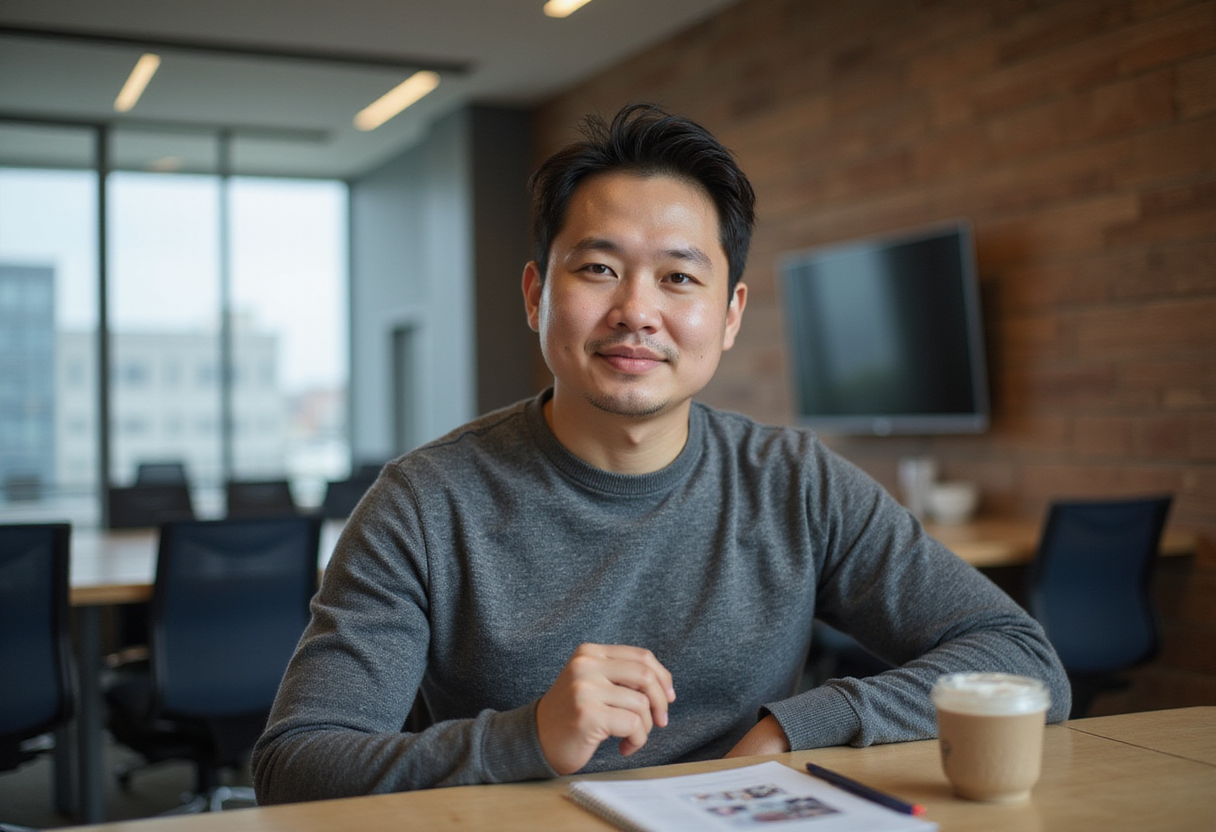
Nvidia CEO Jensen Huang held private meetings with Samsung Electronics Chairman Lee Jae-yong and SK Group Chairman Chey Tae-won in New York on September 28, U.S. Eastern Time. The agenda centered on eighth-generation HBM (HBM5), seventh-generation HBM4E, and gigawatt-scale AI factories.
The discussions took place around the Korea Society's annual gala. Huang received the Van Fleet Award at the event. The Korea Society cited his partnerships with Samsung, SK Group, and Hyundai Motor Group as the rationale. Lee and Chey attended. The three executives had not gathered since their July encounter at the Global AI Summit in San Francisco.
Why HBM5 dominated the agenda
Memory has moved from supporting component to primary determinant of Nvidia's next-generation compute performance. Industry R&D models now shift fundamentally, from sequential GPU-then-memory design toward synchronized co-design at the earliest silicon planning stage.
Samsung Electronics and SK Hynix compete for more than HBM4 sockets. Both have set up joint development frameworks with Nvidia on HBM4E and HBM5. Nvidia's Vera Rubin AI accelerator platform entered mass production this year with HBM4. Specifications for future generations sat at the top of the New York agenda.
- Samsung started HBM4 mass production in February 2026.
- Samsung shipped customer samples of 12-layer HBM4E products in May 2026.
- Jun Young-hyun, head of Samsung's DS Division, met Huang in June to align on long-term cooperation covering HBM4E, HBM5, and next-generation foundry work.
What Samsung wants beyond memory supply
Samsung's ambitions extend past HBM die shipments. The company plans to tailor memory performance, power, and interfaces to individual GPU architectures. Samsung is also wiring its three units—memory, foundry, and advanced packaging—into a single AI chip manufacturing package.
Samsung and Nvidia already collaborate on an AI super factory that will deploy more than 50,000 GPUs. The project applies AI and digital-twin tools across chip design, process control, and equipment maintenance. The New York meeting extended that agenda to specific foundry service directions.
How SK is building AI factory infrastructure
SK Group folded its telecom, data center, and SK Hynix memory assets into one AI factory pitch. Subsidiary SK Telecom will pair Nvidia's DSX platform with the Vera Rubin system to build AI factories of up to 2 gigawatts (GW). Phased commercial operations target a 2027 start. The plan first surfaced at the July San Francisco summit.
SK Hynix and Nvidia also locked in a long-term joint development and stable supply framework for next-generation AI memory.
What is driving the strategic alignment
U.S. export controls on cutting-edge AI semiconductors to China, paired with Beijing's push to indigenize its AI chip stack, have raised the cost of a single supply-chain disruption. Early visibility into Nvidia's mid- to long-term roadmap now shapes Samsung's and SK Hynix's HBM capex planning, industry analysts note.
The competitive battlefield has shifted from single-chip performance to integrated systems spanning GPUs, memory, networking, power delivery, and cooling. Each new accelerator cycle forces GPU vendors and memory makers to align years in advance. The Korea Society's framing of Huang's South Korean partnerships signals the alliance is evolving from a buyer-seller relationship into comprehensive strategic collaboration across memory, foundry, packaging, data centers, and AI factories.
via img.biggo.com (Original)
More from Amara Osei
Same lot · LOT-C1C6
- DSG-63505nmSamsung Memory Margins Eclipse Nvidia's, Seoul Daily Reports
- DSG-42317nmNvidia and SK Group Detail $500B-Plus AI Data Center, Memory Push
- DSG-39483nmSK Group and NVIDIA Expand Partnership on AI Factories and Memory
- DSG-87827nmSamsung Passes HBM4E Qualification with Nvidia and Major Hyperscalers
- DSG-71977nmSK Hynix Commits $38 Billion to Korean Chip Fab Expansion