Test report DSG-8056 · Rev A · tested November 4, 2026
Supply Chain & PolicyDevice under test
Intel’s $5.3–$6.1 Billion Substrate Plan Faces AI Shortage
Intel’s $5.3–$6.1 billion substrate commitments will secure AI-server components, while Samsung Electro-Mechanics and LG Innotek expand FC-BGA capacity through 2030.
- Read
- 4 min
- Words
- 731
- Node
- 45nm
- Operator
- Amara Osei
Spec summary
- Intel’s two post-Q3 substrate contracts carry an expected funding requirement of $5.3 billion–$6.1 billion; $3.3 billion is due by end-2027.
- Counterpoint Research expects a 20% shortfall in high-performance semiconductor substrates around 2027.
- Samsung Electro-Mechanics will invest ₩6.78 trillion in FC-BGA capacity, targeting mass production in September 2028 and June 2030.
- LG Innotek plans FC-BGA mass production for AI training and inference in 2027 and server substrates by 2028.
- Q3 package-solution revenue rose 58% at Samsung Electro-Mechanics to ₩939 billion and 10.1% at LG Innotek to ₩481.8 billion.
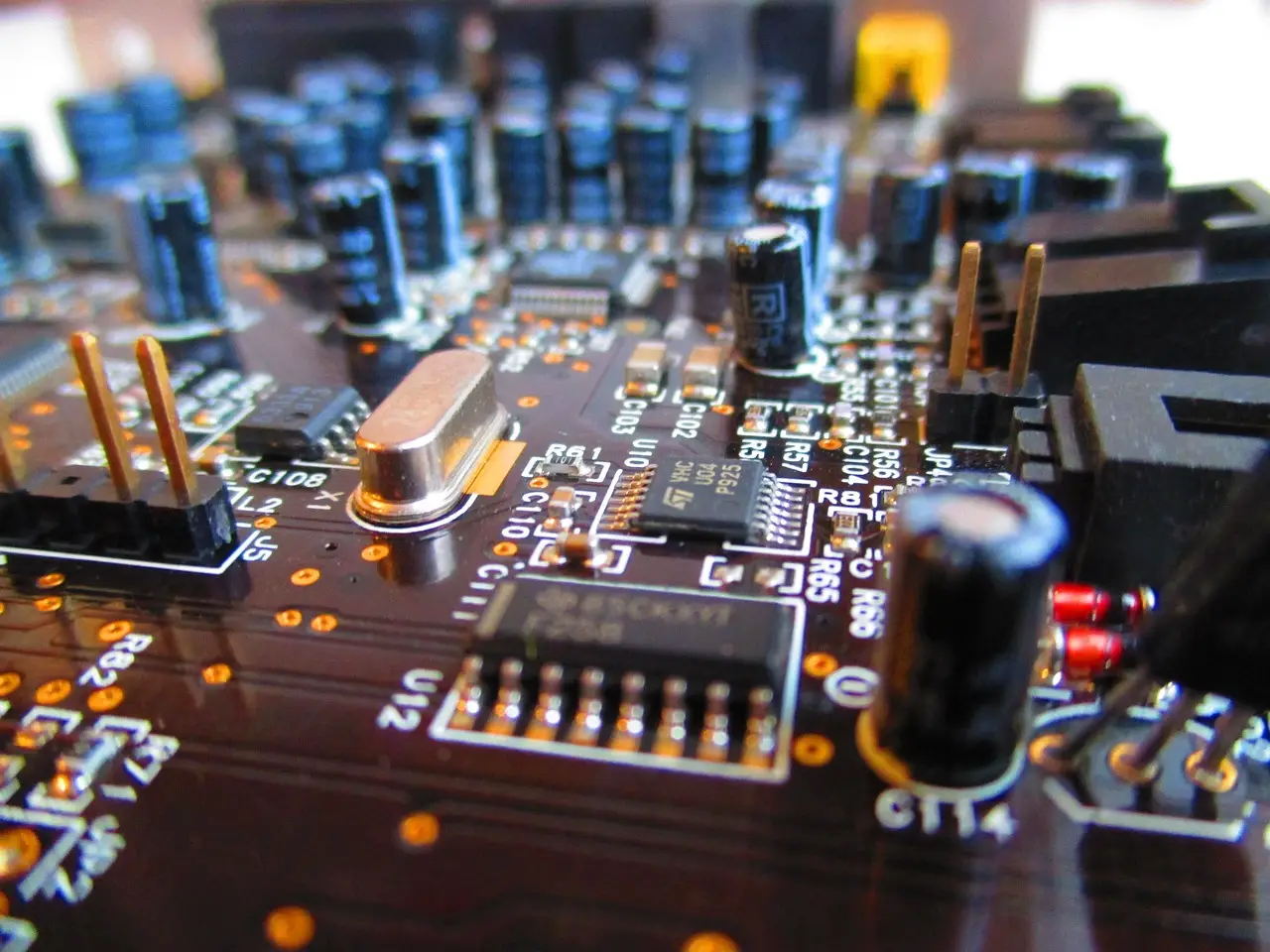
By Amara Osei
Intel expects two substrate supply contracts, signed after the end of the third quarter, to require $5.3 billion to $6.1 billion (approximately ₩7.1 trillion to ₩8.2 trillion). About $3.3 billion (approximately ₩4.4 trillion) must be paid by the end of 2027.
In its third-quarter filing with the U.S. Securities and Exchange Commission, Intel said it cannot adequately meet demand for data-center central processing units (CPUs) because packaging substrates are scarce. Intel also expects supply constraints for substrates and memory to continue through next year. The contracts reserve components for use years after signing, extending procurement beyond current production needs.
Why have advanced substrates become a bottleneck?
As CPUs and graphics processing units (GPUs) in AI servers deliver more performance, their connecting substrates must become larger and more complex. Manufacturers must stack multiple circuit layers with precision, which makes production difficult, while expanding substrate plants takes considerable time.
The main high-value product is the flip-chip ball grid array, or FC-BGA, a substrate that carries electrical signals between semiconductor chips and the mainboard and serves mainly AI servers and data centers. Counterpoint Research expects the supply shortfall for high-performance semiconductor substrates to reach 20% around 2027.
Kwon Min-kyu, an analyst at Kiwoom Securities, said: “As AI semiconductor demand grows rapidly, substrate supply is not keeping pace.” He added: “The shortage will continue for the time being, which will also have a positive effect on substrate makers’ earnings.”
Across the sector, semiconductor companies are committing trillions of won to reserve years of supply. In some agreements, customers help fund substrate makers’ capital spending and guarantee purchase volumes, giving ordering parties direct influence over production facilities.
AI-server deliveries now depend on access to substrates as well as advanced processors.
How are South Korean suppliers expanding?
Samsung Electro-Mechanics said in September it will invest ₩6.78 trillion (approximately $5.1 billion) in FC-BGA capacity at its Sejong Plant and Vietnam subsidiary. The company allocates ₩4.27 trillion (about $3.2 billion) to Sejong and ₩2.51 trillion (about $1.9 billion) to Vietnam.
Samsung scheduled the new Sejong facility to begin mass production in September 2028 and the Vietnam facility to start in June 2030.
Global customers’ funding support and mid- to long-term purchase commitments underpin the expansion. Those arrangements ease Samsung Electro-Mechanics’ capital burden while reserving future sales.
Customer order requests continued after the announcement. On a third-quarter earnings call, Samsung Electro-Mechanics said its planned expansion alone would struggle to meet demand and that it is reviewing the timing and scale of additional investment.
LG Innotek unveiled an FC-BGA for AI accelerators in September. The substrate measures more than 100 mm on a side, and the company was discussing supply plans with customers.
LG plans to begin mass production for AI training and inference in 2027, then expand into high-value server substrates by 2028. It is also in talks with two major customers over long-term supply agreements and additional investment plans.
Moon Hyuk-soo, president of LG Innotek, said: “LTAs are continuing and will improve starting next year.”
Third-quarter package-solution results show the revenue effect of the expansions:
- Samsung Electro-Mechanics: ₩939 billion (approximately $699.8 million), up 58% year on year, as higher FC-BGA sales for server CPUs, AI accelerators and network equipment drove growth.
- LG Innotek: ₩481.8 billion (approximately $359.1 million), up 10.1% year on year, supported by expanded FC-BGA supply for PC CPUs to global customers.
Both Korean manufacturers are adding capacity, but their announced production schedules extend as far as June 2030.
What does the shortage mean for competition?
The shortage has widened competition beyond chip production to the ability to secure critical components. The market previously paid limited attention to substrates, but rising AI-server investment has shifted bargaining power toward suppliers and increased the value of high-performance substrates within the semiconductor value chain.
Capacity expansion takes two to four years, so the shortage could remain structural even as Samsung Electro-Mechanics and LG Innotek add lines. For South Korean manufacturers, larger high-value orders offer revenue growth, while large upfront investment and deeper dependence on customers remain the counterweight.
AI-server output now depends on substrate availability as much as on advanced chip production.
via Google News: AI chip (Source)
More from Amara Osei
Show full bio
Staff writer covering money, funding and market shifts around hardware layer of artificial intelligence at Die Signal.
593 articles
Same lot · LOT-360B
- DSG-46705nmIntel’s $6.1bn substrate deal exposes AI packaging crunch
- DSG-952510nmChina's Xinai raises $224M to scale AI chip substrate output
- DSG-846065nmSamsung Electro-Mechanics Signs 360.5 Billion Won Memory Substrate Deal
- DSG-70153nmSubstrate Capacity No Longer Equals Qualified Supply
- DSG-87815nmTOPPAN and Broadcom open Singapore's first high-end AI-chip substrate plant