Test report DSG-7594 · Rev A · tested October 10, 2026
Processors & AcceleratorsDevice under test
Huawei Opens 10,000-NPU Compute Pool to External AI Developers
Huawei has opened a 10,000-NPU compute pool to external AI developers, per Tech in Asia. The allocation ranks among the largest single-vendor NPU disclosures for third-party training and inference on Ascend silicon.
- Read
- 3 min
- Words
- 610
- Node
- 45nm
- Operator
- Priya Raman
Spec summary
- Huawei opened 10,000 NPUs to external AI developers, per Tech in Asia.
- The pool targets training and inference workloads on the Ascend accelerator family.
- Ascend silicon uses Huawei's Da Vinci instruction set for matrix and tensor operations.
- Huawei's primary software stack for Ascend is the MindSpore framework paired with the CANN toolkit.
- Chip generation, pricing model, geographic availability, and SLA terms remain undisclosed.
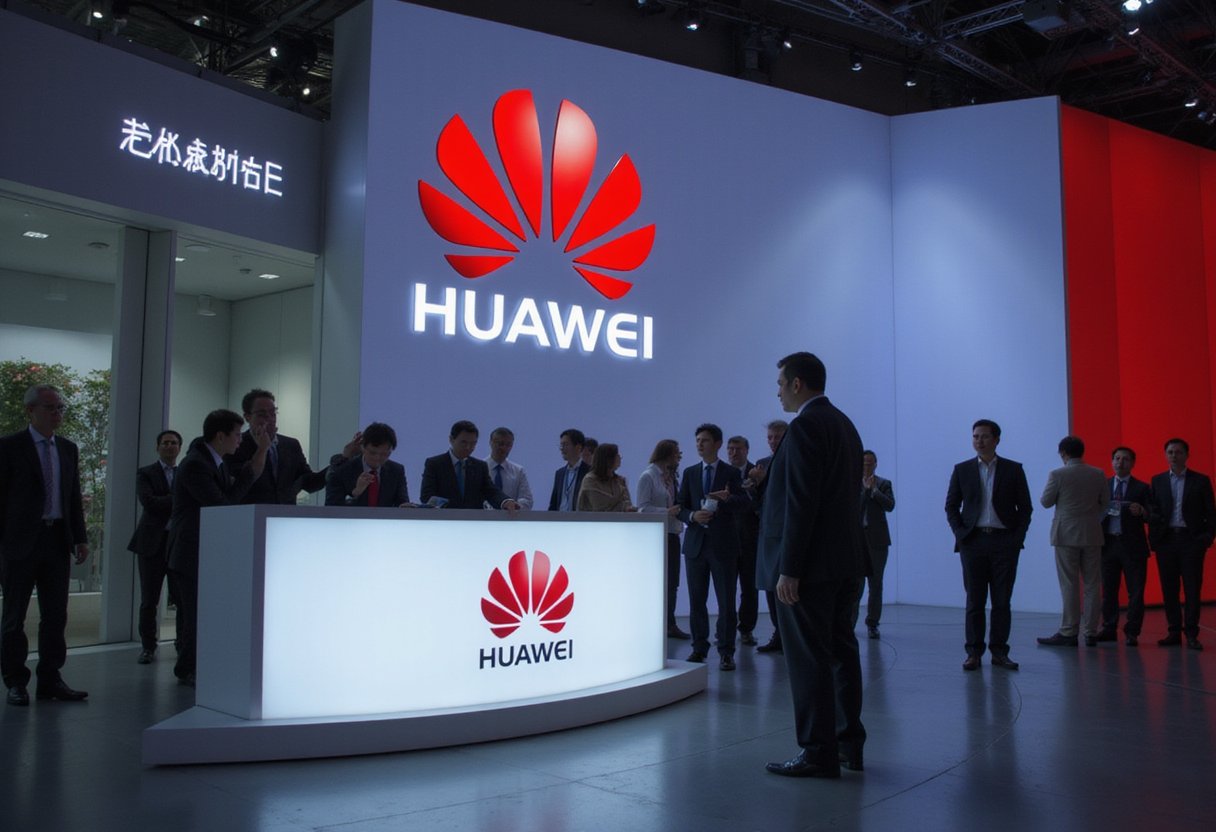
Huawei has opened access to 10,000 Neural Processing Units (NPUs) to AI developers outside the company, according to Tech in Asia coverage of the announcement.
The allocation targets model training and inference workloads on Huawei's in-house accelerator family and ranks as one of the largest single-vendor NPU pools disclosed for third-party AI development. The move positions Huawei as a direct alternative to GPU-based cloud services for customers restricted from Nvidia hardware.
What does the allocation cover?
The 10,000-NPU pool covers both training and inference workloads on Huawei's Ascend silicon. For comparison, comparable cloud-hosted GPU pools from Western hyperscalers typically count allocations in the low thousands per customer region, which puts the Huawei figure on the upper edge of disclosed commercial capacity for any accelerator class.
NPU accelerators differ from general-purpose GPUs in their specialization for the matrix and tensor operations that dominate deep-learning workloads. They carry dedicated on-chip memory hierarchies and high-bandwidth interconnect fabrics that allow multiple devices to behave as a single training cluster, while consuming less power per operation than comparable GPU SKUs in the same process node.
Developers typically gain access through cloud APIs, containerized runtime environments, or physical rack allocations in Huawei-operated data centers in China and select overseas regions. The headline does not specify the geographic split or whether hardware export licensing applies.
Who can apply?
The pool opens to external AI developers, with eligibility likely weighted toward customers building large-language models, computer-vision systems, and recommendation pipelines. Huawei has historically prioritized applications that map efficiently onto its Da Vinci architecture, the instruction set shared by both training-oriented and inference-oriented Ascend parts.
The headline coverage does not specify application details, pricing schedules, or SLA terms.
Developers seeking structured access typically submit compute-budget requests specifying expected training duration, model parameter count, and dataset size, after which Huawei issues a resource-quota tier or a reservation slot.
MindSpore, Huawei's answer to PyTorch and TensorFlow, ships with first-class support for Ascend silicon and has driven much of the third-party model-port activity to date.
How does this fit the broader market?
The disclosure lands against tightening access to high-end Nvidia accelerators in China and an industry-wide shortage of training compute. Huawei's domestic NPU supply has expanded through foundry and advanced-packaging partnerships, though yield and high-bandwidth-memory availability remain constrained.
For AI developers, the practical question is throughput per dollar and per watt rather than raw FLOPS. Ascend silicon has historically trailed Nvidia's H100 and H200 generations on peak throughput but narrows the gap on specific operator benchmarks after software-side optimization through the MindSpore and CANN toolchains.
The 10,000-NPU figure is therefore a volume signal as much as a performance signal. It tells developers that Huawei can amortize fixed costs across a larger user base and offer access at price points that reflect scale rather than scarcity, particularly for inference workloads where utilization drives unit economics.
What remains unclear?
The Tech in Asia headline does not indicate:
- Which Ascend generation (310, 910, 910B, 910D) makes up the pool
- Whether access is sold as reserved capacity, on-demand, or a hybrid
- Whether overseas developers outside China qualify
- Pricing or quota tiers
Until Huawei publishes a developer-facing portal or developer-conference materials with those specifics, the 10,000-NPU headline reads as a capacity ceiling rather than a productized offering. Developers evaluating the pool for production workloads will need concrete answers on chip generation, interconnect topology, and SLA terms before they can size training jobs or commit inference budgets.
via Google News: NPU (Source)
More from Priya Raman
Same lot · LOT-C1C6
- DSG-613365nmDeepSeek Releases Huawei AI Chip Tooling, Targets Nvidia Replacement
- DSG-66815nmHuawei and DeepSeek Join Forces on AI Chip Software
- DSG-606120nmHuawei's Next-Gen Ascend NPUs Emerge as China's Strongest AI Bet
- DSG-19855nmDeepSeek and Huawei team up on AI chip software stack
- DSG-557065nmHuawei and Alibaba Report Advances in AI Chips, Clusters, and Models