Test report DSG-6133 · Rev D · tested October 10, 2026
Supply Chain & PolicyDevice under test
DeepSeek Releases Huawei AI Chip Tooling, Targets Nvidia Replacement
DeepSeek published open-source tooling targeting Huawei Ascend AI accelerators, marking the first substantial open-source effort to make domestic Chinese silicon competitive with restricted Nvidia GPUs in the mainland.
- Read
- 3 min
- Words
- 630
- Node
- 65nm
- Operator
- Priya Raman
Spec summary
- DeepSeek released open-source tooling for Huawei Ascend AI accelerators, per Bloomberg
- The toolchain targets Huawei's CANN software platform as a CUDA alternative
- US Commerce export controls on advanced AI chips to China have been progressively tightened since October 2022
- Nvidia's restricted SKUs have included the A100, H100, A800, H800, and H20
- China represented a significant share of Nvidia's data-center revenue before export curbs took effect
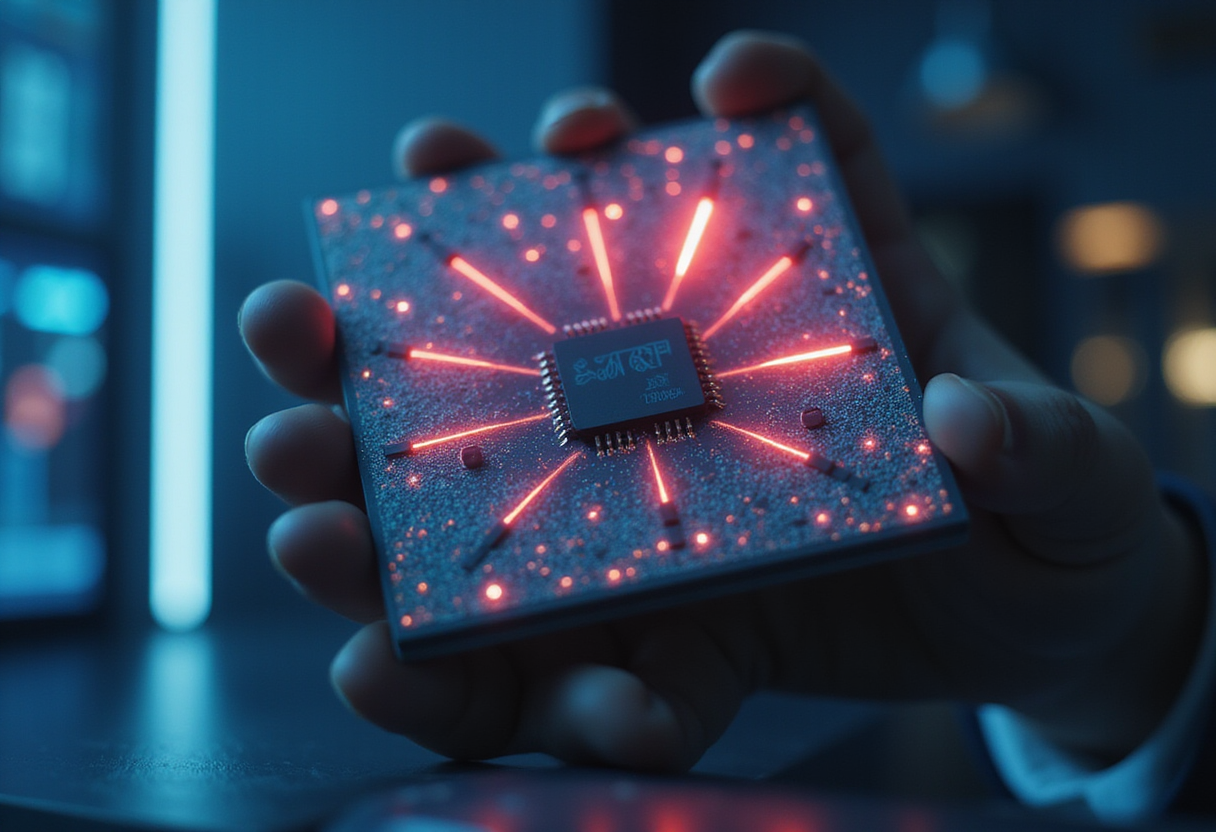
DeepSeek has released open-source tooling engineered to run AI training and inference workloads on Huawei's Ascend accelerators, opening a technical path that could displace Nvidia GPUs from portions of China's domestic AI infrastructure stack.
The Chinese AI laboratory published the toolchain publicly, with the stated objective of letting model developers port existing Nvidia CUDA-based workflows onto Huawei silicon. Bloomberg reported the release as the first substantial open-source package aimed at making Huawei's neural-network hardware competitive with restricted Nvidia parts inside the mainland market.
What did DeepSeek actually ship?
The release targets Huawei's Compute Architecture for Neural Networks (CANN), the vendor's equivalent of Nvidia's CUDA software platform. Tooling covers fine-tuning scripts, model-conversion utilities, and low-level kernel optimizations designed to reduce the porting cost for groups currently running on Nvidia hardware.
DeepSeek's engineers built support around Huawei's most recent Ascend generation rather than across the full product line, prioritizing the chips that have seen the largest deployments in state-backed Chinese compute clusters.
Why Huawei silicon now?
Huawei Ascend accelerators face no US export restrictions inside China and have become the focal point of domestic compute buildouts. Nvidia's data-center GPUs, by contrast, have been progressively walled off from Chinese buyers since the US Commerce Department's first advanced-compute controls in October 2022.
The original rules capped shipments of A100 and H100 parts at defined throughput thresholds. Subsequent amendments pulled successive Nvidia SKUs into the restricted list, including the A800, H800, and the H20 — a China-specific component Nvidia built specifically to comply with the original limits. Each tightening narrowed the addressable market for Nvidia in mainland China and pushed buyers toward domestic silicon.
What changes for Nvidia?
China represented a meaningful, single-digit-to-low-double-digit share of Nvidia's data-center revenue before the export controls took hold. The company continues to sell gaming, embedded, and select professional parts into the market, but the AI-training segment — historically the highest-margin portion of the customer base — has eroded with each regulatory round.
DeepSeek's tooling does not, by itself, close that gap. But it lowers the engineering cost for Chinese AI labs that have already standardized on Huawei hardware, accelerating a transition that export controls set in motion.
What remains unverified
Three points warrant caution before treating this as a one-for-one Nvidia substitute:
- Performance parity with Hopper-class Nvidia silicon on multi-thousand-GPU training runs has not been independently benchmarked at the configurations DeepSeek published.
- Tooling coverage is reported to span only specific Ascend variants; older Ascend parts and edge-tier SKUs are not uniformly supported.
- The economic comparison shifts with each Nvidia product launch and each US rule revision — the substitution calculus in 2025 differs from the one in 2024.
Industry context
Open-source tooling for non-Nvidia accelerators has been a recurring theme through 2024 and 2025, with ROCm, Intel oneAPI, and a growing set of community projects targeting AMD, Intel, and now Huawei hardware. DeepSeek's contribution narrows the software gap rather than closing it; Huawei's CANN ecosystem still requires more application-layer investment than CUDA, which has roughly two decades of accumulated libraries, kernels, and documentation behind it.
What to watch next
Independent benchmarks comparing DeepSeek-tuned Ascend deployments against Nvidia H100 or H200 clusters on comparable model sizes would clarify the production-grade gap. Equally important: any signal from Chinese hyperscalers — Alibaba, Tencent, Baidu, ByteDance — about whether they retool internal pipelines around the DeepSeek package.
Nvidia has not publicly commented on the release. The next data point likely arrives with the company's next quarterly earnings disclosure, when China-region revenue will quantify how much of the displacement, if any, has already occurred.
via Google News: AI chip (Source)
More from Priya Raman
Same lot · LOT-C1C6
- DSG-87837nmDeepSeek Teams With Huawei on AI Chip Programming Tools
- DSG-66815nmHuawei and DeepSeek Join Forces on AI Chip Software
- DSG-694765nmDeepSeek Releases Tools Aimed at Replacing Nvidia Chips with Huawei Silicon
- DSG-845928nmDeepSeek and Huawei to co-develop open-source AI chip software
- DSG-758614nmDeepSeek and Huawei partner on AI chip software to cut Nvidia reliance