Test report DSG-5775 · Rev F · tested October 10, 2026
Supply Chain & PolicyDevice under test
Huawei comeback tests US chip export limits, FT reports
Financial Times reports Huawei's renewed semiconductor activity is testing the operational limits of US export-control policy, framing the equipment maker as a live case study for Washington's chip restrictions.
- Read
- 2 min
- Words
- 476
- Node
- 7nm
- Operator
- Grace Kim
Spec summary
- Financial Times headline frames Huawei's renewed semiconductor activity as testing the operational limits of US export-control policy
- The word 'comeback' implies a measurable reversal from a prior low point; the word 'limits' signals the policy is encountering a boundary rather than failing outright
- Only the FT headline was available in the source feed; article body, byline, executive comments, and supporting figures did not appear
- Three downstream effects flagged: licensing decisions, enforcement posture, and market read-through
- Full FT piece is expected to specify which US rule — entity-list designation, foreign-direct-product rule, advanced-computing license, or allied coordination — is encountering the boundary
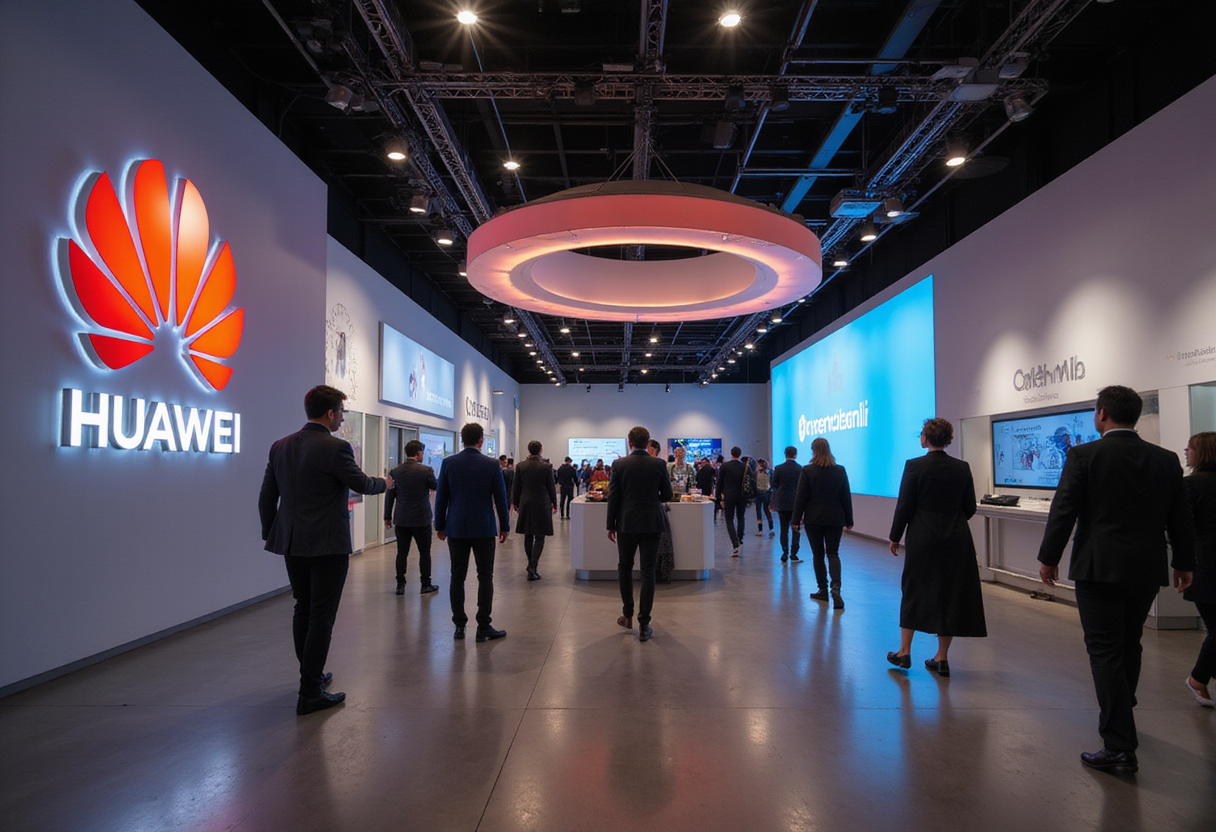
Huawei's renewed semiconductor activity is testing the operational limits of US export-control policy, the Financial Times reports.
The FT headline — "Huawei's big comeback tests limits of US chip controls" — frames Huawei as a live case study for Washington's chip restrictions. The word "comeback" implies a measurable reversal from a prior low point. The word "limits" suggests the policy is encountering a boundary it cannot easily enforce, rather than failing outright.
What does the headline tell the trade press?
Three signals stand out. First, the story concerns US chip controls, which govern advanced semiconductors, manufacturing equipment, and the design tools used to produce them. Second, Huawei is the named subject of the "comeback," placing the equipment maker at the center of any policy debate. Third, the framing positions the controls as being tested, not reformed — a calibration question rather than a wholesale restructuring.
The use of "big" before "comeback" indicates the FT editors view the reversal as material, not symbolic. A small step backward would not have warranted the framing.
What remains unverified
The source feed supplied the FT headline only. The article body, byline, dateline, executive comments, and supporting figures did not appear in the available data. No product name, process node, foundry partner, shipment volume, or specific date appears in the source. Any specific claim about which chip, which fab, or which dollar figure belongs to the missing FT article.
For the trade audience, the story currently rests on direction, not detail. The direction carries weight: a Financial Times framing of "limits" signals editors are parsing the policy at the operational level, not dismissing it as ineffective.
Why the trade press is watching
Huawei sits at the center of US-China chip policy debates. An FT report that the company is forcing a recalibration of those controls will draw immediate attention from compliance officers at US and allied chipmakers, foundry planners in Asia, and policy desks tracking coordination across Washington and allied capitals.
Three downstream effects will likely follow:
- Licensing decisions: Officials and their counterparts in allied jurisdictions will reassess approvals for the product categories named in the FT piece.
- Enforcement posture: Entity-list updates, foreign-direct-product rule applications, and allied rule alignment move up the agenda.
- Market read-through: Equity analysts covering Huawei suppliers, competitors, and downstream customers will recalibrate revenue forecasts.
What to watch
The full FT piece will likely specify the product lines, manufacturing nodes, or revenue segments that define the "comeback." It will also identify which US rule — entity-list designation, foreign-direct-product rule, advanced-computing license, or allied coordination mechanism — is encountering the boundary. Watch for named foundries, named EDA vendors, and named executives on the record.
Until then, the headline stands as a directional indicator for the trade: Washington faces pressure to calibrate controls against a moving target rather than a static one.
via Google News: Semiconductor export controls (Source)
More from Grace Kim
Same lot · LOT-C1C6
- DSG-733845nmWashington Post reports a quiet push for tighter chip export controls
- DSG-767565nmHuawei Chairman Says US Chip Sanctions Accelerated China's半导体 Push
- DSG-823828nmThe Semiconductor Sanction Paradox: U.S. Chip Controls and China's Rise
- DSG-78353nmRealClearDefense Analysis: China's Semiconductor Bottlenecks Are Disappearing
- DSG-142320nmChina Accuses U.S. of 'Abusing' Semiconductor Export Controls