Test report DSG-7023 · Rev F · tested November 16, 2026
Edge AI SiliconDevice under test
Edge AI Cushions Intel's PC Decline But Cannot Replace It Yet
Intel shares sit at $56.96, down 42% in a month. Client revenue fell 5% to $8.1B in Q3 while 130+ customers test edge AI products. The gap remains.
- Read
- 4 min
- Words
- 719
- Node
- 20nm
- Operator
- Marcus Bennett
Spec summary
- Intel traded at $56.96 premarket, down 42.0% over one month but up 54.4% year to date.
- Q3 client revenue fell 5% year over year to $8.1 billion; AI PC revenue grew 35%.
- Intel guides Q4 client revenue down more than 20% sequentially; 2026 PC unit TAM to decline ~12%.
- Data Center and AI revenue rose 78% to $7.318 billion, with operating income of $3.04 billion.
- Over 130 customers are adopting or testing Core Ultra Series 3 and Core Series 3 for edge AI.
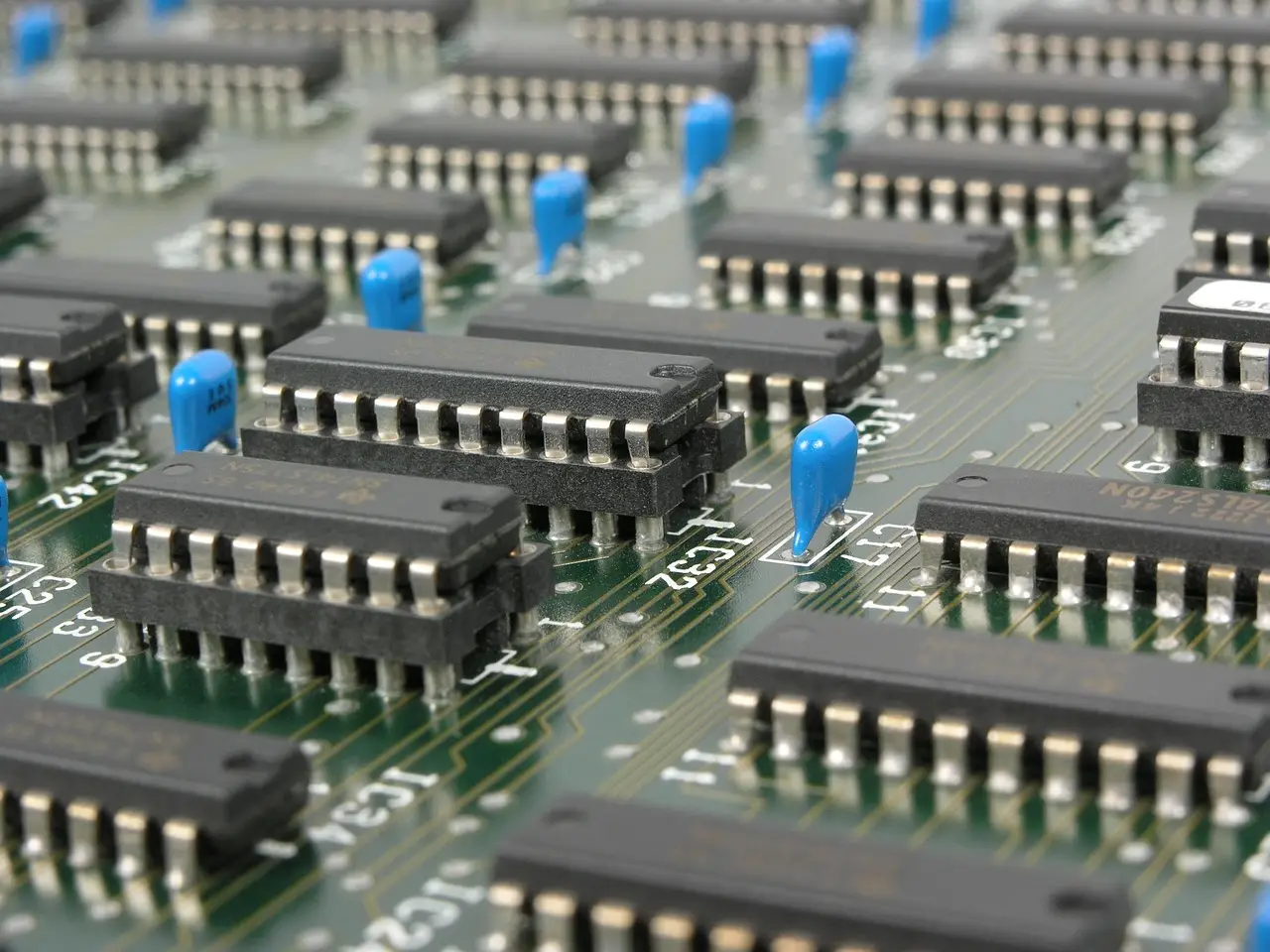
Intel shares traded at $56.96 in Monday's premarket, down 42.0% over one month but still up 54.4% year to date. Reuters reported that shareholders have sued the company over the plunge. Two opposing narratives about Intel (NASDAQ:INTC) collided this month: Forbes asked whether the stock could fall further as the PC market contracts, while TipRanks reported shares rising as Intel pushed deeper into edge AI between November 8 and 10, 2026. For now, the market favors the bearish view.
The practical question is simple: can edge AI fill the gap that PCs are leaving? The numbers say not yet.
Where does Intel compete in edge AI?
Edge AI runs on devices and local hardware rather than in a remote cloud. Intel renamed its client unit the Client Computing and Physical AI Group to reflect that push.
Several products have already shipped:
- Core Ultra Series 3 (Panther Lake), built on Intel 18A
- The open-source OpenVINO Physical AI framework for robotics
- The first Googlebook devices from Acer, ASUS and Lenovo
Adoption is wider than a few launches. More than 130 customers are adopting or testing Core Ultra Series 3 and Core Series 3 for edge AI and robotics. But most of those customers are still testing. Few have been confirmed as revenue.
Chief Executive Lip-Bu Tan laid out the case in April: "The next wave of AI will bring intelligence closer to the end user, moving from foundational models to inference to agentic. This shift is significantly increasing the need for Intel's CPUs and wafer and advanced packaging offerings."
How big is the PC gap?
Client revenue fell to $8.1 billion in Q3, down 5% year over year and 9% sequentially. AI PC revenue grew 35%. CFO David Zinsner said the edge business held up better than the wider client unit. But Intel's reported results do not break out edge revenue, so no stated figure cancels the PC decline.
Zinsner's outlook is worse. He said: "We expect the 2026 PC unit TAM to decline approximately 12%, with second-half units down more than 20%. We do not expect a sustained recovery until memory availability improves and pricing begins to normalize. For 2027, we're planning for the PC unit TAM to decline roughly 10%."
Intel expects client revenue to drop more than 20% sequentially in Q4.
The server side tells a different story. Data Center and AI revenue rose 78% to $7.318 billion. That unit's operating income climbed to $3.04 billion from $964 million. Tan argues CPUs are the better inference engine: "While GPUs are great at thinking tasks, deterministic CPUs are far more efficient at inference tasks."
How high is the competitive bar?
AMD (NASDAQ:AMD) grew client revenue 7% to $2.95 billion in Q3 while Intel's client revenue contracts. AMD also sells Ryzen AI Halo systems for local agentic AI. Nvidia (NASDAQ:NVDA) grew Graphics revenue 46% to $7.92 billion in fiscal Q2 2027. It is moving into Windows PCs with its RTX Spark superchip and into robotics with Jetson Thor. Nvidia is also a partner: it bought $5.0 billion of Intel common stock.
What could widen the gap?
- High memory prices and limited IT budgets are holding back PC demand; Intel expects the slowdown to last at least through the first half of 2027.
- Intel Foundry still posted a $1.85 billion operating loss.
- Q4 guidance calls for revenue of $15.0 billion to $16.0 billion and non-GAAP EPS of $0.25, both down from Q3.
- Xeon supply constraints limit how quickly Intel can capture strong server demand.
What is the verdict?
Edge AI cannot replace Intel's PC business through 2027. The edge wins remain early, and Intel does not separately report that revenue. Server CPUs running inference workloads are the bridge actually supporting results. Edge AI's role is to slow the client decline, and it is too small today to cancel it.
One trigger to watch is Intel's Q4 report. If client revenue falls more than the guided 20% sequentially and AI PC growth slips below 35%, edge AI is failing even as a cushion. If AI PC growth holds and Intel begins the stated edge revenue, the case for edge AI gets stronger.
via 247wallst.com (Source)
More from Marcus Bennett
Show full bio
News editor covering regulation, policy and their impact on hardware layer of artificial intelligence at Die Signal.
681 articles
Same lot · LOT-362C
- DSG-76345nmSiMa.ai raises $150m at $1.45bn valuation for physical AI silicon
- DSG-34375nmIntel Datacenter Revenue Climbs 59% on AI Host Demand
- DSG-271528nmIntel Launches Industrial Edge AI Processors and Healthcare AI Suite
- DSG-27437nmIntel’s $15B-$16B Q4 2026 Guide Puts 2027 Cash Flow at Risk
- DSG-248910nmIntel Trades at $62.50 as Server Growth Meets 2027 Risk