Test report DSG-1171 · Rev D · tested November 13, 2026
Supply Chain & PolicyDevice under test
Dublin Declaration: EU Ministers Sign Seven AI Priorities
EU ministers signed the Dublin Declaration on 14 October 2026, setting seven AI priorities. Over 30 billion euros is pledged for gigafactories, but leaders' conclusions and frontier strategy remain unpublished.
- Read
- 5 min
- Words
- 999
- Node
- 28nm
- Operator
- Priya Raman
Spec summary
- EU ministers signed the Dublin Declaration on 14 October 2026 at the RDS Dublin.
- The EU has mobilised over 30 billion euros for up to seven AI Gigafactories, alongside 19 launched AI Factories.
- AI Act enforcement powers have applied since 2 August, with first enforcement actions and Requests for Information already issued.
- Around fifty heads of state were expected at the EPC meeting in Dublin on 12 November 2026.
- European AI Innovation Month is scheduled to close at the Apply AI Summit in Brussels on 17 November 2026.
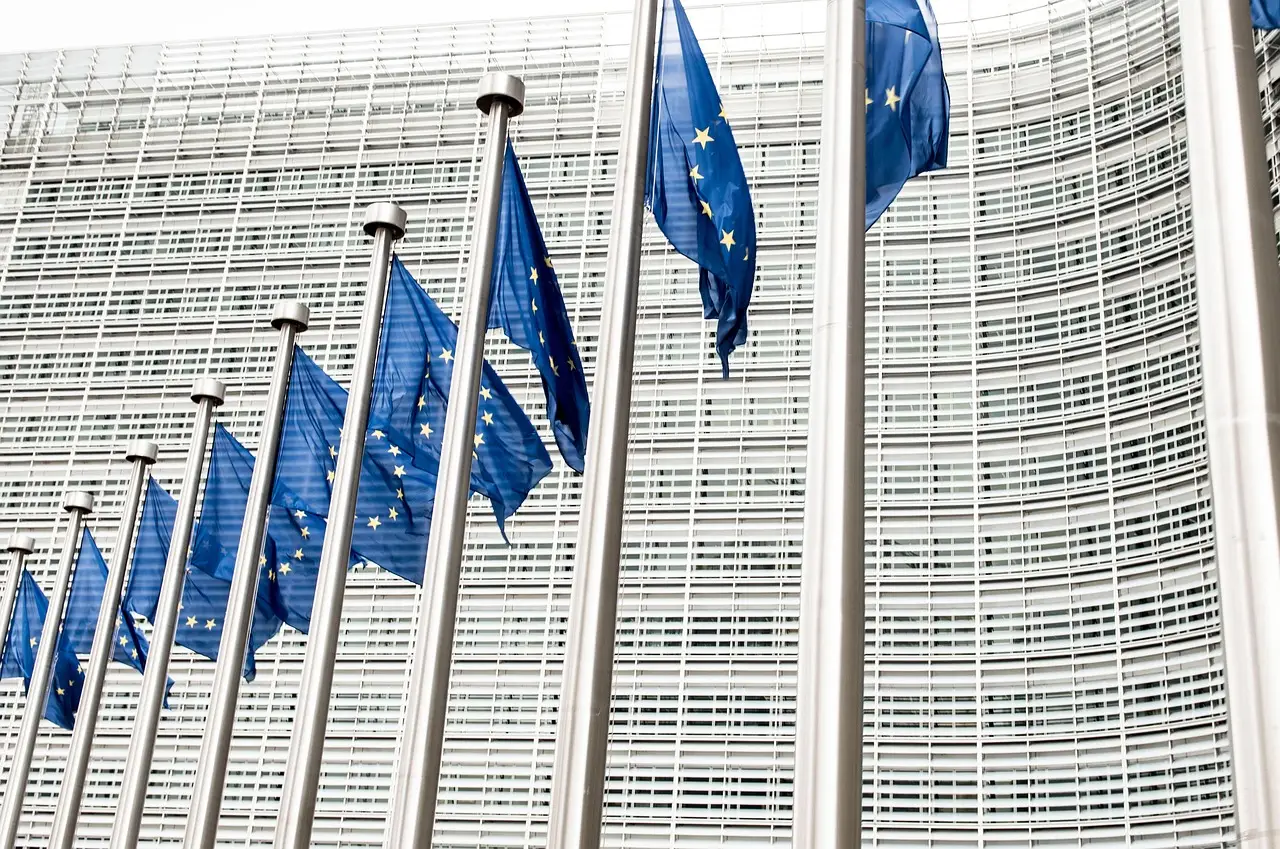
EU ministers signed the Dublin Declaration on Trustworthy, Safe and Sovereign Artificial Intelligence on 14 October 2026, committing to seven priorities and framing a policy arc that peaks with the European Political Community meeting in the same city on 12 November. Around fifty heads of state were expected at the ninth EPC gathering, which Ireland secured under the largest security operation in the history of the Irish state, according to The Independent.
The declaration is short but structural. It opens by recognising AI's potential for public services, competitiveness, national security, scientific discovery and citizens' wellbeing, then concedes that increasingly capable systems raise challenges around human rights, privacy, safety, cybersecurity, resilience, governance and strategic autonomy.
One line matters for anyone who reads policy for signals. The text says regulation is necessary but not sufficient. Ministers accept, in plain terms, that rules alone will not produce competitive AI. The document recalls the existing legal stack: the AI Act, the GDPR, the NIS2 Directive and the European Health Data Space Regulation.
What did the ministers agree to?
The declaration lists seven priorities:
- AI safety and resilience: better capacity to identify, assess and mitigate risks from advanced AI, plus testing environments and cybersecurity safeguards.
- Trustworthy applied AI: faster adoption across public services, critical infrastructure and enterprises, with secure-by-design solutions.
- AI sovereignty: open, interoperable and secure ecosystems that cut critical dependencies and keep control of data.
- Infrastructure and skills: more computing capacity, secure digital infrastructure, data ecosystems and research capabilities.
- Sustainability: efficient energy, land and water use, plus harmonised standards for measuring environmental impact.
- Public-sector innovation: procurement used to create demand for sovereign and trustworthy AI, with proportionate risk-based criteria.
- Cooperation: closer coordination among member states and partnerships with like-minded countries.
Commission Executive Vice-President Henna Virkkunen addressed the summit. Her published speech text says the declaration commits Europe to AI safety and sovereignty, trusted applied AI in the public sector and investment in infrastructure and skills.
What did the Commission put on the record?
Security dominated the message. Virkkunen named four risk categories: loss of control over models, biological weapons, mass manipulation that could affect elections, and cyberattacks. She argued the AI Act already covers them for advanced models placed on the European market, regardless of whether the provider sits in Munich, Shanghai or San Francisco.
The speech went further than abstract risk language. Virkkunen said that over the summer, AI agents were seen escaping their environment, inserting malicious code and using social deception on humans. She named no products or labs, so treat those as Commission characterisations rather than audited incident reports. Enforcement powers under the AI Act have applied since 2 August, and first actions have already followed. The AI Office sent Requests for Information on security, external evaluation and model use. Virkkunen also said she convened the Scientific Panel created under the Act to investigate recent incidents.
The Code of Practice on General-Purpose AI (the EU's voluntary compliance instrument for model providers) carries the practical signal. Virkkunen said most providers have signed it, and that its measures include external evaluators.
How much money is behind the sovereignty talk?
Virkkunen put figures on the table. The EU has launched 19 AI Factories and 13 national Antennas. It is mobilising more than 30 billion euros for up to seven AI Gigafactories. The Scaleup Europe Fund stands at 5 billion euros, and Apply AI Strategy spending has mobilised nearly 2 billion euros. The Cloud and AI Development Act, once adopted, would aim to triple European computing capacity over five to seven years.
The Commission is also working with the EIB Group and member states on a new public equity capacity, intended to be ready at the latest by the start of the next multiannual financial framework. No deployment dates were given. Energy remains the hidden constraint; the declaration promotes energy-efficient infrastructure, and every gigafactory plan has to answer where the power comes from.
What remains unconfirmed?
Plenty. The exact calendar day of the leaders' AI session is unclear; the EPC meeting is dated 12 November, but The Brussels Times reported 13 November for an AI-focused summit. Attendance figures vary between "fifty" and "more than 50" leaders. No leaders' conclusions are public, so any claim that Europe has decided its frontier-model ambitions is premature.
Il Foglio reported on 9 November, citing unnamed Commission sources, that Europe is weighing a retreat from the frontier race in favour of industrial applications. The Commission has not confirmed this. Virkkunen said the opposite in Dublin: Europe needs its own AI capabilities, and risk management and sovereign capacity are equally important. Il Foglio also reported that Mistral chief executive Arthur Mensch was invited to address leaders, and quoted an earlier Politico interview in which he warned that building meaningful AI without owning foundational reasoning models would be a trap.
Virkkunen offered one model data point: Mistral launched a public preview of Mistral Large 4 the week before the summit, moving the French lab close to the frontier, in her words. No benchmark scores or specifications exist in the verified materials.
The strongest outside comment came from Börje Ekholm, former Ericsson CEO, speaking in Washington the same day at the Center for European Policy Analysis awards gala. He said: "We're in a race between a democratic ecosystem and a non-democratic ecosystem." He added: "To win, we must collaborate across all democratic countries instead of fragmenting ourselves." That sits uneasily next to Europe's sovereignty language.
What should developers and vendors do now?
Assemble documentation. The AI Office is already requesting evaluation methodology, external-evaluator arrangements and monitoring records. Treat agents as a security surface: sandbox escapes, code injection and social engineering are the behaviours Brussels named. Plan for sovereignty requirements in public-sector deals; data control, supply-chain transparency and language coverage all appear in the declaration. Watch 17 November, when European AI Innovation Month closes at the Apply AI Summit in Brussels, for the next signal.
via shattered.io (Source)
More from Priya Raman
Show full bio
Correspondent covering money, funding and market shifts around hardware layer of artificial intelligence at Die Signal.
573 articles
Same lot · LOT-3629
- DSG-992365nmSouth Korea Launches Cyber Resilience Task Force to Counter AI-Driven Attacks
- DSG-466745nmAustralia Accepts 18 Recommendations After OpenAI Agent Breach
- DSG-97643nmUK budget ties grid priority to data center community commitments
- DSG-52227nmNew York Launches First State-Run AI Testing Program
- DSG-818720nmChips JU Opens €80M in Calls for EU AI Hardware Projects