Test report DSG-6377 · Rev B · tested November 8, 2026
AI Datacenter InfrastructureDevice under test
Dell PowerEdge R770AP Review: 256 Xeon 6 Cores, 32 E3.S Bays in 2U
Dell's 2U air-cooled PowerEdge R770AP takes two 128-core Intel Xeon 6980P CPUs, 32 E3.S Gen5 bays, 1.8kW redundant supplies and OCP 3.0 networking up to 400Gbps.
- Read
- 4 min
- Words
- 784
- Node
- 20nm
- Operator
- Grace Kim
Spec summary
- PowerEdge R770AP supports two Intel Xeon 6980P CPUs, 128 cores each, for 256 cores total in 2U
- Front panel holds up to 32x E3.S Gen5 NVMe bays, 16 per side of a central airflow channel
- Rear I/O includes OCP NIC 3.0 slots supporting 200Gbps+ ports; Xeon 6 can feed 400Gbps NICs
- Redundant 1.8kW power supplies and a BOSS-N1 boot device with two 480GB M.2 NVMe drives in RAID 1
- Chassis depth is 801mm rear I/O without bezel; review unit used four 1.6TB CD8P E3.S SSDs
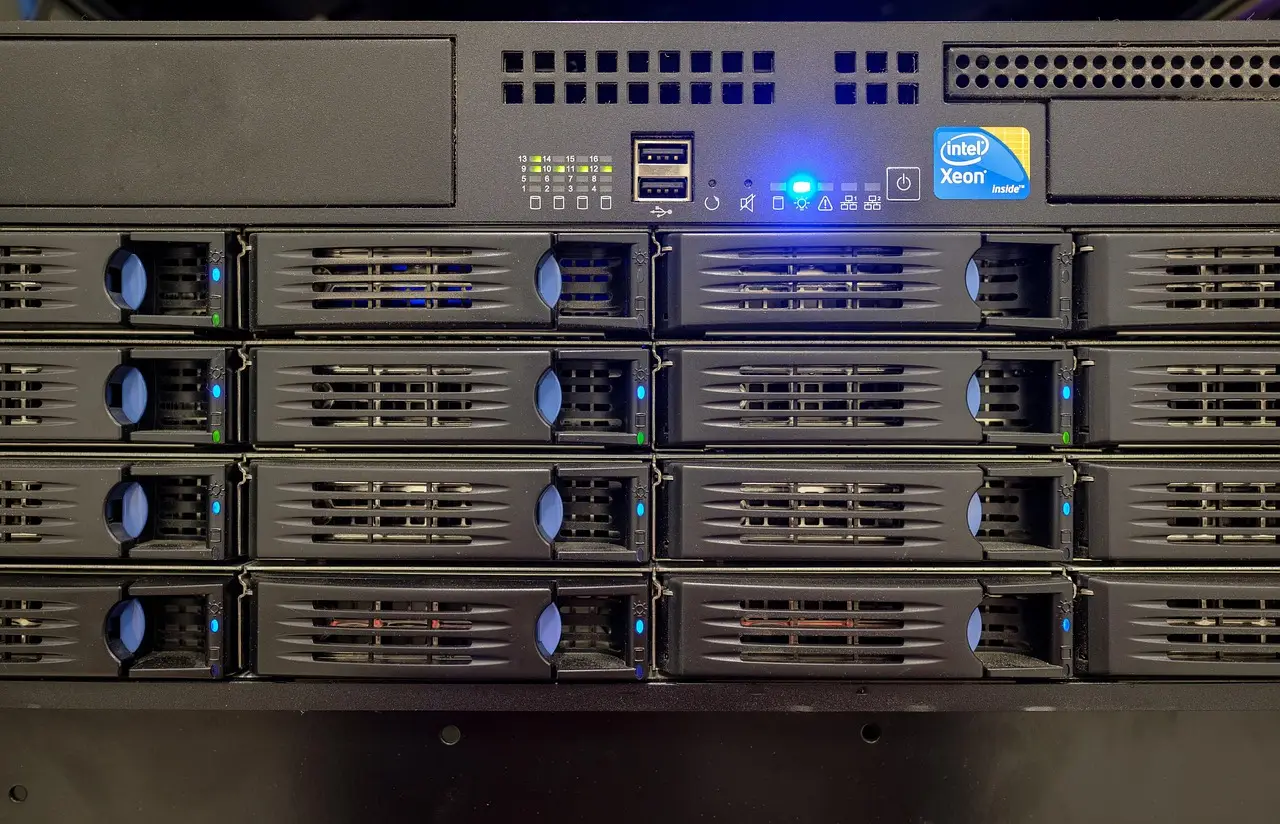
Dell's PowerEdge R770AP packs 256 cores into a 2U air-cooled chassis: two Intel Xeon 6980P processors, 128 cores each, in a dual-socket design that will anchor Intel's platform roadmap for some time. The "-AP" suffix stands for Advanced Performance, at least within the Intel ecosystem, and given the current Diamond Rapids schedule, this is set to be the major Intel platform going forward.
Serving Home wanted to test the box with Intel's Xeon 6+ Clearwater Forest chips, but Intel could not supply silicon. The review unit, one specific configuration from Dell's broad configurator, instead showcases what Dell calls a flexible I/O and storage design built around the Xeon 6 generation.
What does the chassis look like?
The R770AP is a standard 2U rack server with an 801mm rear I/O depth without bezel, per Dell's current technical specifications. The front carries the model markings and service tag on the lower edge — a detail many servers omit — which pushes drive bay numbering for bays 25-31 onto an arrow label since the service tag occupies the usual spot.
Storage dominates the front, but not in the way of previous generations. The panel splits into two banks of vertically oriented E3.S carriers, 16 per side, separated by a central ventilation section. Orange release markings make individual drives easy to identify and pull. An E3.S carrier is smaller than a U.2 carrier (the older 2.5-inch NVMe form factor), which boosts density but leaves slimmer latches.
That center air channel matters. On previous-generation 2.5-inch drive-bay servers, the mid-chassis airflow zone typically capped you below 24 U.2 bays. E3.S (the EDSFF ruler-style flash format) delivers both the direct air channel and 32 front bays.
Front storage options from Dell's current specs include:
- Up to 32x EDSFF E3.S Gen5 NVMe drives
- Up to 16x 2.5-inch U.2 Gen5 x4 or x2 NVMe SSDs
- A no-backplane option
The review unit carries four Dell DC NVMe CD8P E3.S MU 1.6TB SSDs — the Kioxia CD8 1.6TB E3.S drive in Dell packaging.
Rear I/O and networking
The right front ear houses a power button, information status control, and a USB Type-C socket. Dell specifies USB 2.0 for that port, so it's a service port, not a Thunderbolt-capable connection. A few servers now use Type-C for data and video as local KVM I/O, and that may be where this goes eventually.
The rear panel places riser modules across the top, power supplies at the lower sides, and a modular boot network group plus management ports in between. A large metal handle — a Dell offering for generations — becomes more useful as servers grow heavier.
Power comes from redundant 1.8kW supplies in this configuration; Dell offers several alternatives.
Fixed rear I/O follows the layout familiar from recent PowerEdge generations: VGA for local console, two USB 3.1 Type-A ports, and a dedicated iDRAC Ethernet RJ45 socket for out-of-band management (a separate physical channel for server control, distinct from data networking). iDRAC has been around long enough that people use the name for all out-of-band management solutions. Two rear USB 3.1 ports serve keyboards, mice, and USB storage.
VGA persists because many operators still rely on it for initial bring-up or emergency access via data center monitor carts. The irony is sharp: five-figure dual-socket servers, shared $200 analog monitors.
Boot, NICs, and risers
A Dell BOSS-N1 DC-MHS boot device at the rear carries two 480GB M.2 NVMe drives behind orange release levers, providing a hardware RAID 1 OS volume for VMware or Windows Server deployments that need non-software-RAID boot. It also frees two front bays.
Primary networking uses OCP NIC 3.0 cards (the open compute mezzanine-style NIC standard), supporting everything from low-speed RJ45 to 200Gbps+ ports. This system has both a Broadcom BCM57608 and a Mellanox ConnectX-6 Dx controller installed, with QSFP56 cabling for 200Gbps.
What does this change for buyers? With Xeon 6, you can run 400Gbps NICs — one 400G or two 200G — and NICs have not risen in cost like memory and storage, so upgrading networking in new clusters is becoming a popular way to lift overall cluster performance.
Rear risers are pick-your-own-adventure: full-height, low-profile, and other configurations. Fitting today's higher-power NICs, DPUs, and GPUs at the rear demands real thermal design work, since the SSDs, CPUs, and memory pre-heat the air before it reaches those slots.
Next: inside the system.
via ServeTheHome (Source)
More from Grace Kim
Show full bio
Market editor covering regulation, policy and their impact on hardware layer of artificial intelligence at Die Signal.
565 articles
Same lot · LOT-360F
- DSG-233028nmIntel Details D-Series GPU and Xeon Rack Designs at OCP
- DSG-600365nmIntel Announces GPU D-Series And Xeon Rack Designs
- DSG-188510nmIntel pitches drop-in AI card for existing data-center racks
- DSG-838020nmSiFive's BigSky SF-2U870: 32 RISC-V Cores in a 2U Server Box
- DSG-124314nmAMD EPYC 9006: Mapping Venice Silicon to Agentic AI Workloads