Test report DSG-9671 · Rev D · tested October 10, 2026
AI Datacenter InfrastructureDevice under test
DeepSeek launches Huawei Ascend tools, plans 160,000-chip data centre
Chinese AI start-up DeepSeek plans to deploy at least 160,000 Huawei Ascend accelerators at an Inner Mongolia data centre, releasing open-source TileLang as a CUDA alternative ahead of a US$74B funding round.
- Read
- 3 min
- Words
- 538
- Node
- 20nm
- Operator
- Elena Vasquez
Spec summary
- DeepSeek plans to deploy at least 160,000 Huawei Ascend accelerators at an Inner Mongolia data centre
- Funding round values DeepSeek near 500 billion yuan (US$74 billion or RM304 billion), with a 2026 IPO targeted
- TileLang released Sept. 30, 2026 as an open-source CUDA alternative, free to download
- TileLang and Ascend software stack optimised for Huawei Ascend 950 chips
- DeepSeek develops open-weight models competing with Anthropic and OpenAI
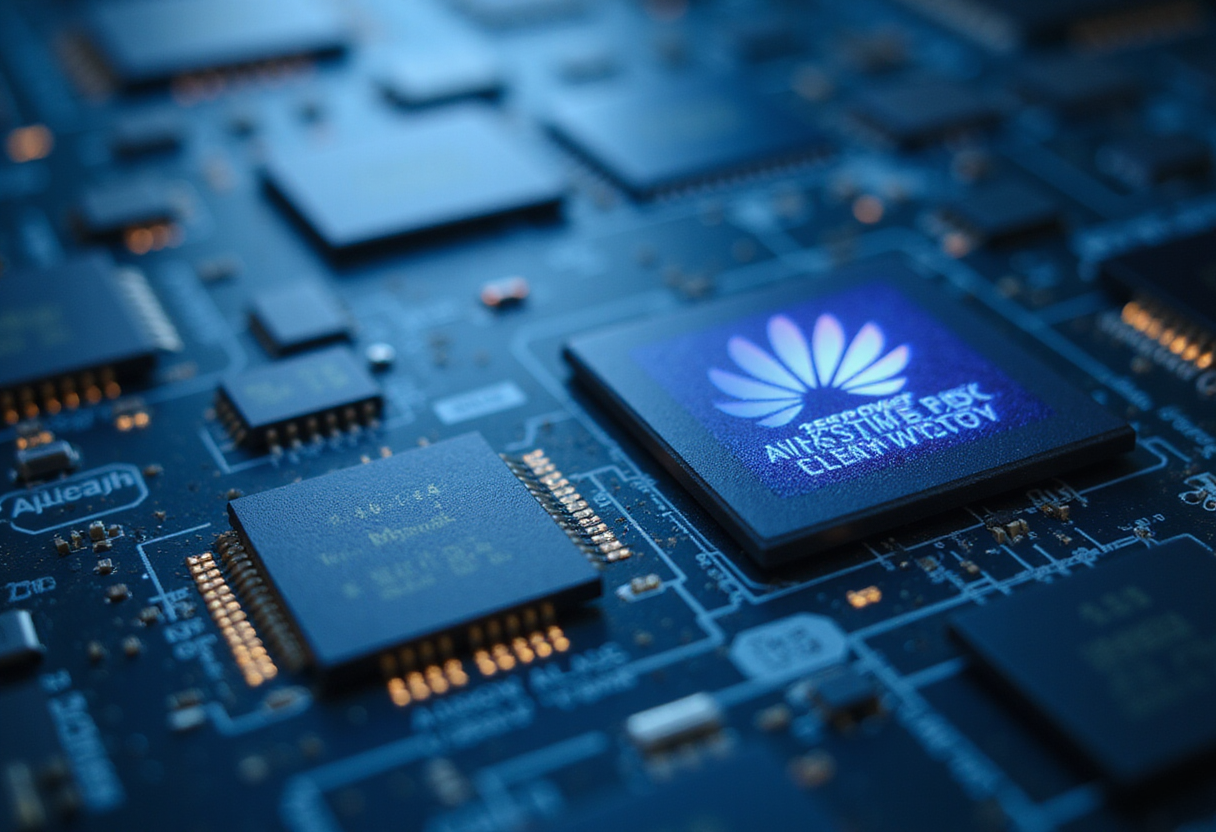
Chinese AI start-up DeepSeek will deploy at least 160,000 Huawei Ascend accelerators at a data centre under construction in Inner Mongolia, the company said on Sept. 30 alongside the launch of TileLang, an open-source programming language positioned as China's answer to Nvidia's CUDA.
The release puts a Chinese-developed CUDA alternative into the hands of developers as DeepSeek nears a fundraising round valued close to 500 billion yuan (US$74 billion or RM304 billion), ahead of a public listing targeted as early as 2026.
What is TileLang?
TileLang sits at the centre of the toolkit DeepSeek developed jointly with Huawei Technologies. DeepSeek describes it as a domain-specific language for programming AI accelerators, modelled on Nvidia's CUDA but written for Huawei silicon.
CUDA has functioned as the global standard for AI development for more than a decade. Tooling that targets CUDA largely determines which chip actually trains or serves a production model. DeepSeek worked with Huawei to optimise performance on Ascend 950 chips, the start-up said.
"A sophisticated programming language with a simple coding process is essential for building an effective AI ecosystem," DeepSeek wrote in its WeChat post.
Why open-source the toolkit?
DeepSeek rarely comments on internal development, including chip integration. The public release signals the company wants third-party developers to write for Ascend hardware without paying licensing fees or waiting for Huawei's own releases.
Huawei provided "unreserved and vigorous support" during the research and development, DeepSeek added. Both companies stated they will collaborate on more innovations.
What does this change in the market?
China's AI labs have relied on Nvidia silicon for training since at least 2022. US export controls have restricted shipments of the most advanced accelerators to China, pushing local labs and chipmakers toward domestic alternatives.
DeepSeek's adoption gives Huawei a flagship reference customer and a credible CUDA alternative at a moment when Chinese data centre build-outs are accelerating. Huawei leads China's effort to produce the accelerators essential to data centres, according to the Bloomberg report cited by The Edge Malaysia.
The move reflects deepening ties between two of China's leading AI firms, both working to fulfil Beijing's vision of replacing American software and circuitry with local equivalents.
What's the financial backdrop?
DeepSeek finalises a fundraising round near 500 billion yuan (US$74 billion or RM304 billion). The valuation sets a benchmark for a Chinese AI start-up targeting a public listing as early as 2026. Proceeds will underwrite the Inner Mongolia build and additional compute procurement.
Bloomberg reported the deployment plan and valuation last month. The Sept. 30 release adds the software layer that ties Huawei's silicon to DeepSeek's open-weight models, which compete with Anthropic and OpenAI.
What comes next?
Two open questions will shape the next phase. First, will third-party developers adopt TileLang in numbers that make Ascend a default target for Chinese AI work, or will CUDA's lock-in keep the field narrow? Second, can Huawei ship Ascend 950 and successors at the volumes DeepSeek's 160,000-chip build requires?
DeepSeek has actively adopted domestic chips, even though model training worldwide still relies heavily on semiconductors from Nvidia.
via advertisement2.bizedge.com (Original)
More from Elena Vasquez
Show full bio
Senior reporter covering industry trends and analytics at Die Signal.
247 articles
Same lot · LOT-C1C6
- DSG-613945nmDeepSeek Open-Sources Huawei Ascend Tools in Push Against Nvidia
- DSG-249228nmDeepSeek Open-Sources Six Tools to Port AI Workloads to Huawei Ascend
- DSG-87837nmDeepSeek Teams With Huawei on AI Chip Programming Tools
- DSG-275614nmDeepSeek and Huawei Partner on Chip Programming Tools
- DSG-613365nmDeepSeek Releases Huawei AI Chip Tooling, Targets Nvidia Replacement