Test report DSG-5397 · Rev D · tested October 12, 2026
Memory & StorageDevice under test
DDR4 Contract Prices Jump 24% in Three Months, Outpacing DDR5
DDR4 contract prices climbed 24% in three months, beating DDR5 gains, as Barclays projects Micron's memory shortage will last until 2028.
- Read
- 3 min
- Words
- 646
- Node
- 10nm
- Operator
- Priya Raman
Spec summary
- DDR4 contract prices rose 24% over three months, outpacing DDR5 price growth.
- Barclays warns Micron's memory shortage could run until 2028.
- DDR5 prices are also rising, indicating a broad DRAM tightening.
- The source provides no base month or regional breakdown for the 24% figure.
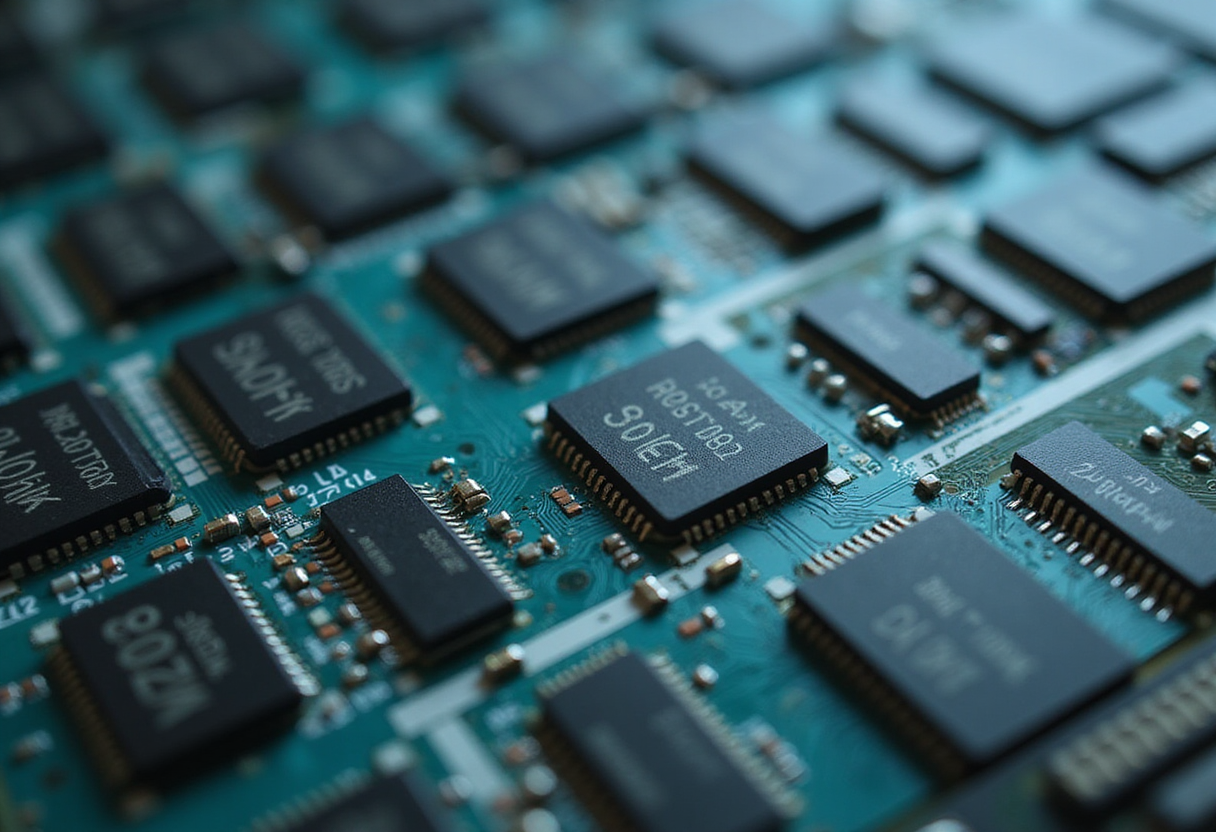
DDR4 memory chip contract prices rose 24% in three months, overtaking DDR5 in percentage terms, according to a report by Wccftech. Barclays analysts attribute the move to a supply shortage at Micron that they expect to run until 2028.
The figure is unusual. DDR4 is a legacy interface (the previous-generation double-data-rate memory standard), and vendors have spent two years migrating output toward DDR5. A legacy product outpacing its successor signals constrained supply, not surging DDR4 demand.
What does the price move tell us?
A 24% contract-price increase in one quarter is steep by memory-market standards. Contract prices (prices negotiated directly between chipmakers and large buyers, as opposed to spot prices) move more slowly than spot markets. A jump of this size in contract terms suggests buyers are locking in supply at almost any cost.
The dynamic follows a familiar pattern. Manufacturers cut DDR4 capacity to convert fabs to DDR5 and high-bandwidth memory. Existing DDR4 installations in servers and industrial systems cannot switch standards overnight. Supply falls faster than demand. Prices follow.
Wccftech reports the surge under a headline framing it alongside a Barclays research note. That note, as summarized, warns that Micron's memory shortage extends until 2028 — a three-year horizon.
How credible is the 2028 timeline?
A three-year shortage forecast deserves scrutiny. Memory markets have historically swung from deficit to glut in 12 to 18 months, because capacity additions and demand destruction both act quickly. Barclays is staking out a longer window than most cycle models would support.
The claim also carries a caveat the headline does not address. Analyst shortage forecasts serve the banks' coverage of memory equities; a longer shortage supports higher price targets for Micron, Samsung and SK hynix. That is not proof of bias. It is a reason to ask who benefits from the number.
What the report does not say matters as well. The source material provides no breakdown of the 24% figure — no base month, no contract volume, no regional split. It does not specify whether the Barclays warning covers DRAM broadly or specific product lines such as high-bandwidth memory for AI accelerators.
Who pays for the DDR4 squeeze?
The burden falls on buyers who cannot migrate. Industrial controllers, networking equipment and budget server builds frequently still specify DDR4. These buyers face the steepest cost increases precisely because they lack alternatives.
For system integrators, the practical question is hedging. A 24% quarterly rise compounds. Two more quarters at that pace would put DDR4 contract prices near double their baseline within a year.
Compare that with DDR5. The report states DDR4 is outpacing the newer standard in price growth, which implies DDR5 prices are also rising, just more slowly. That detail points to a market-wide DRAM tightening, not a DDR4-specific quirk.
What is not yet known?
Several facts would sharpen the picture, and the source does not provide them:
- The absolute price levels behind the 24% figure
- The time window's exact start and end dates
- Whether Barclays revised an earlier forecast or issued a new one
- Samsung's and SK hynix's DDR4 production plans, which would counterbalance Micron's shortage
The last point is decisive. Micron holds roughly a quarter of the DRAM market. Its rivals can redirect legacy production toward DDR4 if the price incentive holds. Barclays' 2028 horizon implicitly assumes they will not do so fast enough.
That assumption is testable. Watch Samsung's and SK hynix's capacity disclosures over the next two quarters. If neither redirects output toward DDR4, the shortage thesis gains ground. If either does, the 24% surge may mark a peak rather than a plateau.
Until then, treat the 2028 date as one bank's projection, not a settled fact. The 24% price move, by contrast, is the hard number in this story — and it is already forcing procurement decisions.
via Google News: DRAM chip (Source)
More from Priya Raman
Show full bio
Correspondent covering money, funding and market shifts around hardware layer of artificial intelligence at Die Signal.
274 articles
Same lot · LOT-C1C8
- DSG-356110nmEx-Samsung Chip Executive: China DRAM Push Could End 414% DDR5 Price Spike
- DSG-52597nmMicron: RAM shortages to persist through 2028 as prices climb
- DSG-200945nmDDR5 Prices Tripled as AI Demand Consumed DRAM Supply
- DSG-783928nmDDR5 Server Memory Prices Up 9X-13X Since ChatGPT Launch
- DSG-433520nmMicron raises 2027 HBM prices after missing 2026 surge