Test report DSG-2745 · Rev F · tested November 18, 2026
AI Devices & SystemsDevice under test
California DMV Bars Waymo From All State Freeways, Effective Nov. 11
California's DMV restricted Waymo from all state freeways on Nov. 11, 2026, citing an imminent hazard after construction-zone incursions on U.S. 101 and a police-pass attempt on I-280.
- Read
- 3 min
- Words
- 670
- Node
- 45nm
- Operator
- Grace Kim
Spec summary
- California DMV barred Waymo from all state freeways effective November 11, 2026
- The DMV cited an "imminent hazard to public safety" from driverless freeway operations
- Three Waymo vehicles entered an active construction closure on U.S. 101 near Burlingame
- A Waymo vehicle attempted to pass CHP cars conducting a traffic break on I-280 in San Francisco
- The restriction is conditional; Waymo's surface-street California service continues
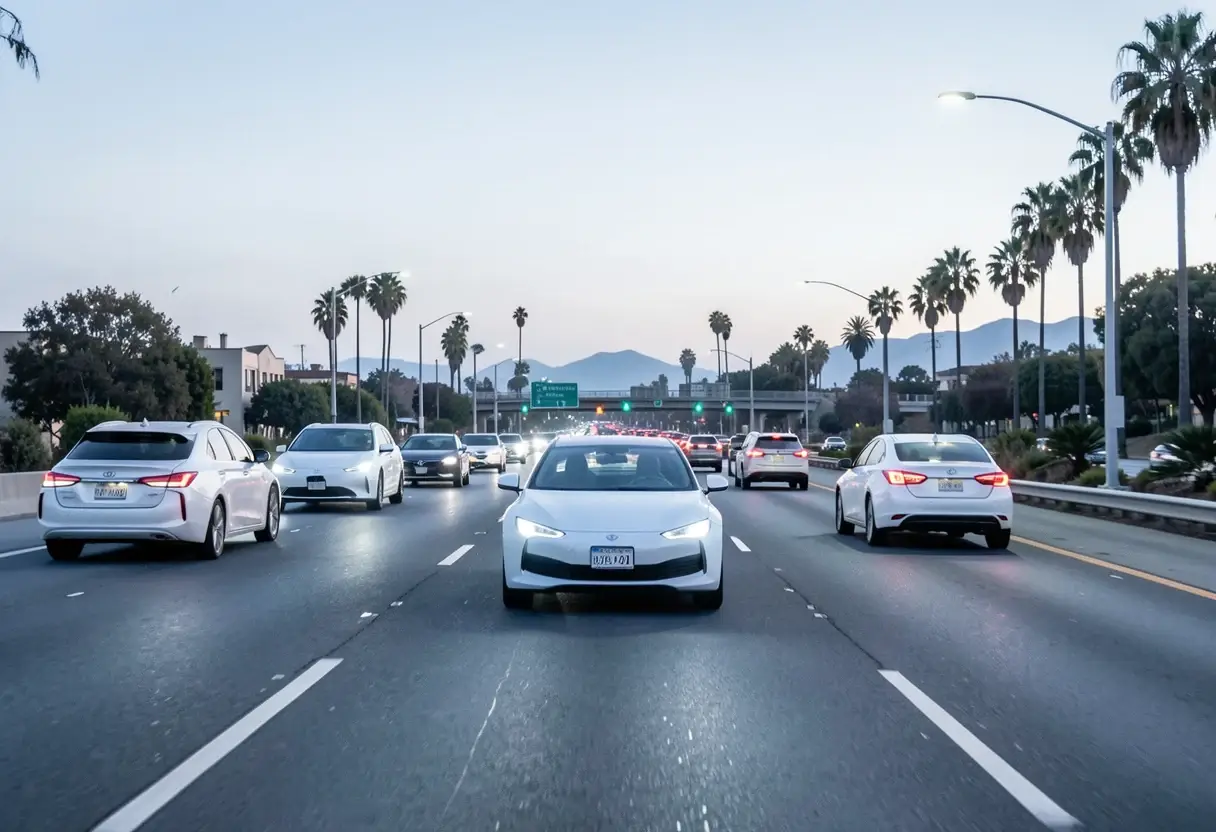
California has banned Waymo from operating or testing driverless vehicles on every freeway in the state, effective November 11, 2026. The California Department of Motor Vehicles said the company's driverless freeway operations posed an "imminent hazard to public safety." The order was reported by the San Francisco Examiner, Drive Tesla Canada and The Verge.
It's a conditional restriction, not a revocation. Waymo keeps its surface-street service, and the freeway ban lifts only when the company shows the DMV effective corrective actions. No end date exists. The regulator holds the clock.
What triggered the order?
Two Bay Area incidents anchor the finding. On U.S. Route 101 near Burlingame, three Waymo vehicles entered an active construction closure — cones, workers, equipment, the works. Separately, a Waymo vehicle on Interstate 280 in San Francisco attempted to pass California Highway Patrol cars conducting a traffic break (a deliberate slowdown in which patrol cars spread across lanes to hold traffic behind them). Passing that line defeats the maneuver entirely.
DMV spokesperson Jonathan Groveman said the department found recurring incursions into active construction zones involving construction workers, vehicles and equipment. The word "recurring" carries the weight here. It explains why the DMV chose a statewide freeway restriction rather than a narrower corridor fix.
Waymo said the U.S. 101 construction-zone incidents involved no injuries or collisions. The DMV didn't accept that as grounds to wait. Its "imminent hazard" framing — the strongest language available — treats near misses and pattern evidence as actionable, the same logic aviation and rail regulators apply. No freeway crash has been reported in any source.
Waymo's response was brief. The company said it is "working with the California DMV and other state officials diligently and responsibly to resume freeway operations." That's a posture of negotiation, not public contest.
What does Waymo have to prove?
The DMV set the standard: the vehicles must demonstrate safe detection of and response to construction zones, emergency vehicles and "other roadway situations." That last phrase is deliberately open, letting the department demand evidence on scenarios the incidents never covered — stalled vehicles, debris, lane shifts, hand-directed flaggers.
Expect a package of evidence, not a single software update. Test results, incident analysis, a description of what changed. No source specifies the review format, who signs off, or how long it runs.
Freeways stress an autonomous stack differently than city streets. At highway speed, sensors must spot and classify a closure far ahead, and temporary cues — curving cone lines, shoulder signage, workers in high-visibility vests — resist clean classification. Detection is half the job; the system must also pick and execute a response within the margin available, while stopping itself carries risk from following traffic. The reporting does not identify which sensor or software layer failed at Burlingame, and no one outside the company can say.
What does this change for riders and the market?
For most riders, little. City trips proceed as before; freeway routing is gone. Airport and cross-town highway runs may route differently, though the sources don't describe how Waymo handles them. No revenue loss, ridership drop or stock reaction has been reported, so no figure gets guessed here.
For competitors and suppliers, the signal is concrete. Any operator planning California highway service now has a visible benchmark for DMV scrutiny. Sensor, compute and mapping vendors should expect procurement talks to lean harder on validation data alongside raw specs.
Confirmed facts at a glance:
- Regulator: California DMV
- Scope: All California freeways, operating and testing
- Effective: November 11, 2026
- Lifting condition: Demonstrated corrective actions for cited deficiencies
- Injuries/collisions: None in U.S. 101 events, per Waymo
- Surface streets: Service continues
Some social posts call this a permanent ban. The sources don't support that. The DMV tied the restriction to corrective actions, which implies a path back — though regulators who act before harm tends to demand more proof afterward, and the bar for Waymo's return may sit higher than for an operator that never triggered an order.
via shattered.io (Source)
More from Grace Kim
Show full bio
Market editor covering regulation, policy and their impact on hardware layer of artificial intelligence at Die Signal.
665 articles
Same lot · LOT-362E
- DSG-714220nmTesla Robotaxi Launches in San Antonio With 274-Square-Mile Zone
- DSG-52693nm40 of 41 Ballot Contests Went Against Data Center Growth
- DSG-447145nmVirginia bans data center NDAs in new accountability framework
- DSG-64875nmOver Half of Pre-Construction Hyperscale Capacity Now Sits in High-Risk States
- DSG-411145nmVirginia senator proposes three-year statewide data center moratorium