Test report · tested November 22, 2026
AI Datacenter InfrastructureDevice under test
Applied Digital and Core Scientific Drop 12% as AI Sell-Off Deepens
Applied Digital fell 12% to $12.27 and Core Scientific dropped 12% to $11.80 on November 20 as the AI infrastructure sell-off deepened. TeraWulf slid 10% to $10.45.
- Read
- 3 min
- Words
- 602
- Segment
- AI Datacenter Infrastructure
- Operator
- Marcus Bennett
Spec summary
- Applied Digital fell 12% to $12.27 on November 20 and is down 50% year to date
- Core Scientific dropped 12% to $11.80; TeraWulf fell 10% to $10.45
- Applied Digital carries $6.4 billion of debt against $3.7 billion of cash
- Core Scientific holds over $24 billion in contracted revenue backlog
- S&P 500 set for longest losing streak since 2020, down 1% on the day
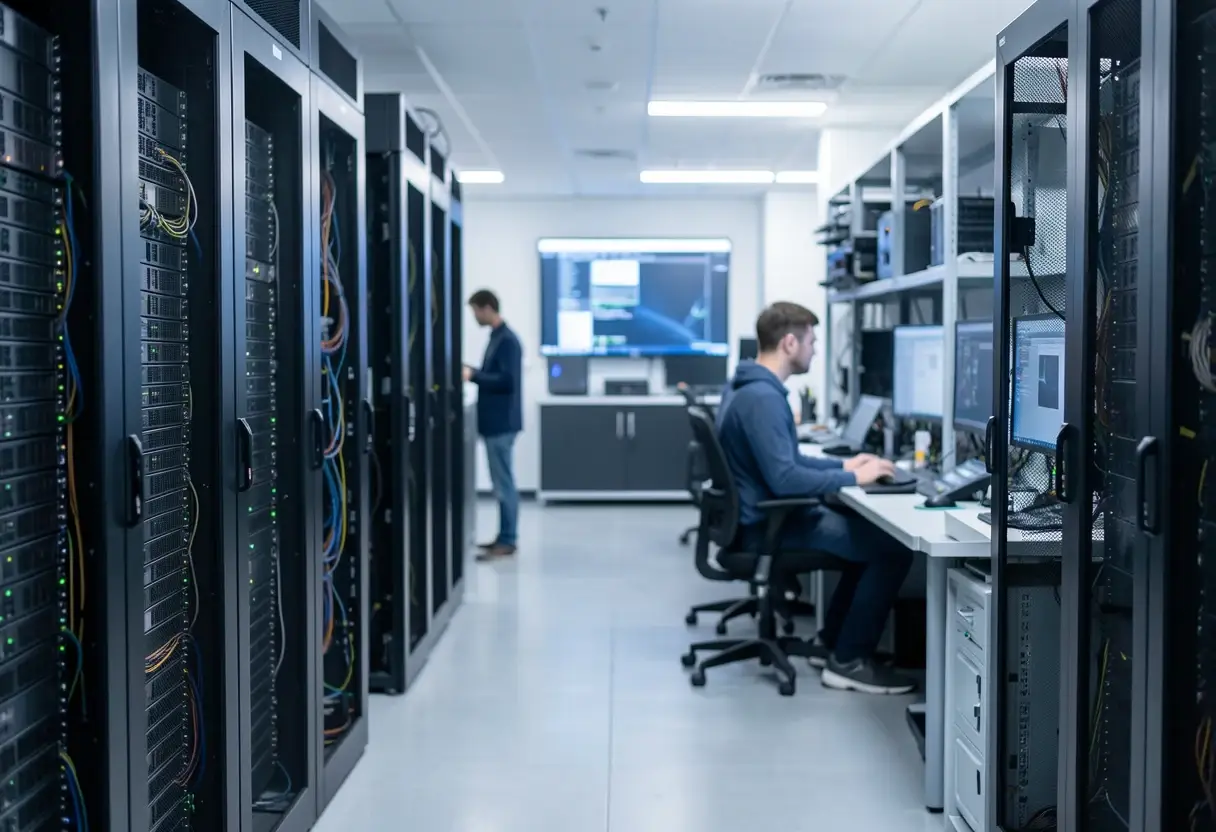
Applied Digital (NASDAQ:APLD) fell 12% to $12.27 in morning trading on November 20, leaving the stock down 50% year to date. Core Scientific (NASDAQ:CORZ) matched the 12% decline, trading at $11.80, while TeraWulf (NASDAQ:WULF) dropped 10% to $10.45.
The selling is part of a broader AI infrastructure retreat. The S&P 500 is down 1% and set for its longest losing streak since 2020. The NASDAQ 100 is off 2%. Chip stocks, neocloud operators and fuel cell names are all lower as money rotates into consumer staples, health care and real estate.
Sentiment toward neocloud and AI infrastructure names has weakened over the past two months. Investors are questioning the durability of Big Tech cloud spending, debt-fueled business models and the AI trade itself.
What do the balance sheets show?
Highly leveraged builders suffer most when risk appetite fades, and Applied Digital fits that profile. The company carries approximately $6.4 billion of debt against $3.7 billion of cash and restricted cash. Its debt-to-equity ratio stands at 2.86x.
Core Scientific is down 19% year to date, a far milder decline. The company holds more than $24 billion in contracted revenue backlog, and investment-grade credit backs more than half of its contracted cash flows. Leverage remains a problem: $4.3 billion of long-term debt and a stockholders' deficit of $1.09 billion.
TeraWulf has $27 billion in contracted revenue across its platform and $3.4 billion of net debt. Over the past month, its stock is down 13%.
All three companies pivoted from Bitcoin (CRYPTO:BTC) mining toward hosting AI and high-performance computing workloads under long-term leases. That shift leaves each one sensitive to doubt about AI spending and to the cost of financing its build-out.
How does each company differ?
- Applied Digital designs its campuses to operate for decades, beyond a single GPU cycle, so tenants can refresh hardware in the same buildings. CoreWeave and one investment-grade hyperscaler anchor its customer list. The company has spun off its cloud services arm as a separate business. It reports $36 billion in contracted revenue over initial base terms.
- Core Scientific is winding down Bitcoin mining to become a pure-play, high-density colocation provider. CoreWeave is its first major tenant, and AMD (NASDAQ:AMD) has signed long-term leases as a second anchor.
- TeraWulf describes itself as an energy infrastructure company that does not own GPUs, leaving chip risk with its tenants. It still runs a Bitcoin mining segment. Its largest development, the Justified Data Campus, is leased to a frontier AI developer with hyperscaler credit support.
Demand fears or de-risking?
The bulls point to long-term hyperscaler leases, take-or-pay structures and investment-grade tenants that give all three companies multiyear revenue visibility. The bears counter that each build-out demands heavy capital at a moment when the market is shedding AI risk.
Michael Burry posted on X that he "tried to warn" investors about CoreWeave (NASDAQ:CRWV) and other neocloud and chip names.
Core Scientific CEO Adam Sullivan addressed the constraint directly on the company's November 5 call: "The overarching theme right now in the market is capital is the throttle on all new development." Rising financing costs could pressure returns for all three companies if credit markets tighten further.
What does this change for shareholders? TeraWulf and Core Scientific holders face the same tension as Applied Digital investors: each business relies on a small group of large tenants. A cautious approach may be warranted until the AI infrastructure spending debate resolves.
via 247wallst.com (Source)
More from Marcus Bennett
Show full bio
News editor covering regulation, policy and their impact on hardware layer of artificial intelligence at Die Signal.
752 articles
Same lot
- Applied Digital Falls 8% as Nebius Outlook and Huang Exit Hit AI Data Centers
- Applied Materials Jumps 8% to $403 Ahead of Q4 Earnings Test
- Nvidia Slips to Third as $500 Billion AI Financing Wobbles
- Western Digital Falls 12% to $261, 65% Below Its June Record
- Five AI Stocks Fall 12%-16% in a Day, and Dell's $95B Faces the Test