Test report DSG-1697 · Rev B · tested November 4, 2026
AI Datacenter InfrastructureDevice under test
AMD, FuriosaAI and MangoBoost plan Seoul AI reference cluster
AMD, FuriosaAI and MangoBoost will test mixed CPU-GPU-NPU-DPU infrastructure in Seoul in spring 2027, while Naver Cloud reports 20%–25% less rack space with EPYC.
- Read
- 4 min
- Words
- 774
- Node
- 10nm
- Operator
- Elena Vasquez
Spec summary
- AMD, FuriosaAI and MangoBoost signed an MOU on April 4, 2026, targeting a first Seoul reference cluster in spring 2027.
- The design combines AMD CPUs and GPUs with FuriosaAI NPUs and MangoBoost DPUs and software to reduce inference cost and power.
- More reported more than twice the per-server inference throughput for GLM 5.2 on AMD MI355X versus an Nvidia B200 comparison system.
- ROCm optimization produced a 3.3-fold gain on one inference task using identical hardware in about six months.
- Naver Cloud runs EPYC in about 35,000 of 250,000 servers and reports 20%–25% less rack space than Intel.
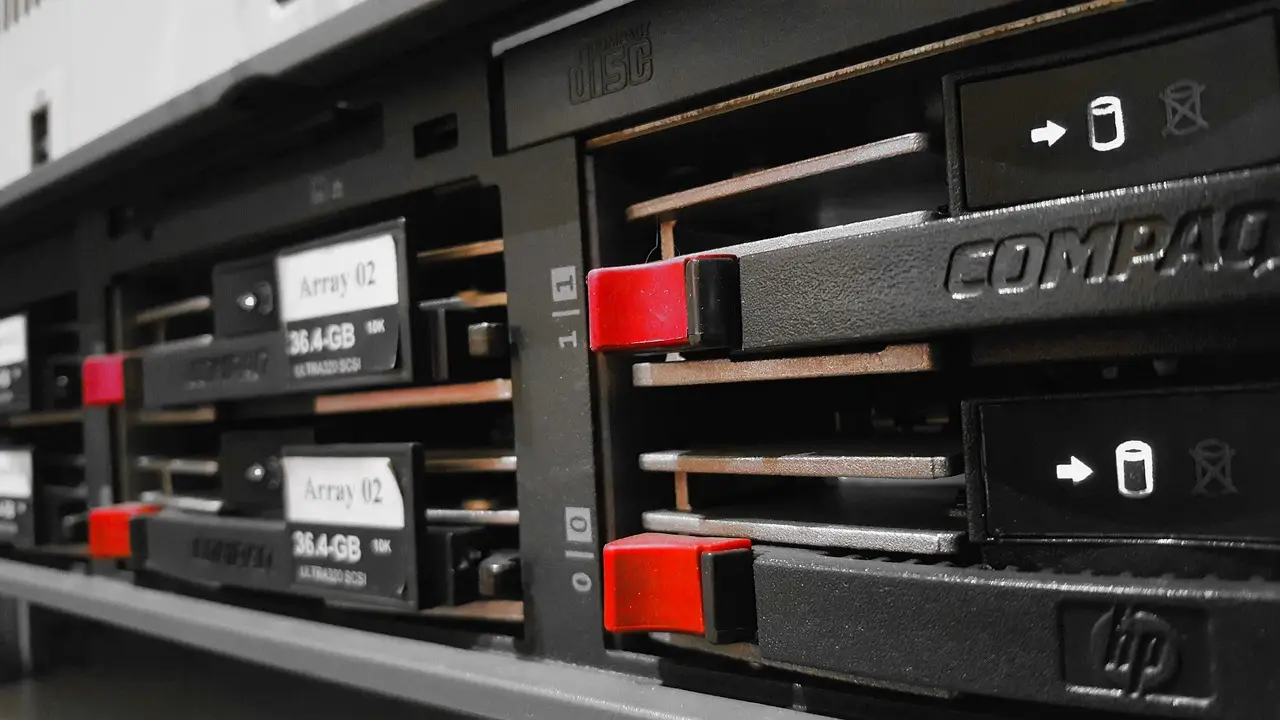
AMD, FuriosaAI and MangoBoost plan a first heterogeneous AI reference cluster in Seoul for spring 2027, combining CPUs, GPUs, NPUs, DPUs and software to cut inference costs and power draw.
The April 4, 2026 memorandum of understanding covers joint infrastructure design, performance validation and a reference system using hardware MangoBoost operates in Seoul.
What does the Korean partnership combine?
At Advancing AI World Tour and AI Dev Day Seoul 2026, AMD signed the MOU with domestic AI semiconductor maker FuriosaAI and AI infrastructure company MangoBoost. The event took place at the Westin Seoul Josun Parnas Hotel in Gangnam District, Seoul.
The partnership follows AMD's July MOU with the Ministry of Science and ICT, which covers AI computing infrastructure, a domestic AI research center and talent development. The first steering committee meeting for the ministry-AMD MOU convened on April 4 to discuss implementation. Vice Minister Ryu Je-myeong said combining each side's strengths would determine future competitiveness.
AMD senior vice president for global AI markets Keith Strier said: "We promised not only to bring AMD's technology to Korea, but also to integrate Korea's technology into AMD's technology." The companies will review how to allocate inference compute, test multiple chips together and validate performance and interoperability on MangoBoost's Seoul infrastructure.
The deal also supports AMD's push to widen processor choice in an Nvidia-centered AI infrastructure market through Korean partnerships. For buyers, the test will show whether specialized NPUs and DPUs can share inference workloads with general-purpose CPUs and GPUs.
How will Korea validate domestic AI chips?
The government plans to support domestic NPUs in real services through performance verification. At a panel, ICT policy director general Lee Do-kyu said an unnamed domestic company planned to purchase about 10 billion won of NPUs in March 2026, conditional on K-Perf verification.
Lee said the ministry would build large-scale demonstration references in 2027. It will also help public institutions and companies adopt domestic NPUs.
Why does inference now matter more than training?
AI spending is shifting from model training to operating models in production, where serving more requests with the same equipment determines unit economics. Agentic AI systems perform multiple tasks on their own, adding data retrieval and task execution that require efficient coordination of CPUs, memory and networks alongside accelerators.
AMD's Helios rack connects 72 GPUs, while Helion allows CPU-only or CPU-GPU hybrid configurations according to workload. Ritesh Rohit Patel, AMD's Asia-Pacific and Japan data-center business development director, said agentic systems combine GPUs, CPUs, networks, storage, memory and software. He added that CPUs work across several stages from request to response or action.
What can software change on identical hardware?
AMD reported that optimizing its open ROCm platform raised performance on one specified inference task by a factor of 3.3 on the same hardware in about six months. Vice President Ramine Roane said: "Hardware gets all the attention, but software determines how much value you can actually get from a GPU."
More sees data-center revenue moving from renting GPUs toward running AI models directly and selling tokens, the basic units used to process and generate text. CEO Jo Kang-won said customers increasingly examine support for the latest models and token expense, rather than GPU specifications alone.
More said GLM 5.2, running on AMD MI355X GPUs with its software, more than doubled inference throughput per server over a comparison system based on Nvidia B200. It increased total answer generation while sustaining about 30–50 tokens per second per user. In a separate token-sales simulation, More estimated software optimization could raise profit margins to about 60%.
Why did Naver Cloud switch to AMD EPYC?
Naver Cloud operates about 250,000 servers across 13 domestic data centers and uses EPYC, AMD's server CPU, in roughly 35,000 of them. EPYC purchases rose from about 13,000 units in 2023 to more than 36,000 in 2025, even though the operator had mainly used Intel.
Demand for search and cloud services grew within fixed space and budgets, prompting Naver Cloud to weigh CPU prices against installation area, power and cooling. Director Park Young-hee said Intel's proposed high-core processor carried a high price, slowing expansion within available funds. More compute per server also lowers total ownership costs.
Park said EPYC reduced rack space by 20%–25% compared with Intel, leaving room for additional CPUs in Naver's data centers. In the second half of 2026, the operator plans to introduce the 144-core EPYC 9005 series to its public cloud and continue collaborating with AMD.
via Google News: NPU (Source)
More from Elena Vasquez
Show full bio
Senior reporter covering people, launches and day-to-day practice in hardware layer of artificial intelligence at Die Signal.
589 articles
Same lot · LOT-360B
- DSG-177228nmSeoul hosts first AMD–Korea AI chip steering meeting
- DSG-458245nmAMD to Integrate Korean NPUs Into Its Hardware Stack
- DSG-649010nmAMD's Lisa Su to Visit Korea on October 8 for AI Chip Push
- DSG-784628nmKorea Convenes Emergency GPU Supply Review After Nvidia CEO Exit
- DSG-57855nmLawmaker Pushes 30% Domestic NPU Quota for Industrial Parks