Test report · tested November 22, 2026
Processors & AcceleratorsDevice under test
Alibaba Trains Next Qwen on T-Head Chips, Targets 2027 Supply Shift
Alibaba CEO Wu Yongming told investors on Nov 19 that the next Qwen generation is training on T-Head chips, and that post-2027 'vast majority' of new AI-chip supply will lean domestic — with zero specs attached.
- Read
- 4 min
- Words
- 799
- Segment
- Processors & Accelerators
- Operator
- Elena Vasquez
Spec summary
- On November 19, 2026, CEO Wu Yongming said the next-generation Qwen model is training on Alibaba's own T-Head chips.
- After 2027, the 'vast majority' of Alibaba's new AI-chip supply is expected to be primarily T-Head silicon.
- No chip model, specification, parameter count, release date, volume or price was disclosed.
- Alibaba also plans to buy other domestic Chinese chips for internal inference workloads.
- US regulators are weighing disclosure rules for Chinese AI models, with Qwen near the center of that debate.
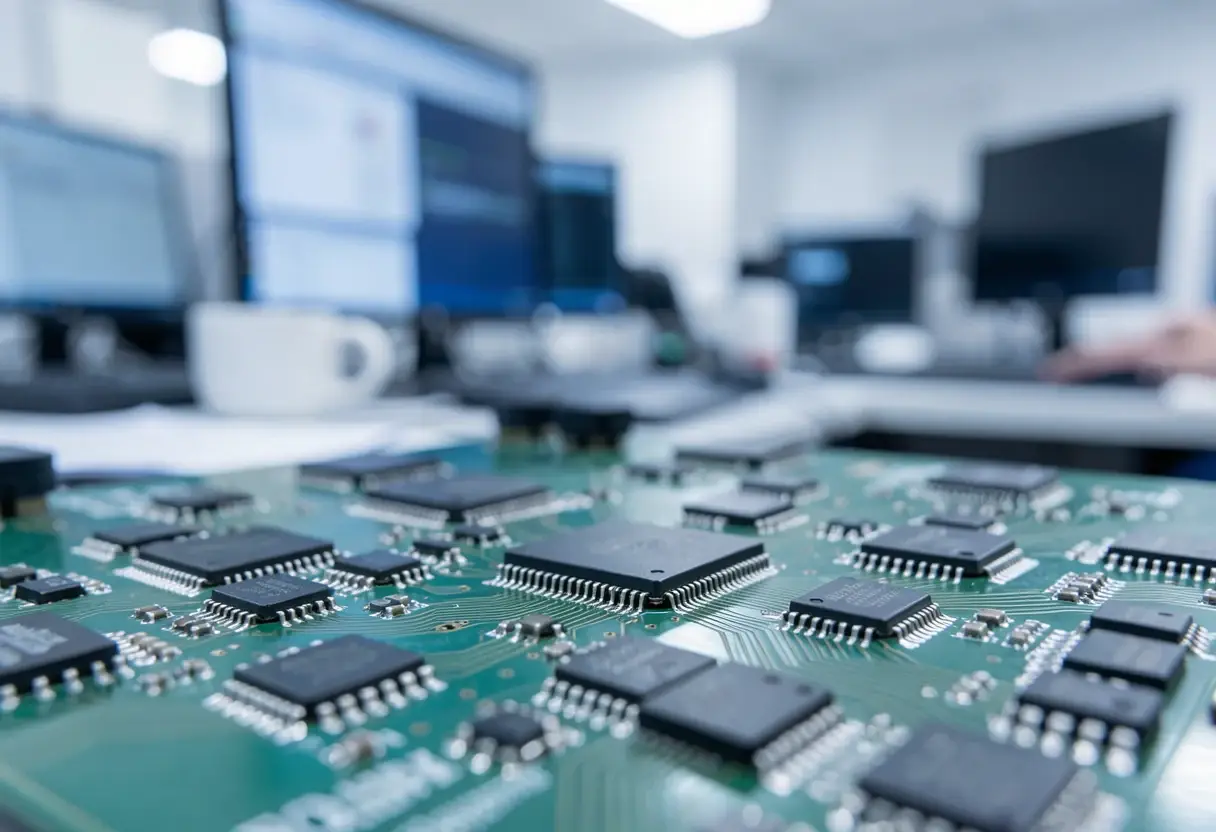
On November 19, 2026, Alibaba told investors something concrete: its next-generation Qwen model is training right now on the company's own T-Head chips. CEO Wu Yongming made the statement, reported by Global Times and Fello AI, and paired it with a supply pledge — after 2027, the "vast majority" of Alibaba's new AI-chip supply is expected to consist primarily of T-Head silicon.
That's the whole announcement. No chip model, no process node, no parameter count, no release date, no volume, no price. Any outlet attaching a version number to the run is going past what was said.
What exactly did Wu Yongming commit to?
Three claims are solid. The next Qwen generation is in training. The silicon doing the work comes from T-Head, Alibaba's in-house chip-design unit. And future supply will lean T-Head plus other domestic chips, which Alibaba plans to buy for internal inference.
Note the wording on training: "underway," not finished. "Next generation," not a named version. The 2027 pledge uses "primarily," which leaves room for non-T-Head silicon in new supply — and says nothing about the installed base. A data center full of existing accelerators doesn't vanish on January 1, 2028. The pledge governs additions, not the fleet Alibaba already owns.
There's no signed supply contract behind the "vast majority" phrasing, per the reports. It's a strategy statement, and it will take quarters of disclosure before an analyst can model it.
Why does training on domestic chips matter more than inference?
Most Chinese domestic-chip announcements so far cover inference — the easier job. Inference tolerates slower hardware and scales across modest accelerators. Training a flagship model needs thousands of chips running in lockstep for weeks, fast interconnects, and software that rarely crashes.
Wu also said Alibaba will buy other domestic chips for inference. That separation matters: T-Head anchors new supply, while other Chinese vendors fill the serving side. Chinese chip designers will compete hard for those inference contracts, and how wide that door opens depends on prices, software support and delivery schedules — none disclosed.
The software layer may matter more than the silicon itself. Nvidia's lead rests partly on a decade of tooling developers already know. A domestic chip needs compilers, kernels and debugging tools to match, and training the flagship on T-Head forces Alibaba's engineers to harden exactly that layer.
What's the export-control backdrop?
The announcement landed in a week of dense chip-policy news. US officials keep narrowing how Chinese firms can reach advanced AI silicon, including through remote access to foreign data centers. US regulators are also weighing how to label Chinese AI models, and Qwen sat near the center of that disclosure-rule story.
Supply friction runs both directions. Earlier reporting described 600,000 Nvidia H200 chips sitting idle in Hong Kong while Beijing import approval stayed pending. A company waiting on two governments to clear a shipment has a strong reason to build its own.
That said, the reports give no link between Wu's remarks and any specific US measure. The sound reading: Alibaba has been building toward this for years, and the policy climate made it more useful to say out loud.
What does it mean for Nvidia, rivals and buyers?
For Nvidia, this is less a revenue shock than confirmation of a trend. China was already a constrained market, so a pledge to buy mainly domestic silicon after 2027 removes upside that was uncertain anyway. The bigger strategic signal: custom chips carrying flagship training.
Alibaba holds an unusual triple position — major cloud business, one of China's most visible model families, and a chip-design unit. Google made the same bet with TPUs; OpenAI has its own chip effort underway. The largest AI spenders no longer want to rent their entire future from a single merchant supplier.
For investors, the news cuts both ways. In-house chips can lower long-run compute costs and shield against supply shocks. They also move chip-development risk onto Alibaba's balance sheet — a flawed chip generation would delay model training and cloud capacity simultaneously.
What should developers and buyers do?
For developers, nothing changes today. Alibaba announced no new APIs, pricing or weights tied to this run.
Enterprise buyers should ask sharper questions: which instance types run on which hardware, software compatibility, workload portability, support commitments. Compliance teams outside China get one more provenance line in vendor reviews — knowing a model trained on domestic Chinese silicon doesn't by itself prove a risk.
Signals to watch: a named Qwen release, published T-Head specs, disclosed production volumes, named domestic inference suppliers, and any US or Chinese policy response. Expect incremental disclosure on the next earnings call, not a single reveal.
via shattered.io (Source)
More from Elena Vasquez
Show full bio
Senior reporter covering people, launches and day-to-day practice in hardware layer of artificial intelligence at Die Signal.
757 articles