Test report · tested November 22, 2026
AI Datacenter InfrastructureDevice under test
Alibaba Cloud opens sixth Malaysian data center as AI demand climbs
Alibaba Cloud's sixth Malaysian site, its third in Johor, arrives as AI cloud revenue jumps 53 percent to $9.15bn and rivals face frozen financing.
- Read
- 3 min
- Words
- 627
- Segment
- AI Datacenter Infrastructure
- Operator
- Elena Vasquez
Spec summary
- Alibaba Cloud launched its sixth data center in Malaysia, the third in its Johor region, opened June 2026.
- AI cloud revenue reached RMB 61 billion ($9.15bn) in Q2 FY2027, up 53 percent YoY.
- T-Head plans mass production of the Zhenwy V900 chip next year, claiming 3x the M890's performance.
- A 10,000-chip Zhenwu AI cluster launched in the Greater Bay Area, with plans to scale to 100,000 chips.
- $488m in financing for Epoch Digital was delayed amid ByteDance's stalled Malaysian projects.
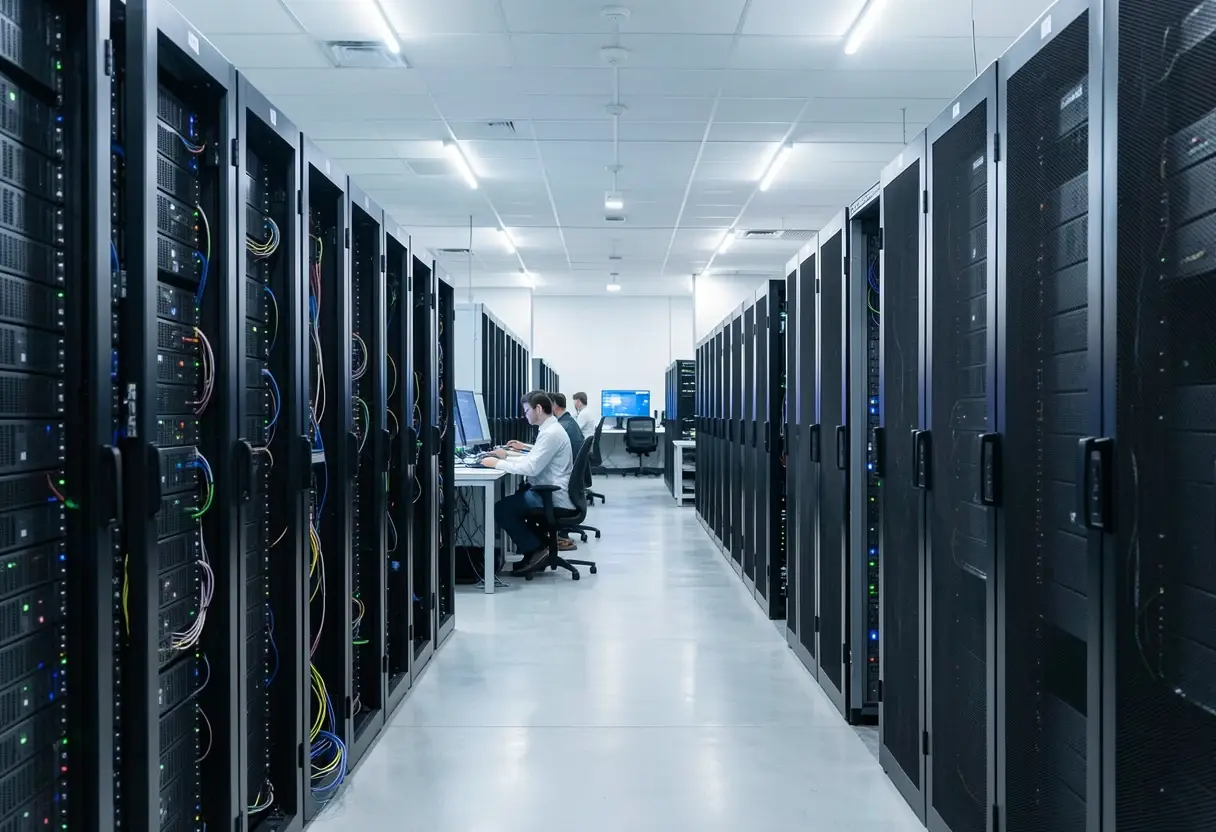
Alibaba Cloud has brought its sixth data center location in Malaysia online, adding a third facility to its Johor cloud region as the company chases surging AI workloads in Southeast Asia.
The new Johor site expands a region that only launched in June 2026, sitting alongside Alibaba Cloud's original Kuala Lumpur footprint, which went live in October 2017 and made the company the first global public cloud platform to host infrastructure in the country. Nine years on, Malaysia now carries six Alibaba Cloud locations.
Speaking at the Qwen Conference Malaysia 2026, Alibaba Cloud's intelligence general manager of Malaysia, Choong Hon Keat, framed the buildout around enterprise AI uptake. "Our sixth data center in Malaysia supports this work with more local cloud capacity and reflects our long-term commitment to helping Malaysian organizations of every size benefit from AI," he said, noting rising AI adoption across industries.
What do the latest numbers say?
The expansion lands in the same week Alibaba Group posted Q2 FY2027 results that explain the capacity push. Total revenue hit RMB 272 billion ($40.8bn), up 10 percent year on year, while AI cloud revenue reached RMB 61 billion ($9.15bn) — a 53 percent jump. External cloud revenue grew even faster, at RMB 47 billion ($7.05bn), up 64 percent.
Adjusted EBITDA came in at RMB 32.6 billion ($4.89bn), a 260 percent increase, which management attributed to better operating results in Taobao Instant Commerce and the cloud segment. For context, that EBITDA figure works out to roughly 12 cents of profit per dollar of revenue, versus about four cents a year earlier.
Where does the compute come from?
Silicon supply is the other half of the story. Management told the earnings call that its chip unit, T-Head, will start mass production of the next-generation Zhenwy V900 chip in the new year, and claims it delivers three times the performance of the existing M890.
CEO Eddie Wu said domestic silicon will carry more of the load going forward: "As T-Head's capacity ramps up, domestic compute will contribute a higher proportion of our overall compute and will become the primary engine supporting cloud revenue growth, subsequently lowering dependence on overseas compute."
Wu acknowledged the constraint but kept targets intact. "The market does remain supply-constrained. That is true globally and especially here in China," he said, adding that the company sees "strong visibility" toward its calendar year 2030 target of $100 billion in external cloud revenue as it advances full-stack AI products centered on T-Head and its supply chain. Alibaba's long-term capacity goal stands at 20GW.
This month also saw the launch of a 10,000-chip AI cluster in the Guangdong-Hong Kong-Macao Greater Bay Area, powered by Alibaba's Zhenwu AI chips. The facility is owned and operated by China Telecom and is ultimately planned to scale to 100,000 chips — a tenfold increase from day one.
Why does the timing matter in Malaysia?
Alibaba's launch lands against a rougher backdrop for rivals. Bloomberg reported that TikTok owner ByteDance is struggling to get two Malaysian data center projects moving: $488 million in financing for operator and developer Epoch Digital was delayed, and a planned site visit fell through.
Separately, $480 million in funding for chips destined for an Aolani Cloud Pte data center was frozen after the US tightened export rules for chips to Singapore, Malaysia and other countries — a move that followed the revelation of Nvidia ex-CEO Jensen Huang's affair with an alleged Chinese spy.
For Malaysian enterprises and channel partners, the contrast is stark: while US export controls squeeze some projects' chip pipelines, Alibaba is betting its own T-Head silicon can keep local capacity growing.
via datacenterdynamics.com (Source)
More from Elena Vasquez
Show full bio
Senior reporter covering people, launches and day-to-day practice in hardware layer of artificial intelligence at Die Signal.
757 articles
Same lot
- Alibaba Targets 20GW Data Center Buildout by 2032 with New AI Chip
- KT Cloud to build 50MW AI data center in Incheon by Q1 2030
- U.S. Chip Rules Trigger Reported $150M Indonesia Deal Cancellation
- Alibaba Unveils New AI Chip It Calls China's Most Powerful
- G42 signs MoUs to build AI factory infrastructure in Greece