Test report DSG-6687 · Rev F · tested November 12, 2026
AI Datacenter InfrastructureDevice under test
AI Inference Turns the Memory Wall Into a System Problem
Rambus analysis: AI inference has turned the memory wall into a coordination problem across compute, memory, interconnect and software — with KV cache as the crux.
- Read
- 3 min
- Words
- 679
- Node
- 20nm
- Operator
- Grace Kim
Spec summary
- Rambus analysis argues the memory wall is now a multidimensional system constraint, not a bandwidth bottleneck
- KV cache cuts repeated computation but grows with context length and is multiplied by concurrent requests
- Usable capacity is defined as memory reachable within a workload's latency, bandwidth and power envelope
- Proposed better metric than headline bandwidth: tokens per watt or per dollar while meeting latency targets
- Four architecture questions: placement, movement, coordination, assurance of inference state across tiers
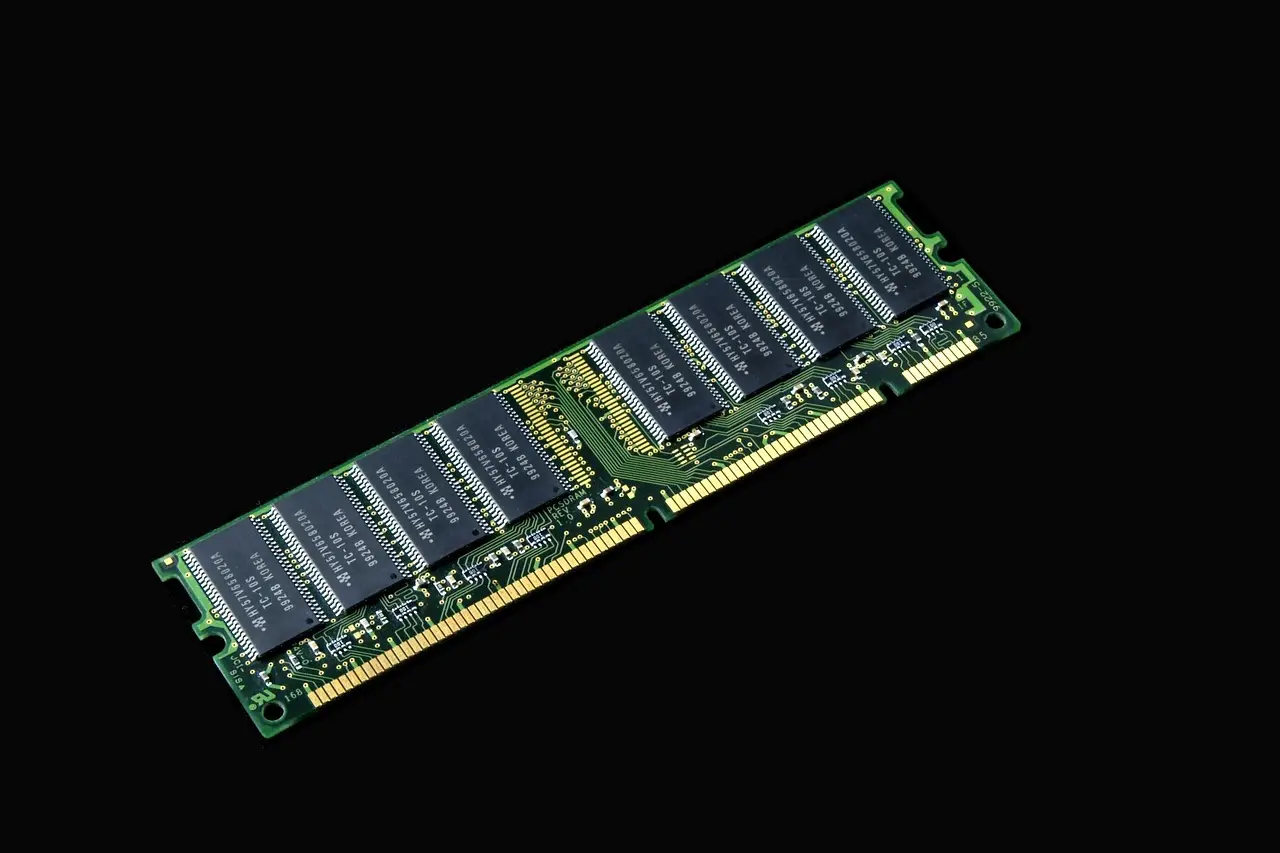
The memory wall — the long-standing gap between processor performance and memory's ability to feed it — has stopped being a bandwidth problem and become a system coordination problem spanning compute, memory, interconnect, and software. That is the core argument of a new analysis from Rambus, published on Semiconductor Engineering, which contends that AI inference has fundamentally changed the economics of memory in data center infrastructure.
For years, AI infrastructure raced for compute: more accelerators, larger heterogeneous clusters, higher peak performance. Large-scale deployment changes the scorecard. Latency, power, utilization, predictability, and cost per inference now matter as much as raw throughput. And inference is not one workload. A conversational assistant emphasizes latency; an enterprise assistant processes large proprietary context for many users; agents retain state across steps; consumer services chase throughput and cost per token; batch jobs emphasize utilization. The architecture must follow the workload.
Why the KV cache is the crux
The key-value cache (stored attention representations that let later decoding steps reuse prior computation instead of recomputing it for earlier tokens) is the clearest illustration of the trade-off. It cuts repeated compute but increases pressure on memory capacity and data movement. Longer context windows grow the KV-cache footprint of each sequence; higher concurrency multiplies it across simultaneous requests.
KV state has a lifecycle. It is created during prefill, repeatedly accessed during decode, and may be retained for reuse. Depending on the serving architecture, it may be moved, replicated, compressed, or evicted — each phase placing different demands on bandwidth, capacity, latency, and control.
The analysis puts the operating principle bluntly: every movement of data must earn its cost. Moving KV state to a lower-cost tier pays off only when the high-tier capacity it frees, or the recomputation it avoids, outweighs transfer latency, bandwidth consumption, energy, and the risk of missing a service-level objective (SLO — the latency contract an application must meet).
What does this change for memory design?
The useful metric is no longer aggregate capacity or headline bandwidth. A system may hold substantial memory, yet lower tiers can be too distant, congested, or costly to reach within the workload's SLO. The practical limit, the analysis argues, is usable capacity within the workload's latency, bandwidth, and power envelope.
High aggregate throughput can also hide unacceptable time to first token, inter-token latency, or tail latency during congestion. A more meaningful measure, the piece suggests, may be tokens per watt or per dollar while meeting latency targets. The relevant question for architects: which combination of compute, memory, interconnect, and software delivers predictable performance within the available power and cost envelope?
Conflicts run through the hierarchy. High-bandwidth memory near an accelerator delivers speed but is constrained in capacity, power, and cost. Larger-capacity tiers are more economical but slower. Moving data between tiers expands effective capacity — while consuming bandwidth, power, and time.
Four questions every tiered design must answer
Adding memory tiers introduces decisions, not solutions. A useful architecture must address:
- Placement. Which data must stay near compute, and what tolerates a distant tier?
- Movement. When is transferring data cheaper than recomputing it?
- Coordination. How do accelerators, memory controllers, interconnects, and software schedule placement and movement without congestion?
- Assurance. How does the system preserve reliability, isolation, integrity, and predictable performance as inference state crosses more boundaries?
Each optimization cuts both ways. Replication avoids recomputation but consumes bandwidth and capacity elsewhere. Pooling improves utilization only if contention and quality of service stay controlled.
The wall keeps moving
Higher-bandwidth memory, faster interconnects, compression, and smarter cache management relieve constraints but don't eliminate them. As one bottleneck improves, models absorb the headroom: longer contexts, higher concurrency, multimodal models, and more sophisticated agents will keep shifting where memory pressure appears. That makes hardware-software co-design critical, because every layer influences data movement.
The next phase of AI infrastructure scaling, the analysis concludes, won't be defined by compute alone or solved by adding memory. It is a test of how effectively a system converts distributed memory resources into predictable AI performance.
via rambus.com (Original)
More from Grace Kim
Show full bio
Market editor covering regulation, policy and their impact on hardware layer of artificial intelligence at Die Signal.
565 articles
Same lot · LOT-3628
- DSG-436920nmIntel D-Series GPUs Make HBM Optional for Agentic Inference
- DSG-12373nmAMD Pitches Helion Rack at Agentic AI Data Centers: Up to 32,768 CPU Cores
- DSG-227565nmCounterpoint Research: DRAM Prices Set to Rise Again on Agentic AI Demand
- DSG-251520nmMicron: AI Compute Outruns HBM Bandwidth 3x Every Two Years
- DSG-815514nmIntel to sell Crescent Island AI GPU with up to 480GB DRAM