Test report · tested November 19, 2026
AI Datacenter InfrastructureDevice under test
Vertical Data Opens Toronto Hub, Targets 150 MW Canadian Pipeline
Vertical Data (OTCQB:VDTA) opened a Toronto office on Nov. 18, 2026 and launched a Canadian AI data center platform targeting a 150+ MW pipeline of 20–60 MW projects.
- Read
- 4 min
- Words
- 785
- Segment
- AI Datacenter Infrastructure
- Operator
- Amara Osei
Spec summary
- Vertical Data announced a Toronto office and Canadian AI data center platform on November 18, 2026
- Company cites a pipeline above 150 MW with projects of 20 MW to 60 MW; figures are unaudited
- The platform pairs development capital with GPU financing via GPUfinancing.com, tenant sourcing and operations
- Canada's reported 2026 budget targets 500 MW of sovereign AI compute against roughly 300 MW of existing capacity
- No project locations, timelines, power dates, customers or investment amounts were disclosed
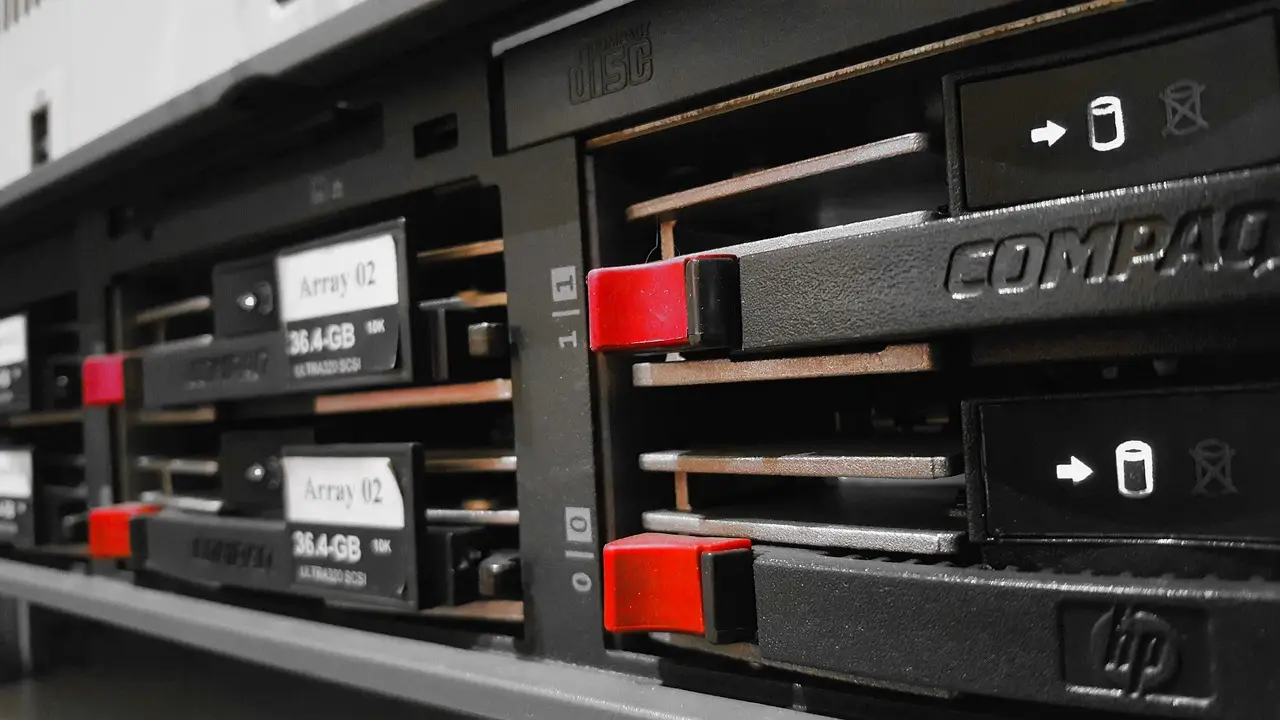
Vertical Data Inc. (OTCQB:VDTA) announced on November 18, 2026 that it has opened a Toronto office and launched a dedicated AI data center development platform for Canada, with a pipeline the company puts at more than 150 MW and individual projects ranging from 20 MW to 60 MW.
The announcement, carried by TradingView, names the company's two operating businesses, VerticalData.io and GPUfinancing.com, and ties both to the new platform. Neither the 150 MW figure nor the project-size range has been independently audited.
What does the platform actually offer?
The platform bundles four functions into one offer:
- Development capital to fund construction, including the building, power connection and cooling
- GPU financing via GPUfinancing.com for the compute installed inside the facilities
- Tenant sourcing, aimed at bringing enterprise AI customers directly to project sites
- Day-to-day data center operations for partners
That stack covers land and power, chips and financing, customers and operations. Few companies of Vertical Data's size attempt every layer at once.
A 60 MW project matches the scale of the Texas AI site that Giga Energy tied to a $1 billion lease, placing Vertical Data in the mid-sized campus segment rather than the hyperscale tier. The company's own arithmetic of a 150 MW pipeline implies roughly three sites at 60 MW each, or seven to eight sites at 20 MW — a portfolio, not a single anchor campus.
How does the financing model work?
The design splits funding by asset life. Vertical Data invests development capital in the powered shell, which serves tenants for years. GPUs, financed separately through GPUfinancing.com, depreciate on a much faster cycle as new generations ship. Separate vehicles let each layer carry debt and equity matched to its useful life.
The company has also raised money at the parent level: a Stock Titan listing carries a headline citing a $4.24 million private placement. The available material does not connect those proceeds to the Canadian platform. The platform's investment amount, and the share of capital Vertical Data will carry itself versus raise from partners, remain undisclosed.
Where does this fit in the Canadian market?
The Toronto platform extends a structure the company laid out in its June 1, 2026 SEC exhibit, issued from Las Vegas. That filing introduced a three-platform model: VerticalData.io for enterprise GPU provisioning and managed infrastructure, GPUfinancing.com for structured GPU financing, and Vertical Edge for direct equity in data center assets. The June filing described edge data centers near major North American metro areas, focused on sites with existing power agreements that could reach revenue within 12 to 24 months.
Policy context is moving in the same direction. Market reporting says Canada's 2026 federal budget aims to let companies access 500 MW of sovereign AI compute through backstops and offtake agreements, against roughly 300 MW of current Canadian AI data center capacity — a target about 1.7 times today's base. A separate reported package of about $2 billion includes up to $700 million for private-sector data center investment, up to $1 billion for public supercomputing and up to $300 million for an AI Compute Access Fund, which a Spheron Network guide says could cover up to two-thirds of eligible compute costs for smaller firms.
Analysis published in mid-November by Frank Rayal argued that bankable customers are the gating factor for Canadian AI projects and that pooled offtake commitments could help smaller buyers support construction.
What is missing from the announcement?
The excerpt carries no speaker-attributed quote and discloses no office address, staff names, project locations, construction timelines, power-delivery dates, customer names or pricing. Power access, not capital, now decides which projects get built, and the announcement names no utilities or sites. A 20–60 MW project is easier to power than a gigawatt campus — smaller loads fit existing substations and shorter interconnection queues — which may be the quiet advantage of the chosen size range.
For context, reports describe Bell's planned AI Fabric campus in Sherwood, Saskatchewan at 300 MW and about $1.7 billion, pre-sold to CoreWeave and Cerebras, with another 900 MW planned conditionally. Canadian GPU capacity spans Calgary, Toronto, Vancouver, Kelowna, Edmonton and Cambridge, Ontario, with providers including Denvr Dataworks, Hut 8 and CoreWeave. Yahoo Finance Canada reported Uniserve securing a $4 million loan, mostly for Nvidia B300 systems in Vancouver — the type of GPU-backed lending GPUfinancing.com is built to offer.
Confirmed facts remain limited to the office, the platform, the 150 MW pipeline, the 20–60 MW range and the four-part service offer. Everything that would prove the plan — power dates, financing closes, signed tenants — still has to arrive.
via shattered.io (Source)
More from Amara Osei
Show full bio
Staff writer covering money, funding and market shifts around hardware layer of artificial intelligence at Die Signal.
777 articles
Same lot
- NVIDIA and SB Energy Plan 10-GW AI Data Center Complex in Ohio
- BlackRock and Nvidia Back $40 Billion AI Data Center Consortium
- OpenAI, Nvidia and Microsoft Back Giant AI Data Center in Ohio
- ChronoScale and STN commit $780m to Odessa AI data center campus
- Google to Pay $920 Million Monthly to SpaceX-xAI for AI Data Center Capacity