Test report DSG-3635 · Rev B · tested October 10, 2026
Supply Chain & PolicyDevice under test
US Chip Controls Sidestepped at Xi-Trump Summit
Semiconductor export controls were absent from the top of the agenda at the Xi-Trump summit, a shift with implications for the global chip supply chain.
- Read
- 2 min
- Words
- 366
- Node
- 65nm
- Operator
- Marcus Bennett
Spec summary
- Chip export controls took a back seat at the Xi-Trump summit, per the South China Morning Post.
- The summit omitted a topic that has been central to prior US-China high-level talks.
- No specific policy changes on export controls were announced in connection with the meeting.
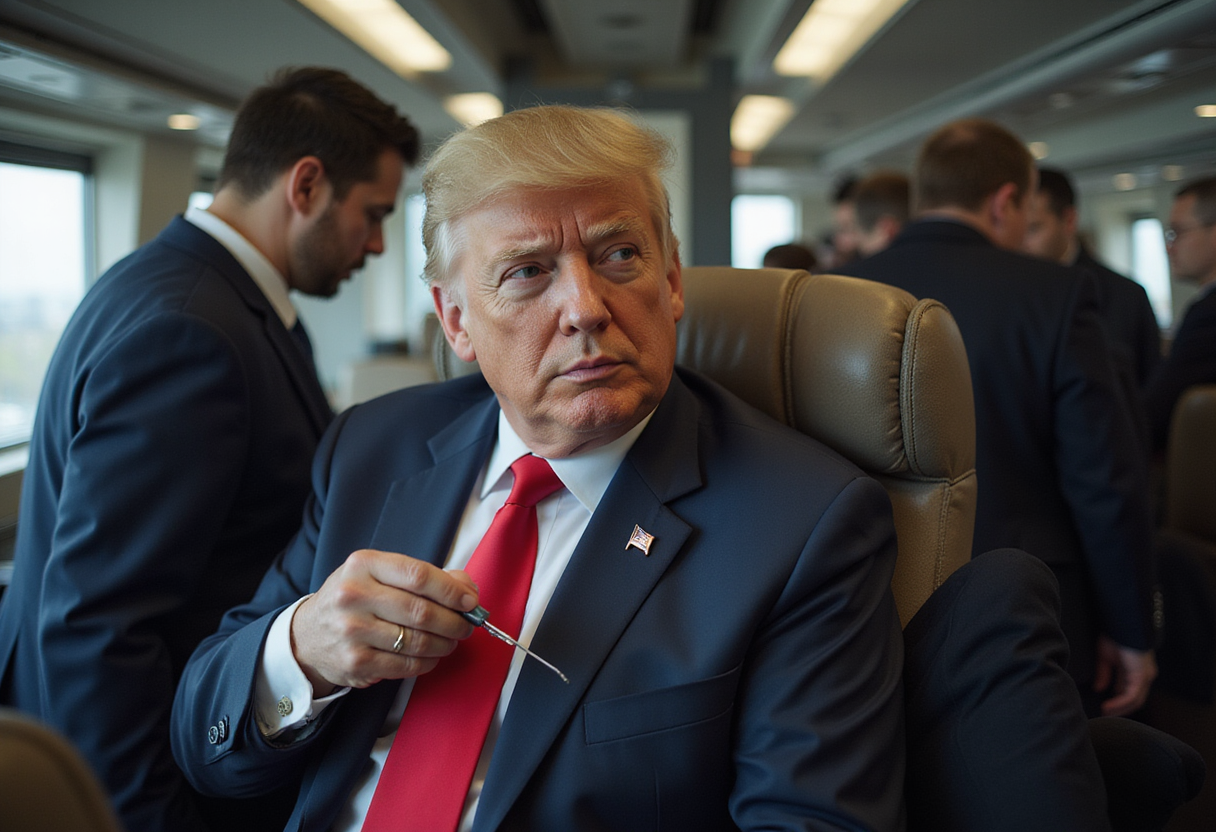
Semiconductor export controls took a back seat at the summit between Chinese President Xi Jinping and US President Donald Trump, according to a report by the South China Morning Post.
The omission marks a notable departure from previous high-level exchanges between the two countries, where chip technology restrictions have repeatedly served as a central point of friction. For an industry that tracks every shift in the US export-control regime, the absence of the topic from the leaders' agenda signals a change in how the two governments are sequencing their trade and technology disputes.
What does the omission signal?
Export controls on advanced semiconductors and chipmaking equipment have been among the most consequential policy tools Washington has deployed against Beijing in recent years. Suppliers, fabs and equipment makers across the US, Europe and East Asia have adjusted supply chains and licensing strategies in response to each successive round of restrictions.
At this summit, however, the two leaders did not place those measures at the center of their discussions. The South China Morning Post report indicates the topic was deprioritized relative to other items on the bilateral agenda.
Why does it matter for the chip industry?
For semiconductor market participants, the practical question is whether the summit's ordering of priorities translates into policy. Export-control enforcement, licensing decisions and entity-list additions proceed through agencies such as the Commerce Department, and a single meeting does not by itself change the regulatory framework in force.
Still, leadership-level signaling carries weight. When chip controls move down the agenda at a leaders' summit, observers in the semiconductor supply chain read it as an indicator of the negotiating space both governments are willing to leave open on technology issues.
What happens next?
No specific policy changes were announced in connection with the meeting. The existing US export-control regime on advanced chips and manufacturing equipment remains in place, and companies in the sector continue to operate under the current rules.
Industry analysts will watch subsequent bilateral engagements and any Commerce Department actions for confirmation of whether the lowered profile of chip controls at the summit reflects a durable shift in posture or a one-off ordering of priorities.
via Google News: Semiconductor export controls (Source)
More from Marcus Bennett
Show full bio
News editor covering marketplaces and e-commerce at Die Signal.
278 articles
Same lot · LOT-C1C6
- DSG-310310nmChina Responds to US Semiconductor Export Controls, OECD Report
- DSG-599614nmBeijing Denounces US Chip Curbs as Threat to Global Supply Chains
- DSG-117620nmUS Reportedly Weighs Sweeping New Chip Export Controls
- DSG-78353nmRealClearDefense Analysis: China's Semiconductor Bottlenecks Are Disappearing
- DSG-823828nmThe Semiconductor Sanction Paradox: U.S. Chip Controls and China's Rise