Test report · tested November 26, 2026
Foundries & ManufacturingDevice under test
TSMC's 2nm Hits 8% of Wafer Revenue as AI Demand Runs Triple Capacity
N2 jumped to 8% of TSMC wafer revenue in Q3 2026, with NT$103.13 billion booked as AI demand runs at roughly triple capacity. Wei: 'not enough, still not enough.'
- Read
- 5 min
- Words
- 1,054
- Segment
- Foundries & Manufacturing
- Operator
- Grace Kim
Spec summary
- TSMC N2 generated a reported 8% of wafer revenue in Q3 2026, up from about 3% in Q2.
- Q3 2026 2nm line revenue was NT$103.13 billion; Q3 consolidated revenue was NT$1,494.24 billion with net income of NT$763.06 billion.
- CEO C.C. Wei put major-customer demand at roughly three times available advanced-node capacity.
- Nvidia's Q3 Data Center revenue reached $107.6 billion, up 110% year over year, on TSMC 3nm and 5nm — not 2nm.
- AMD's Venice EPYC entered production on TSMC 2nm on May 21, 2026, the first HPC product on that node.
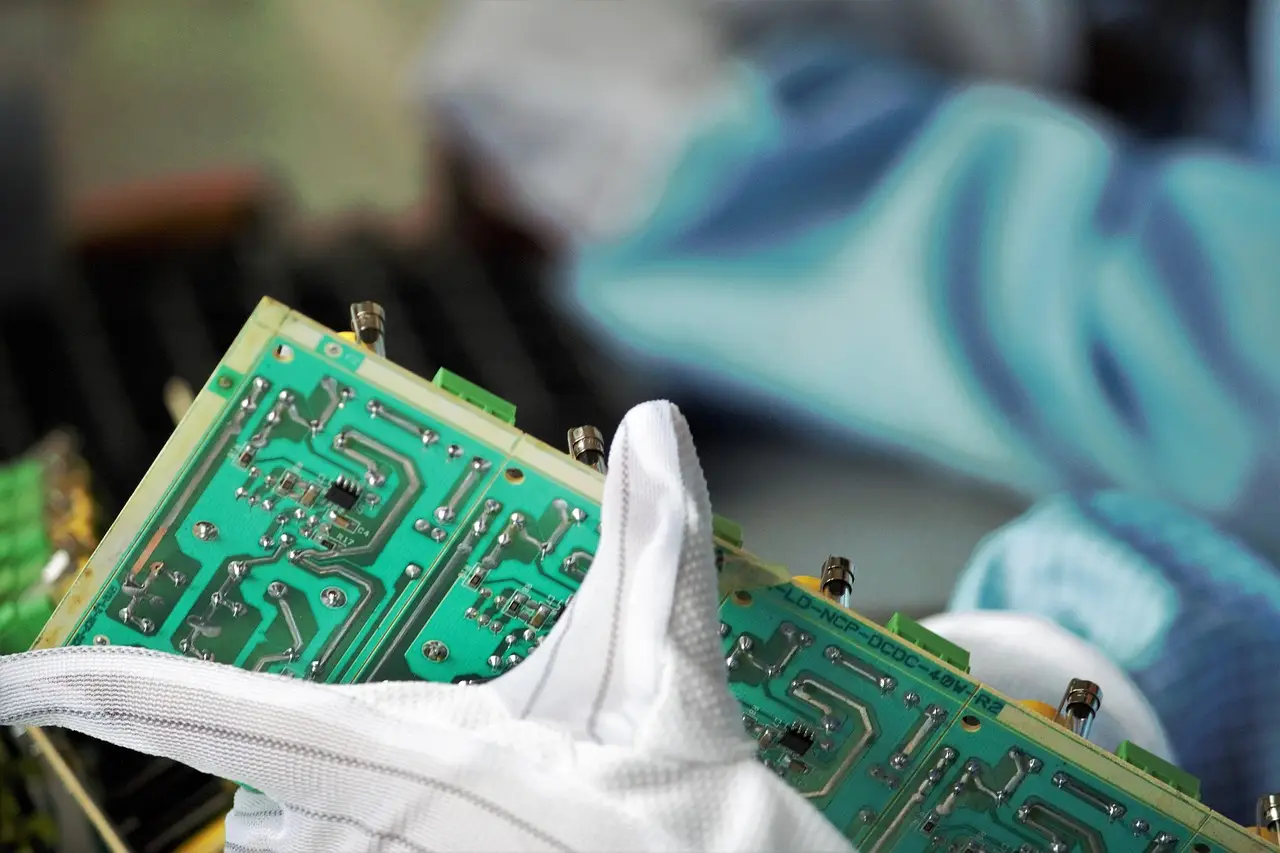
TSMC's 2nm process, N2, generated a reported 8% of the company's wafer revenue in Q3 2026 — up from roughly 3% in Q2. The numbers come from an OpenNash summary of the earnings call, and they quantify how hard the AI chip shortage is pulling the newest node into volume. Steeper still: the ledger shows the ramp in raw form.
The Q3 numbers behind the 8%
TSMC's financial statements list a 2-nanometer product line at NT$103.13 billion for the quarter and NT$135.06 billion for the first nine months of 2026. Subtract, and the first half contributed only about NT$32 billion. Q3 alone more than tripled everything before it.
The board approved the report on November 10, 2026:
- Consolidated revenue: NT$1,494.24 billion
- Net income: NT$763.06 billion
- Diluted EPS: NT$29.43
- Up to US$500 million approved for a strategic investment company targeting semiconductor ecosystem stakes
TSMC has run N2 in high-volume manufacturing since Q4 2025 and is ramping in phases at Hsinchu and Kaohsiung. Annual N2-family capacity should more than double in 2027, per the call summary. N2P and A16 count as extensions, not replacements; A16 pairs nanosheet transistors with a backside power rail (power delivery moved beneath the transistor layer). TSMC's official schedule puts A16 in 2026, though broad 2027 availability is an industry expectation, not a company date. TSMC also introduced N2U in April 2026 — 3% to 4% more speed or 8% to 10% less power than N2P, at 1.02 to 1.03 times logic density, with production scheduled for 2028. A13 debuted at the 2026 North America Technology Symposium.
What does this change for buyers?
Who holds 2nm-class capacity today: TSMC has it at scale. Samsung says SF2 is in mass production with a second generation ramping. Intel released a 0.9 design kit for 14A but has no confirmed shipping product. AMD says its Venice server CPU is the first high-performance computing product in production on TSMC 2nm. Nvidia's newest Vera Rubin systems, per its latest disclosures, still build on TSMC 3nm and 5nm.
Demand outruns the ramp. On the Q3 call, management pointed beyond AI accelerators to agentic AI CPUs and networking chips, widening the pool of customers competing for the same wafers. Hyperscalers sign multi-year commitments; accelerator vendors reserve capacity quarters ahead. TSMC Chairman and CEO C.C. Wei has been blunt, calling advanced-node capacity "not enough, not enough, still not enough" and estimating major-customer demand at roughly three times available capacity. A CNAS report adds that he considered wearing a shirt reading "no wafers."
Wei also pushed back on AI-bubble questions, saying TSMC feels nervous about bubble talk and careless investment would hurt badly. That caution explains the paced buildout — TSMC would rather run short than strand billions in idle fabs.
Nvidia: the biggest buyer, one node behind
Vera Rubin NVL72 systems entered volume shipments in Q3 2026, with deployments at CoreWeave, Google Cloud, Microsoft Azure, Oracle Cloud Infrastructure and Nebius. On November 16, Nvidia announced Rubin HPC, a Vera Rubin platform GPU for science and analytics, plus a rack-scale platform around its first fully custom data-center CPU. Groq 3 LPX, an interactive inference accelerator in the family, hit full production August 24.
Nvidia's fiscal 2027 numbers frame the demand: Q2 revenue of $96.2 billion, up 106% year over year; Q3 at $115.8 billion, up 103%; Q3 Data Center at $107.6 billion, up 110% — about 93% of the total. On November 17, Nvidia announced expanded substrate commitments with Kinsus and Samsung Electro-Mechanics, with added capacity starting production in H2 2027 and targeted expansion in Q3 2028. The constraint has shifted from design to manufacturing, packaging and substrates.
AMD, Samsung, Intel
AMD says Venice entered production ramp on TSMC 2nm on May 21, 2026, with future production planned for the Arizona facility. Venice anchors Helios — 72 Instinct MI455X or MI450X GPUs with Venice CPUs, Pensando networking, UALink and ROCm. On November 12, AMD updated the MI400 series with MI430X and MI450X. Q3 revenue: $13.4 billion, up 45%, with Data Center up 97%, per a single-source report. Anthropic, Meta, Microsoft, OpenAI and Oracle ran early Helios workloads; AMD and Meta announced a 6-gigawatt GPU deployment, the first gigawatt on a custom MI450-based GPU shipping H2 2026. AMD's March Samsung agreement covers HBM4 for MI455X; May brought more than $10 billion in Taiwan ecosystem investment.
Samsung's October 29 results cite continued 2nm HPC order wins, including from major hyperscalers, with 2027 growth led by 4nm and 2nm. A leadership reshuffle — Jong Myeong Lee promoted to president and divisional CTO, Jun Young-hyun overseeing turnarounds — reportedly targets 2nm yield problems. Samsung has published no SF2 yield, capacity or wafer price. The pipeline includes a Preferred Networks AI accelerator on SF2 with I-Cube S 2.5D packaging, an Arm Cortex-X collaboration announced November 12, SF2Z with backside power delivery on the roadmap through 2027, and SF2A automotive 2nm targeting 2026 readiness. Taylor Fab 1, following a $17 billion initial minimum investment, is reportedly on track to be operational by end of 2026.
Intel's 14A — RibbonFET 2 gate-all-around transistors, PowerDirect backside power, Turbo Cells — projects 15% to 20% more performance at the same power versus 18A, or 25% to 35% less power, and up to 30% better density, per Intel's own April 2025 analysis. PDK 1.0 is expected Q1 2027. 18A-P, offering up to 9% higher performance per watt, has landed an unnamed external customer. Microsoft's November 18 announcement covers EMIB packaging for Azure silicon and multi-year Xeon supply including Diamond Rapids — packaging, not 14A.
The chain doesn't stop at wafers: TSMC is reportedly considering a 20% CoWoS price increase (under consideration, not implemented), and Samsung's newest HBM hits up to 3.3 TB/s per stack, 2.7 times HBM3E, crowding conventional DRAM output. Consumers feel it through shared inputs — no 2nm consumer GPU is announced, and TSMC management reportedly called consumer markets pressured heading into 2027. Seven years separate TSMC's 7nm volume debut (2018) from 2nm volume (Q4 2025), and planners saw this shortage coming and still cannot build fast enough.
via shattered.io (Source)
More from Grace Kim
Show full bio
Market editor covering regulation, policy and their impact on hardware layer of artificial intelligence at Die Signal.
782 articles
Same lot
- TSMC Posts Record $46.7 Billion Q3 Revenue on AI Demand
- TSMC Posts NT$1,494.24 Billion Q3 Revenue, NT$763.06 Billion Net Income
- TSMC Posts Record $46.7 Billion Q3 Revenue, Up 50% on AI Demand
- TSMC AI Chips Drive One-Third of Record $40.2B Q2 Revenue
- TSMC Posts Record Q3 Profit, Plans $98 Billion Capex Through 2028