Test report DSG-4126 · Rev E · tested October 13, 2026
Foundries & ManufacturingDevice under test
TSMC Power Plant Funding Talks Still Conceptual, Taipower Says
Taipower says talks on TSMC funding new power generation remain conceptual — no amount, site, capacity or timeline has been confirmed by either party.
- Read
- 2 min
- Words
- 466
- Node
- 7nm
- Operator
- Priya Raman
Spec summary
- Taipower describes TSMC power plant funding talks as conceptual
- No funding amount, site, capacity figure or timeline has been confirmed
- Taipower, Taiwan's state utility, controls the grid side of any such deal
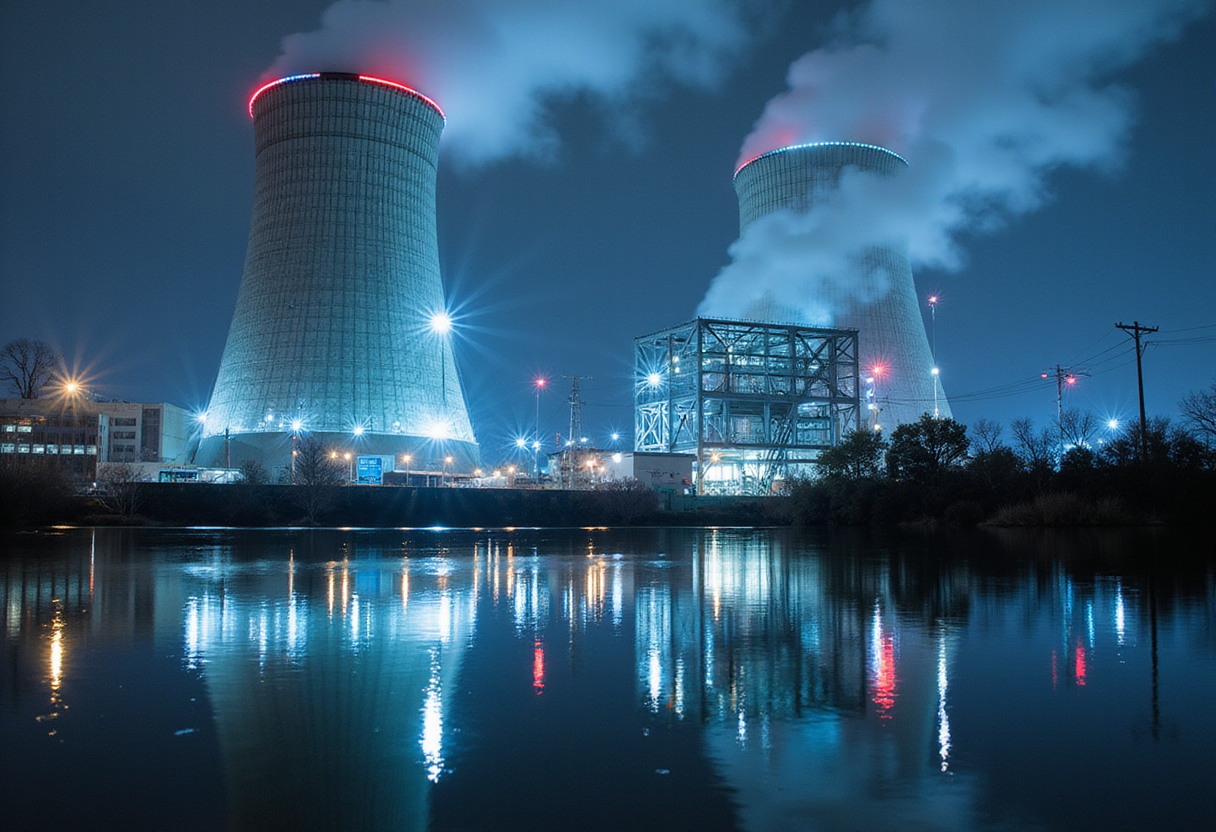
Talks on TSMC funding new power generation capacity remain "conceptual," according to Taiwan's state utility Taipower. That single qualification, reported by DigiTimes, does the heavy lifting in this story. It separates speculation from commitment, and the gap between the two is where the risk sits.
By Priya Raman
What has actually been agreed?
Nothing, on the evidence available. Taipower characterizes the discussions with TSMC as conceptual. The word matters. A conceptual discussion produces no binding figures, no timeline, and no contract structure. Anyone reading reports of a funded plant deal should note what the utility did not say: it did not confirm an amount, a location, a capacity figure, or a signing date.
Why would TSMC fund power plants at all?
The context is load growth. TSMC operates advanced semiconductor fabs in Taiwan, and fabrication at leading nodes consumes electricity at industrial scale. Chipmakers of this size increasingly worry about whether grid supply can keep pace with expansion plans, and TSMC's AI-driven capacity buildout sharpens that concern.
A fabless chip designer buys wafers; a fabs owner buys megawatts. When the grid operator cannot guarantee those megawatts, the customer starts asking whether it should help pay for them.
Who controls the grid side?
Taipower does. The state utility owns and operates Taiwan's transmission and much of its generation. Any arrangement under which TSMC finances new plant capacity would run through Taipower's planning, not around it. That gives the utility's framing real weight. If Taipower calls the talks conceptual, no counterparty has yet produced terms concrete enough to change that label.
What does the label "conceptual" change?
It lowers expectations. Reports of TSMC bankrolling generation projects imply a near-term fix to Taiwan's power squeeze. Taipower's statement suggests the parties are far from that point. For supply-chain planners and TSMC equipment suppliers, the practical reading is this: do not book grid relief from any TSMC-funded plant into capacity models yet.
- Status of talks: conceptual, per Taipower
- Confirmed funding amount: none
- Confirmed site or capacity figure: none
- Confirmed timeline: none
What is not being said?
The utility has not rejected the idea outright. That is the second half of the story. By acknowledging the discussions exist while denying their concreteness, Taipower leaves the door open without pricing what stands behind it. Skepticism here is not dismissal; it is accounting. A promise without a number attached is a headline, not a plan.
TSMC has not, on the available record, publicly detailed its position. Until it does, or until Taipower upgrades its own language from "conceptual" to something firmer, the only defensible summary is this: Taiwan's largest power consumer and its sole major utility are talking, and the talks have not yet produced anything you can put in a spreadsheet.
via Google News: TSMC (Source)
More from Priya Raman
Show full bio
Correspondent covering money, funding and market shifts around hardware layer of artificial intelligence at Die Signal.
282 articles
Same lot · LOT-C1C9
- DSG-95665nmTaipower Denies Formal TSMC Power Plant Takeover Proposal
- DSG-12897nmTSMC Secures Taiwan Approval for $44 Billion in US Investments
- DSG-73177nmTSMC Raises 2nm Wafer Production Outlook by 20%
- DSG-670610nmMusk Plays Down TSMC Presence at AI Fab Facility
- DSG-57567nmTSMC quarterly revenue climbs 51% on persistent AI demand