Test report DSG-8773 · Rev B · tested October 16, 2026
Supply Chain & PolicyDevice under test
Taiwan Reportedly Plans $4B Texas Complex for Nvidia AI Supply Chain
Taiwan reportedly plans a $4 billion Texas complex serving the Nvidia AI supply chain while tightening AI chip exports to China, per Seeking Alpha.
- Read
- 3 min
- Words
- 594
- Node
- 5nm
- Operator
- Grace Kim
Spec summary
- Taiwan reportedly plans a $4 billion complex in Texas dedicated to the Nvidia AI supply chain.
- The report also says Taiwan is tightening exports of AI chips to China.
- No site, timeline, or named companies have been confirmed beyond the $4 billion figure.
- The moves affect Nvidia's supply resilience and its China market access simultaneously.
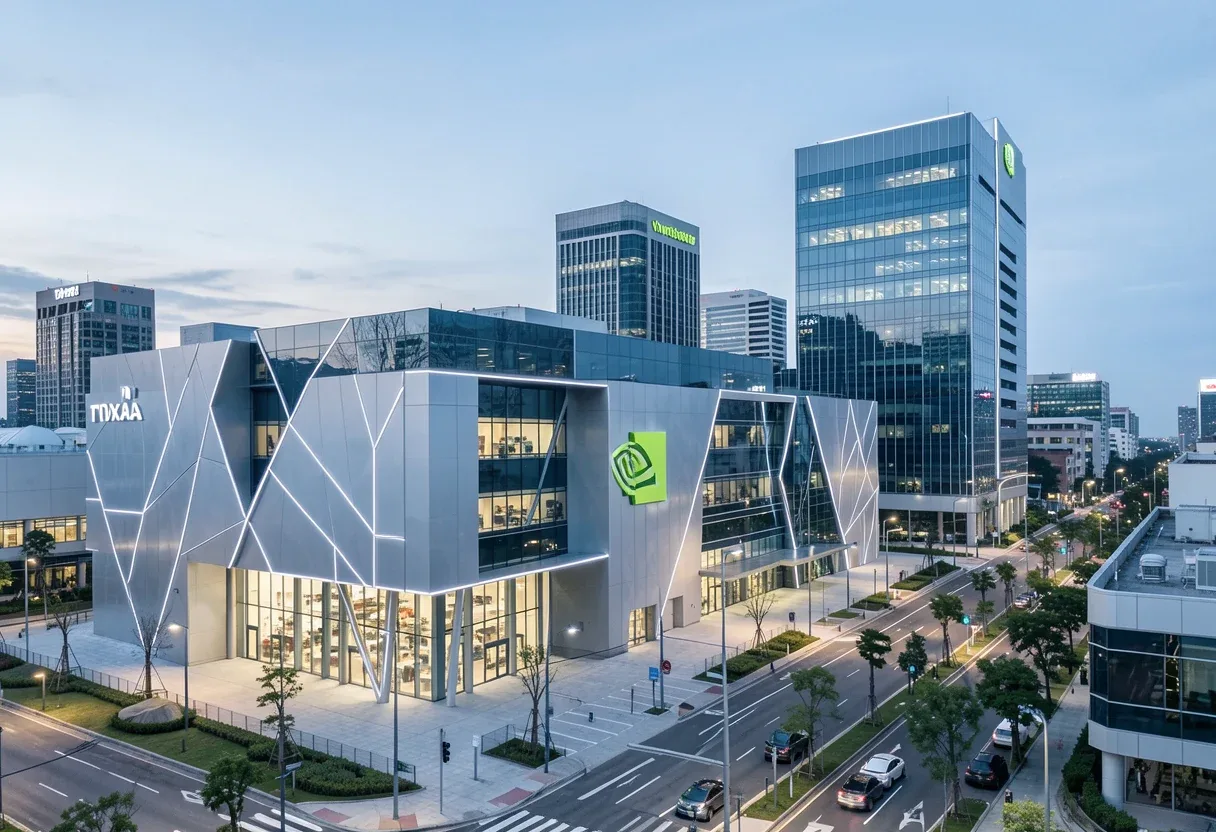
Taiwan is preparing a $4 billion complex in Texas dedicated to the Nvidia AI supply chain, according to a report carried by Seeking Alpha. The same report says Taipei is simultaneously tightening export controls on AI chips bound for China.
That's two policy signals in one package. One pushes Taiwanese manufacturing capacity onto US soil. The other restricts the flow of advanced AI silicon (the high-end accelerators used to train large models) toward China. Both land squarely on Nvidia, whose GPUs anchor most of the world's AI compute.
What does the reported plan actually involve?
The headline figure is $4 billion. The facility would sit in Texas and serve the Nvidia supply chain, which spans advanced packaging, server assembly, and the components that turn bare chips into rack-scale AI systems. Beyond that, the report's public summary offers no site, no timeline, and no named companies.
So treat the number as the anchor. Everything else remains unconfirmed detail. That's normal at this stage of industrial-policy reporting, but it means procurement teams should wait for official confirmation before adjusting plans.
The reported investment matters for three reasons:
- Scale. $4 billion is a serious commitment, large enough for a packaging or module campus rather than a single assembly line.
- Location. Texas already hosts major semiconductor and systems manufacturing, so the choice would plug into existing logistics and workforce pools.
- Customer alignment. A facility explicitly framed around Nvidia suggests co-located capacity for AI server hardware, not general-purpose chip output.
Why pair a US plant with China export curbs?
The two moves fit a pattern. Washington has spent years pushing allies to onshore advanced chip capacity and to restrict China's access to cutting-edge AI hardware. Taiwan sits at the center of both levers.
By tightening AI chip exports to China, Taipei aligns with US export-control policy and protects its own position as the indispensable supplier of advanced silicon. By building in Texas, Taiwanese players hedge geographic risk — the concentration of chipmaking on one island that every risk analyst flags.
For Nvidia, the calculus is direct. More US-based capacity in its supply chain means more resilience against geopolitical disruption. Tighter China restrictions, though, mean a smaller addressable market or heavier compliance burden on the sales side.
What does this change for buyers and builders?
Not much yet, in operational terms. A reported plan is not a fab in the ground. But the direction is clear.
If confirmed, the Texas complex would add US-based capacity to a supply chain that data-center operators have struggled to book ahead. Lead times for AI servers have been tight for over a year. New capacity anywhere helps.
On the China side, tighter export rules from Taiwan would compound existing US restrictions, narrowing workarounds and pushing Chinese buyers further toward domestic alternatives.
What to watch next
Three confirmation points will separate a real project from a floated trial balloon:
- An official announcement from Taiwanese authorities or the investing companies, with a site and construction schedule attached.
- Word on which segment of the supply chain the $4 billion covers — packaging, assembly, or full system integration.
- The specific scope of the China export tightening: which chip classes, which thresholds, and when the rules take effect.
Until then, the $4 billion figure and the export-tightening signal are the facts on the table. Both point the same way: AI hardware supply is consolidating around the US-Taiwan axis, and China's access to it is narrowing.
Die Signal will track confirmations as they land.
via Google News: AI chip (Source)
More from Grace Kim
Show full bio
Market editor covering regulation, policy and their impact on hardware layer of artificial intelligence at Die Signal.
412 articles
Same lot · LOT-C1CC
- DSG-61043nmTaiwan Eyes $4B Texas Complex to Anchor Nvidia AI Supply Chain
- DSG-42393nmTaiwan Moves to Restrict AI Chip Sales to China, Aligning With U.S.
- DSG-39007nmTaiwan Reportedly Weighs Tighter AI Chip Export Curbs on China
- DSG-707645nmTaiwan Moves to Restrict AI Chip Sales to China, Bloomberg Reports
- DSG-192165nmChinese state funds tied to restricted Nvidia AI chip buys