Test report · tested November 22, 2026
AI Datacenter InfrastructureDevice under test
Sophia Space runs orbital OS across Kepler satellites
Sophia Space ran its SOOS software on Kepler relay satellites, a first on-orbit test for the $22m orbital data center startup. Its TILE hardware stays grounded, and no performance figures were released.
- Read
- 4 min
- Words
- 714
- Segment
- AI Datacenter Infrastructure
- Operator
- Priya Raman
Spec summary
- Sophia Space deployed its SOOS software on multiple Kepler satellites in tranche 1 of an optical relay constellation.
- The company has raised over $22m across pre-seed rounds, including $10m in February and $3.5m in May.
- An asset financing agreement with SLI covers up to $300m.
- TILE compute modules support Qualcomm Snapdragon 865/Cloud 100 or Nvidia Jetson/Blackwell configurations with dedicated solar panels.
- No satellite count, workload details, or performance figures were disclosed.
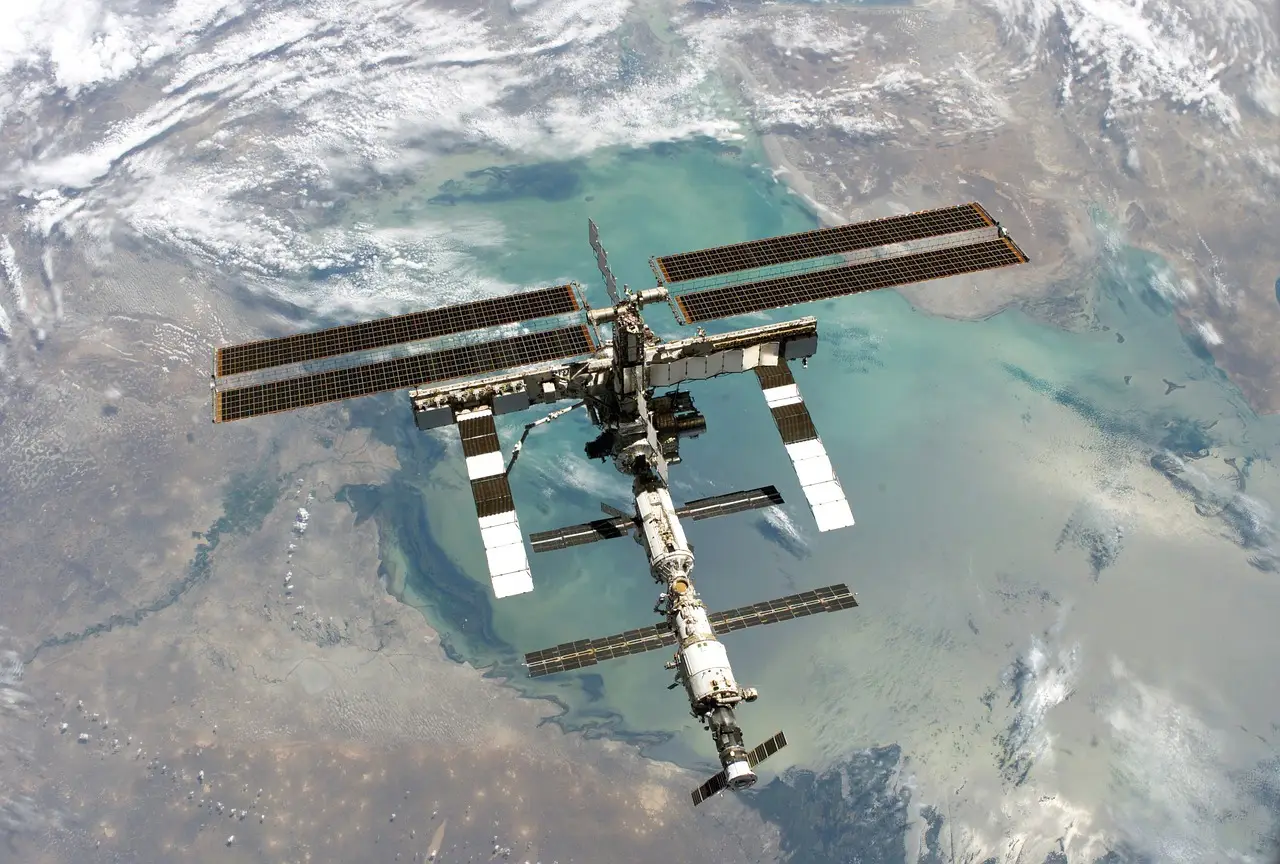
Sophia Space has deployed its Sophia Orbital Operating System (SOOS) across multiple Kepler satellites, marking the first in-space operation of the company's orbital data center (ODC, a computing facility placed in orbit rather than on Earth) software. The Pasadena, California startup announced the milestone this week. The proof is limited to software on borrowed compute. Purpose-built hardware remains on the ground.
The deployment runs on orbital compute of multiple Kepler satellites across tranche 1 of that company's optical data relay constellation. Sophia Space did not disclose how many satellites participated, how long the tests ran, or what workloads executed. Those numbers matter more than the milestone itself.
Who is funding this?
Sophia Space closed a $10 million pre-seed round in February, led by Alpha Funds, KDDI Green Partners Fund, and Unlock Venture Partners. A further $3.5 million pre-seed followed in May. CEO Rob DeMillo reports the current allotment has been oversubscribed, bringing total capital to more than $22 million. The company also holds an asset financing agreement with SLI for up to $300 million.
That $300 million figure deserves scrutiny. Asset financing typically unlocks against delivered, revenue-generating equipment. Sophia's own TILE compute modules have not yet reached orbit.
What did the tests actually prove?
"This is an important milestone in moving from architectural design and ground-based testing to actual on-orbit operations," DeMillo told DCD exclusively. "The next steps are to expand the capabilities of SOOS, demonstrate increasingly sophisticated distributed workloads, and integrate our purpose-built TILE computing hardware as it becomes available in orbit. This is no longer just a theoretical architecture. We've established the connection and demonstrated that the underlying approach works in space."
The claim is a connection, not a data center. Demonstrating that distributed software links satellites differs substantially from running production workloads at scale. No performance figures, throughput numbers, or error rates accompanied the announcement.
TILE, the company's solid-state compute module line, is vendor-agnostic and passively cooled with patented technology. Sophia has previously said TILE Edge servers can be configured with Qualcomm Snapdragon 865 and Cloud 100, or Nvidia Jetson and Blackwell hardware, each pairing with a dedicated solar panel.
How do you cool a data center in a vacuum?
"Here's the irony of putting data centers in space: you're surrounded by an environment that's effectively a vacuum, and getting rid of heat is one of your biggest engineering challenges," DeMillo told DCD. "The key is moving heat efficiently from the processors to surfaces that can radiate it into space, without relying on the complex active cooling systems traditionally associated with high-performance computing."
Passive radiative cooling (transferring heat to surfaces that emit it as infrared radiation into space) avoids pumps and moving parts. The company has not published thermal test data from orbit. The company previously expressed interest in Nvidia's Space-1 Vera Rubin GPU-CPU compute module, built for orbital operation. Its latest statement did not mention Nvidia at all.
What workloads are on the roadmap?
Sophia lists a broad set of target applications:
- missile warning
- space domain and maritime awareness
- disaster response
- atmospheric monitoring
- weather intelligence
- in-space manufacturing
SOOS provides triple redundancy across these applications, according to the company. The list is aspirational. None of these workloads has a demonstrated orbital deployment under the company's name.
The tests are intended to show how modular computing infrastructure can scale while expanding partnership opportunities. Sophia has a cooling solution and a methodology, but it treats downlink (transmitting data from orbit to ground) as a problem for partners. "We see ourselves working with communications providers rather than trying to build every component of the network ourselves," DeMillo said. "But the breakthrough right now isn't just getting data back to Earth faster. It's making sure we don't have to send all of it back in the first place."
That position is coherent. It also shifts the hardest engineering problem onto unnamed future collaborators.
DeMillo agreed the ODC conversation has moved from last year's feasibility question toward scaling, timescales, and commercially viable infrastructure. The feasibility question is not fully answered until Sophia's own hardware flies. The company gave no launch date for TILE.
By Priya Raman.
via datacenterdynamics.com (Source)
More from Priya Raman
Show full bio
Correspondent covering money, funding and market shifts around hardware layer of artificial intelligence at Die Signal.
731 articles
Same lot
- Greek Sovereign Fund Buys 23% Stake in Data4's Athens Unit
- Kao to host five AI inference clusters at Harlow by early 2027
- Google to Pay $920 Million Monthly to SpaceX-xAI for AI Data Center Capacity
- Stephens upgrades Oracle, lifts target to $213 on November 2
- Oxide Computer Raises $445M Series D to Expand Rack-Scale Cloud Hardware