Test report DSG-3914 · Rev C · tested October 8, 2026
Memory & StorageDevice under test
Samsung Set to Post 106.1 Trillion Won Quarterly Profit Amid AI Memory Boom
Samsung is expected to post 106.1 trillion won in Q3 operating profit, nearly nine times last year's figure, as AI demand keeps memory in shortage — but price growth is slowing.
- Read
- 5 min
- Words
- 920
- Node
- 3nm
- Operator
- Elena Vasquez
Spec summary
- Samsung's Q3 operating profit is forecast at 106.1 trillion won ($79.1 billion), up from 12.17 trillion won a year earlier.
- Analysts cut consensus forecasts by 7.7% since end-August despite the record quarter.
- TrendForce expects Q4 DRAM contract prices to rise 10-15%, versus roughly 60% in Q2.
- J.P. Morgan estimates Samsung's HBM share rising to 34% this year, while SK Hynix falls to 46%.
- The won strengthened 14.3% against the dollar in Q3, its largest quarterly gain since early 1998.
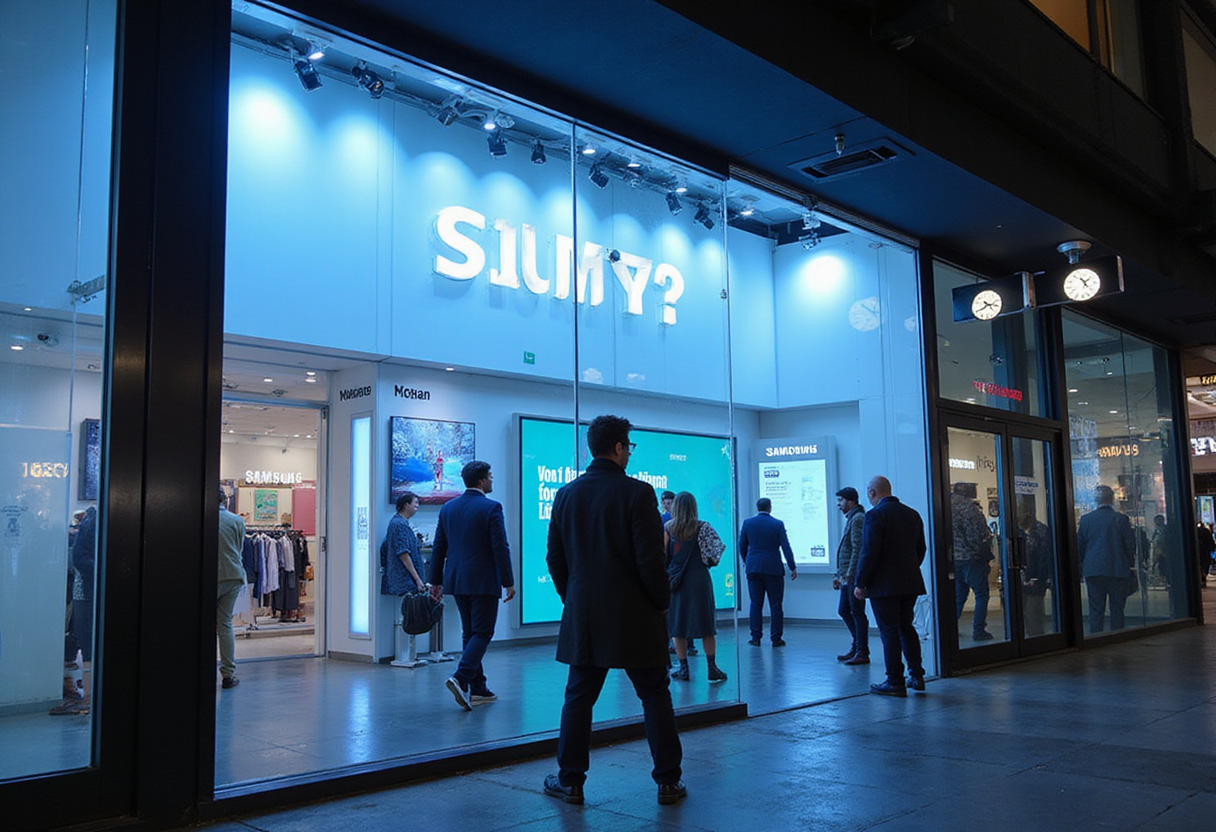
Samsung Electronics is expected to report 106.1 trillion won ($79.1 billion) in operating profit for the July-September quarter, an almost ninefold increase from 12.17 trillion won a year earlier and the company's fourth consecutive record quarter.
The estimate comes from LSEG's SmartEstimate, based on forecasts from 21 analysts. Samsung will release preliminary third-quarter results on Thursday, with detailed figures expected later in October.
Behind the record number sits a warning: analysts have cut their consensus forecast by 7.7% since the end of August. The market is turning more cautious even as earnings stay far above last year's levels.
The core driver remains demand for memory in AI servers and data centers. The resulting shortage has lasted more than a year, and chipmakers expect tight supply into next year and potentially through 2028.
What is slowing down?
Memory prices. TrendForce expects conventional DRAM contract prices to rise 10% to 15% in the fourth quarter, a substantial slowdown from the roughly 60% increase recorded in the second quarter.
"Although the market remains in a tight supply position, the pace of price growth is expected to decelerate," said Avril Wu, senior vice president for research at TrendForce.
Suppliers have grown cautious about pushing prices higher because excessive increases could damage demand for smartphones, PCs and other consumer electronics. Memory has already become a more expensive component for device manufacturers.
Long-term supply agreements are also changing the market's dynamics. Samsung said in July that it aimed to secure long-term contracts covering about two-thirds of its memory output. These deals give customers supply certainty and Samsung predictable demand, but they cap pricing power.
"With ceiling-price mechanisms built in, the rate of price increases has slowed down," Wu said.
For Samsung, that trade-off means greater earnings visibility but less upside from any further sharp spike in spot prices. Samsung's memory-chip operating margin is expected to reach 76% in the third quarter, according to SK Securities analyst Han Dong-hee, unchanged from the previous quarter.
The industry remains far from normal supply conditions. Micron has said the memory market could be even tighter in 2027 and 2028 than this year. The open question is not whether demand has collapsed, but whether supply constraints stay severe enough to support exceptionally high margins as production expands.
Why does HBM matter for Samsung?
The more important strategic battle is high-bandwidth memory, essential for the processors used in AI data centers. Samsung fell behind SK Hynix in HBM after delays in qualifying its products for Nvidia, leaving SK Hynix dominant during the early stages of the AI infrastructure boom.
Samsung has been closing the gap and expanded shipments of its latest HBM4 products this year. J.P. Morgan estimates Samsung's share of the HBM market will rise to 34% this year from 20% last year, while SK Hynix's share falls to 46% from 60%.
HBM is one of the fastest-growing areas of the memory market and carries greater strategic weight for AI infrastructure than conventional DRAM. Gaining share there could compensate Samsung for slower growth in conventional memory prices.
But competition is intensifying. SK Hynix remains the market leader, and Micron is expanding its HBM business. The contest increasingly centers on qualification from major AI-chip designers and sufficient production capacity.
How much pressure come from China and currency?
Chinese memory manufacturers pose a growing competitive challenge. They remain concentrated in lower-end products but are using the global shortage to expand among customers.
"Our industry checks indicate that an increasing number of OEMs and ODMs are adopting Chinese DRAM and NAND," said Kinngai Chan, senior research analyst at Summit Insights Group, in a report. If Chinese producers move into higher-value memory, global supply could eventually grow faster and pressure prices.
Currency adds another headwind. The South Korean won strengthened 14.3% against the dollar in the third quarter, its largest quarterly gain since early 1998. For Samsung, which generates substantial revenue overseas, a stronger won reduces the value of foreign earnings when converted to local currency.
The currency effect comes at a sensitive moment. Samsung shares have fallen about 25% from their June record, though they remain more than twice their level at the start of the year.
What do the results signal for the cycle?
The upcoming figures will tell two stories. The first is extraordinary cyclical strength: a projected 106.1 trillion won operating profit shows how dramatically AI infrastructure spending has transformed the memory market. The second is the start of a debate over sustainability.
Memory-price growth is slowing. Long-term contracts limit pricing power. The won has strengthened sharply. Consumer electronics makers are absorbing higher component costs, and Chinese competitors are expanding. Against that, Samsung has a potentially significant growth source in HBM, where rising share would strengthen its position in the AI supply chain and reduce dependence on conventional memory pricing.
The critical question is whether HBM growth can compensate for a cooling price cycle elsewhere in memory. While demand still keeps the industry in shortage, the market is moving from a phase where nearly every variable favored Samsung toward one where earnings depend on product mix, customer contracts, manufacturing efficiency and market share.
Analysts say that makes the next results important not simply for the size of the profit increase, but as a clearer indication of whether the AI-driven memory boom is still accelerating or entering a more mature phase.
via tekedia.com (Original)
More from Elena Vasquez
Show full bio
Senior reporter covering industry trends and analytics at Die Signal.
63 articles
Same lot · LOT-C1AF
- DSG-935728nmSamsung Projects 107.4 Trillion Won Quarterly Profit on AI Chip Demand
- DSG-202828nmSamsung Forecasts Record $80B Quarterly Profit on AI Memory Demand
- DSG-190065nmSamsung Guides for 780% Jump in Quarterly Operating Profit
- DSG-43067nmSamsung Q3 Operating Profit Jumps Nearly Nine-Fold on AI Chip Demand
- DSG-732920nmSamsung Profit Forecast to Jump 780% on AI Chip Demand