Test report · tested November 27, 2026
Supply Chain & PolicyDevice under test
S&P Puts Nvidia's 'AA' Rating on CreditWatch Negative Over Huang Risk
S&P puts Nvidia's 'AA' rating on CreditWatch negative over reliance on Jensen Huang, sending its five-year CDS to a record 147.27 basis points as AI credit stress spreads to Oracle, CoreWeave and SoftBank.
- Read
- 3 min
- Words
- 600
- Segment
- Supply Chain & Policy
- Operator
- Elena Vasquez
Spec summary
- S&P placed Nvidia's 'AA' rating on CreditWatch negative with a decision within 90 days, citing excessive dependence on CEO Jensen Huang.
- Nvidia's five-year CDS premium hit a record 147.27 basis points; Oracle at 356 bp, CoreWeave at 1,314 bp, SoftBank above 500 bp.
- Starbucks Korea posted 63.7 billion won in combined Q2-Q3 operating losses; monthly revenue decline narrowed from 28% to 8% by September.
- Ubase will expand AI worksites from 2 to more than 20 by H1 next year and spin off 500-employee Xbase in January.
- Europe's game market nearly doubled to 27.9 billion euros last year from 14.5 billion euros in 2016.
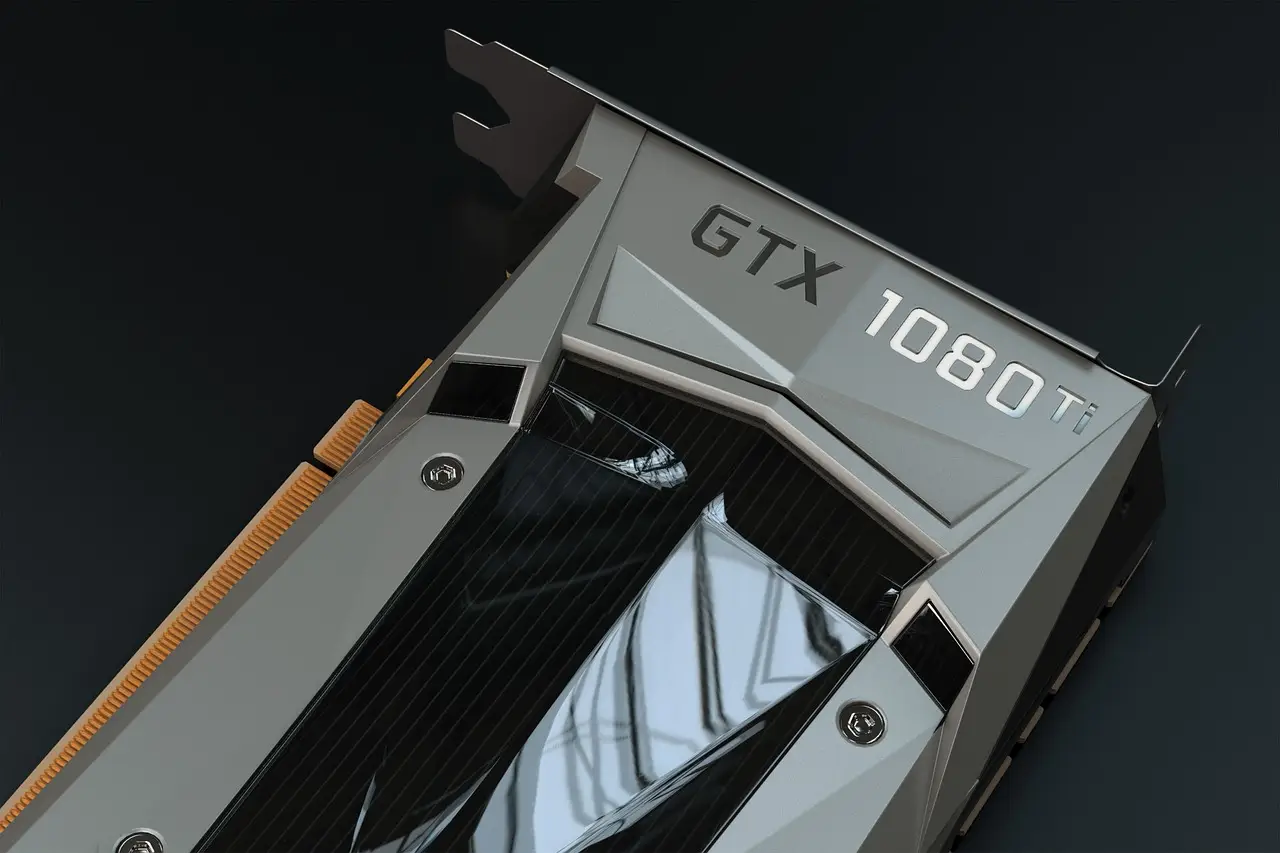
S&P Global Ratings placed Nvidia's 'AA' rating on CreditWatch negative and said it will reach a final conclusion within 90 days, citing what it called excessive dependence on CEO Jensen Huang. The move drove Nvidia's five-year credit default swap premium to a record 147.27 basis points — roughly 1.47 percentage points of annual cost to insure against default.
The signal isn't isolated. Five-year CDS premiums jumped across the AI ecosystem: Oracle now trades at 356 basis points, CoreWeave at 1,314, and SoftBank above 500. John Belton, managing director at Gabelli Funds, warned that hyperscaler capital spending would peak next year before declining in 2028 — a timeline that forces anyone holding AI chip exposure to model a demand cliff two to three years out.
For practitioners tracking Korean suppliers, the read-through is direct. Momentum in Korean chip exports, which lean on high-bandwidth memory and AI accelerator demand, could weaken after 2026–2027. The briefing's takeaway: this is a moment to gradually trim AI chip-related holdings rather than ride the cycle blind.
What else moved this week?
AI cheating scandal widens. Police requested an arrest warrant for Han, 34, the top scorer on the certified tax accountant exam, on charges of obstructing official duties by deception. Meanwhile, social media demands to privately vet high scorers — including perfect scorers on the national medical licensing exam — are spreading fast. Perfect scores in the health and medical law subject surged to 137, or 5.2%, this year from 20, or 0.6%, in 2022, though the Ministry of Health and Welfare cautioned that exam difficulty and other factors complicate simple comparisons. Experts warn that unfounded allegations posted online can constitute defamation.
Starbucks Korea's turnaround. After the May Tank Day controversy and a canceled summer e-Frequency promotion, the chain posted combined operating losses of 63.7 billion won across Q2 and Q3 — 18.4 billion in the second quarter, 45.3 billion in the third. Recovery is underway: the monthly revenue decline narrowed from 28% in June to 8% in September, and monthly operating losses shrank to 13.5 billion won from 25.1 billion. Rewards membership topped 16 million. Next year, Starbucks plans 200 store renovations under its "coffee house" concept — double this year's 100 — plus stronger training across roughly 2,200 domestic stores.
Who's reshuffling and who's expanding?
HS Hyosung promoted two to president in a 12-person reshuffle. Ahn Sung-hoon, born 1971, a former Bain & Company consultant who became head of the holding company in 2024 at 53, and Sung Nak-yang, rated highly for leading the company's entry into silicon anode materials for next-generation batteries.
Ubase is scaling its "agentic BPO" model from two worksites to more than 20 by the first half of next year, with AI agents handling repetitive tasks while human agents take empathy and complex judgment work. In January it spins off Xbase, an AI specialist with about 500 employees, built on more than 30 million hours of annual consultation data, targeting U.S. and Japanese outsourcing firms.
Korean game publishers are moving on Europe. Nexon, Krafton, Neowiz and NCSoft are establishing subsidiaries or buying stakes in Sweden, Austria, Finland and Germany. Europe's game market nearly doubled to 27.9 billion euros last year from 14.5 billion euros in 2016, and Poland's median developer salary of about $31,000 runs roughly a quarter of U.S. levels. The strategic driver: PC and console genres to escape domestic saturation and the ceiling on Asia-centered MMORPGs.
via en.sedaily.com (Source)
More from Elena Vasquez
Show full bio
Senior reporter covering people, launches and day-to-day practice in hardware layer of artificial intelligence at Die Signal.
814 articles
Same lot
- Nvidia AA Rating Placed on CreditWatch Negative Over Huang Risk
- S&P Threatens Nvidia AA Cut as Stock Tests 18-Month Low Near 125
- Nvidia at $168.89: Wall Street Prices In a Governance Risk Discount
- Nvidia Reportedly Taps Insurers to Backstop AI Chip Loans
- S&P lifts KLA to 'A' on AI chip demand and 50% margins