Test report DSG-2029 · Rev B · tested September 29, 2026
Edge AI SiliconDevice under test
POSCO Partners With Mobilint to Expand NPU Use in Industrial AI
POSCO has signed a partnership with Korean NPU startup Mobilint to expand neural processing unit adoption across industrial AI workloads in its production operations.
- Read
- 3 min
- Words
- 632
- Node
- 65nm
- Operator
- Priya Raman
Spec summary
- POSCO has entered a partnership with Mobilint to expand NPU use in industrial AI.
- The agreement pairs a major Korean steelmaker with a domestic AI chip specialist.
- The deal signals growing industrial adoption of dedicated inference hardware at the network edge.
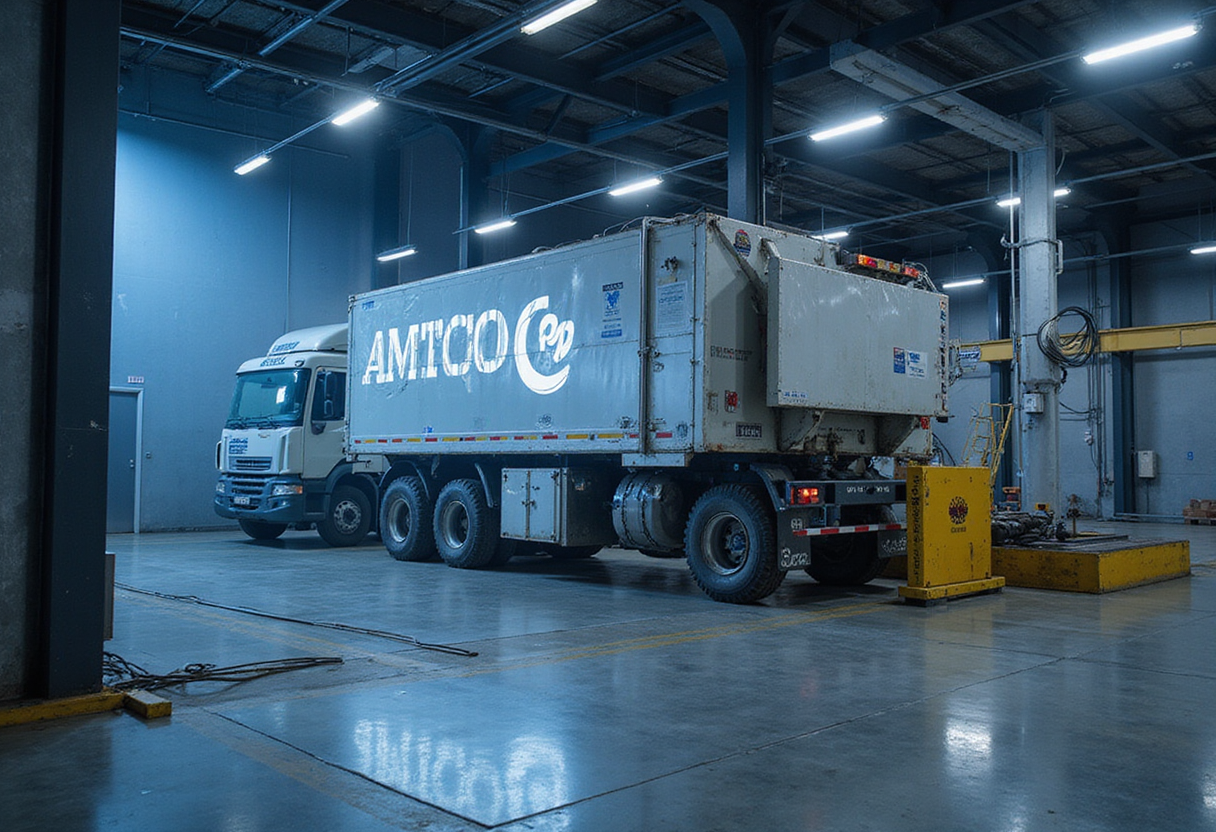
POSCO has entered into a partnership with Mobilint aimed at expanding the use of neural processing units (NPUs) in industrial AI applications. The agreement, reported by Yahoo Finance, connects one of Korea's largest industrial groups with a domestic AI chip specialist as manufacturers move dedicated inference hardware onto the factory floor.
The deal places POSCO among the growing roster of heavy-industry operators that treat edge AI silicon not as a research experiment but as production infrastructure. NPUs, processors designed specifically for the matrix-heavy arithmetic that dominates neural network inference, offer a power-efficiency advantage over general-purpose CPUs and GPUs. In industrial settings — where thousands of cameras, sensors and inspection points generate continuous data streams — that efficiency translates directly into operating cost and thermal budgets.
For POSCO, the logic of local inference is straightforward. Steel production runs on visual inspection, defect detection, predictive maintenance and process control. Each of these workloads benefits from running models close to the data source rather than shipping imagery and telemetry to remote data centers. Latency drops, bandwidth costs fall, and the analysis keeps functioning when network connectivity degrades.
Mobilint, the Korean startup on the other side of the agreement, builds NPU hardware and the accompanying software stack. Its pitch to industrial customers centers on inference performance per watt — the metric that determines whether AI models can run at scale inside plants without triggering expensive facility upgrades. Partnering with POSCO gives the chipmaker a marquee reference customer in one of the most demanding industrial environments available.
The collaboration also reflects a broader pattern in Korean industry. Large manufacturers have increasingly paired with domestic semiconductor firms to build out on-premise AI capability, reducing dependence on foreign accelerator supply chains that remain capacity-constrained. Steel, chemicals, batteries and shipbuilding — sectors where Korea holds global positions — all generate inference workloads that dedicated silicon can serve.
What NPU adoption changes in a plant
CPU-based inspection systems typically struggle with modern computer-vision models, which demand sustained parallel throughput. GPUs handle that load but draw significant power and require active cooling, complicating deployment in dusty, high-temperature production areas. NPUs sit between the two: slower at general computation, but optimized for the convolution and transformer operations that dominate industrial vision models.
By expanding NPU deployment, POSCO positions itself to run more models at more points in the production line. Practical effects include faster defect classification on rolled steel, tighter integration between sensor data and process adjustment, and a foundation for scaling AI across facilities without proportional increases in compute spending.
The commercial picture for Mobilint
A partnership with an anchor industrial customer carries weight for a young chip company. Industrial AI deployments demand reliability guarantees measured in years, not cloud-style service-level agreements. A design win inside POSCO's operations serves as validation that Mobilint's hardware can survive conditions that consumer-grade silicon cannot.
It also opens a path to volume. A single integrated steelworks can host hundreds of inspection stations. If POSCO standardizes on NPU-based inference across its sites, the hardware order sizes move from pilot quantities to production runs.
Context and outlook
The POSCO–Mobilint announcement lands amid intensifying competition in the AI inference hardware market. Established accelerator vendors, cloud providers designing their own chips, and a wave of startups are all chasing the same shift: inference moving from centralized clusters to the network edge. Industrial customers, with clear cost structures and measurable returns on defect reduction and uptime, are among the first buyers to commit at scale.
For POSCO, the partnership is one element of a wider digitalization push across its production network. For Mobilint, it is a foothold in exactly that market segment. Both sides now face the standard test of industrial AI: sustained performance, in production, under plant conditions.
via Google News: NPU (Source)
More from Priya Raman
Same lot · LOT-C1BA
- DSG-313910nmRebellions NPU Runs SK Telecom AI Workloads at 4 Billion Tokens Daily
- DSG-560214nmDeepX NPU Deployed for South Korean Air Force Perimeter Surveillance
- DSG-233720nmMobilint to Trial Korean NPU with LG, Doosan and Daedong
- DSG-74807nmMicrochip Technology Signs Definitive Agreement to Acquire Hailo
- DSG-135810nmAxelera AI Closes Funding Round Above $250 Million