Test report · tested November 22, 2026
Memory & StorageDevice under test
Phison details SSD with onboard NPU, 64GB of 130 GB/s memory
Phison showed an SSD with an NPU and 64GB of 130 GB/s memory running PyTorch and llama.cpp on-drive, plus a pSLC+QLC Mixed Media design. Neither has a name or date yet.
- Read
- 5 min
- Words
- 948
- Segment
- Memory & Storage
- Operator
- Grace Kim
Spec summary
- Phison detailed an SSD with a built-in NPU and 64GB of 130 GB/s memory at SC26, supporting PyTorch, vLLM, OpenVINO and llama.cpp
- Phison claims 10 to 100x less data transferred for applicable workloads on the computational-storage design
- The NPU's cited 36,800 DMIPS figure likely describes companion CPU cores, not AI performance
- Mixed Media puts pSLC cache inside every drive; losing 1 of 24 drives costs 4% of cache instead of 25%
- Neither design has a product name, controller name or sample date; Kioxia and DapuStor have similar pSLC+QLC designs
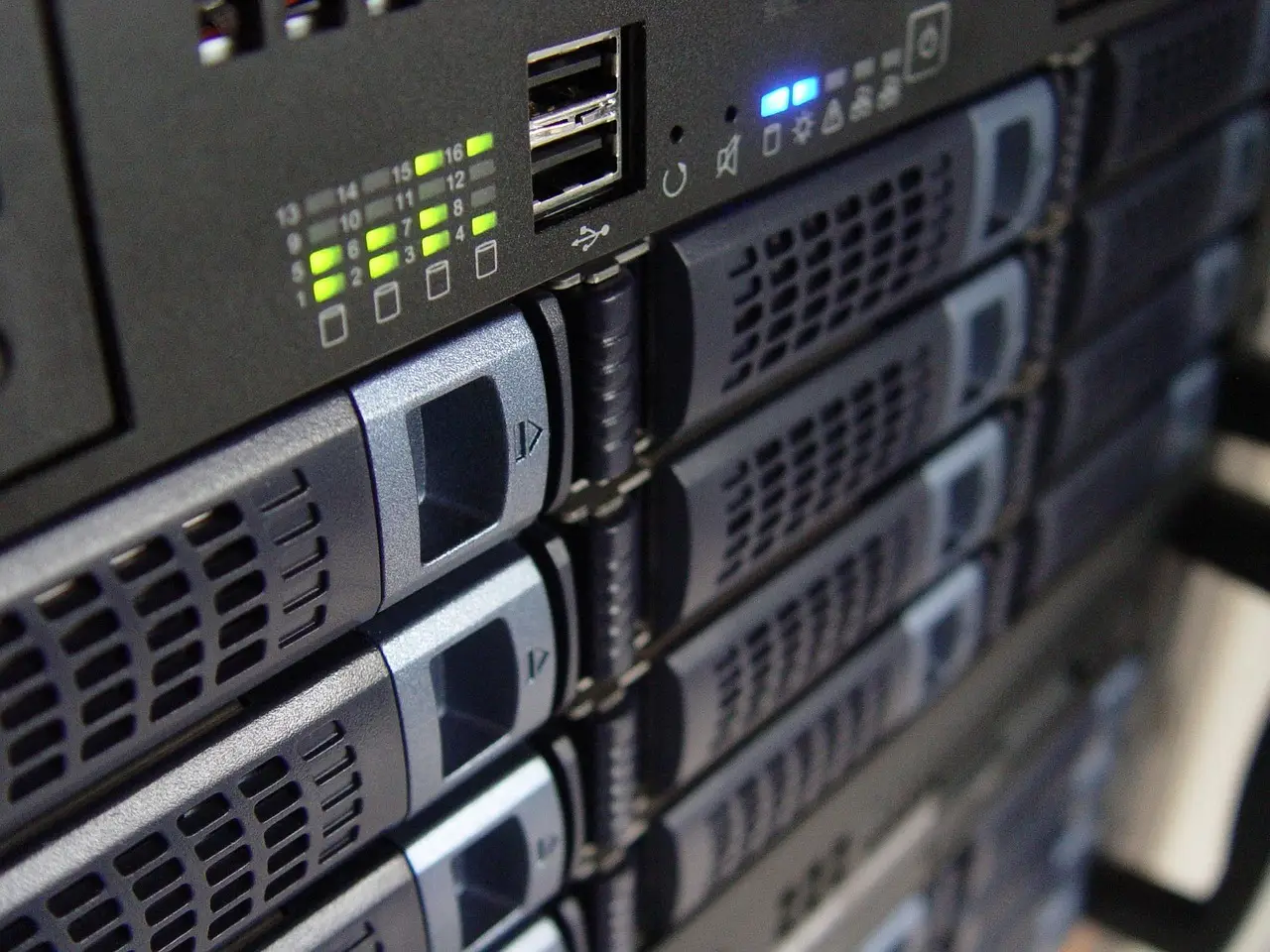
Phison used Supercomputer 2026 (SC26) to detail two enterprise SSD designs: a computational-storage drive with a built-in NPU (neural processing unit) and 64GB of 130 GB/s memory, and a "Mixed Media" part that merges pSLC cache with QLC capacity behind one 16-channel controller. Neither has a product name, a named controller or a sample date, and Phison notes that "many of the products and features mentioned are still in development."
What does the on-drive AI actually change?
The premise is simple: instead of moving whole datasets to the server, the SSD runs code where the data already lives and sends back results. The drive supports PyTorch, vLLM, OpenVINO and llama.cpp, and Phison says developers can build on it "without specialized programming tools." Nothing was disclosed about how a host reaches the drive's compute.
The performance claim: drives "scan and process data in parallel" and return "relevant results," which Phison says could mean 10 to 100 times less data transferred for applicable workloads. That may free up the host CPU for other tasks.
How fast is the compute, really?
Phison says the integrated NPU should deliver "36,800 DMIPS of compute performance" — Dhrystone Millions of Instructions Per Second, a synthetic integer benchmark dating to the 1980s. NPUs are usually rated in TOPS, and Phison gave no such figure, so the DMIPS number likely describes the Arm-based CPU cores alongside the NPU — adequate for an SSD of this class, but no measure of AI capability. For reference, the Topaz NPU add-in card Phison showed at Computex carried eight NPUs rated at up to 40 TOPS each.
The memory matters more. Phison doesn't state the type; LPDDR5X is a popular option and may pair with the Topaz NPU, per one secondary report. If the drive is a PCIe 6.0 part comparable to Phison's X3 controller, it could hit 28 GB/s to the host — putting local memory above 4x that speed. For scale, 130 GB/s is a bit less than half of Nvidia's DGX Spark hardware.
Is this idea new?
No. Samsung's SmartSSD put an FPGA (field-programmable chip) on a drive in 2018; a 2022 second generation used AMD's Xilinx Versal and claimed more than 50% lower processing time, up to 70% lower energy use and up to 97% lower server CPU usage for scan-heavy database queries. It has reportedly vanished from Samsung's lineup, though the first generation still sold under the Xilinx name as of last year.
ScaleFlux took a narrower route with in-controller compression invisible to the server, and its CEO claims it is the only company with computational storage in production at hyperscalers. Lesson: don't make customers write new code. Phison's CTO Sebastien Jean argued in All About Circuits in 2025 that generic computational storage had stalled because "each use case is highly unique and it's simply not scalable," calling Linux-on-a-drive a "pie-in-the-sky approach." His alternative: targeted accelerators running set operations over logical block addresses, which he reckoned could let a chassis of 90 PCIe 6.0 SSDs process 2.5 TB/s without touching the CPU. The SC26 design looks closer to the general-purpose model, likely because of AI-driven demand for memory and compute.
At the conference's Emerging Storage Technology panel, Jean also previewed PCIe 7.0 drives at "50, 56 gigabytes per second" — "faster than a DDR channel" — where 32 drives could reach "1.8 terabytes per second" as computational storage for HPC.
Mixed Media: fewer bays, better cache math
The second design pairs "high-endurance pSLC and high-capacity QLC flash" — 4-bit QLC running in 1-bit SLC mode for speed and endurance. It fits existing infrastructure "without requiring specialized host software." Jean said the SLC endurance group is managed separately from the TLC/QLC, each getting its own namespace, so the OS sees multiple drives; writes go to SLC, QLC stays read-heavy.
The tradeoff: one drive failure takes out capacity and a share of cache. But Phison says "losing one drive out of 24 would result in a 4% cache loss instead of a 25% loss" versus dedicated cache drives, which also need host-side tiering software.
Phison isn't first here. Kioxia's Mixed Mode (FMS 2025) sets a pSLC-to-QLC ratio once per drive — 1:4 as a "good beginning ratio," though customers typically want pSLC at 0.5% to 2% of maximum QLC capacity — with parity protection across drives. DapuStor's dual-mode J5060 offers 400GB to 1.2TB of pSLC on a 30.72TB QLC drive and hit customer validation in August. Solidigm's CSAL works differently, with a host-side flash translation layer. Enmotus' FuzeDrive P200, previewed at CES 2020, used a Phison controller with 24GB of SLC on a 900GB model — the closest ancestor.
What's next?
Mixed Media looks nearer to market: it builds on standard NVMe, and Phison's ratio and configurability remain unknown. The X3 controller, unchanged since Computex in June, still promises 28 GB/s sequential and 6.8 million IOPS, with samples by year-end and volume mid-next year per Phison's June statement. Jean said Phison is "very optimistic" about Nvidia's 100 million IOPS PCIe 7.0 target, but noted 512-byte accesses would mean "eight times as much power," roughly 140 to 180 watts — beyond reasonable. Micron and Samsung already ship PCIe 6.0 SSDs, and Marvell's Bravera SC6 is coming. Phison's PS7161 redriver is "the first PCIe 6.0 redriver on the PCI-SIG Integrators List." Watch CES and Computex 2027.
via tomshardware.com (Source)
More from Grace Kim
Show full bio
Market editor covering regulation, policy and their impact on hardware layer of artificial intelligence at Die Signal.
749 articles
Same lot
- Phison's 36,800-DMIPS SSD NPU Has No Price or Ship Date
- SK hynix puts custom H-TPU cores in SSD controllers
- Nvidia brings AI 'superchip' to Windows laptops, betting on the PC
- Samsung SDS launches NPU-as-a-Service on FuriosaAI silicon in South Korea
- Dell Targets Agentic AI Data Gaps With Semantic Layer and Knowledge Graphs